Mint tea sounds straightforward until you notice how differently it appears from one place to another. Sometimes it means a clear herbal drink made mainly from fresh mint; elsewhere, it refers to green tea lifted with mint and served as part of a familiar social ritual. In North Africa, particularly Morocco, mint tea is often known as atay or Moroccan mint tea, and it has become closely associated with hospitality, conversation, and serving guests. The name may be simple, but the drink carries more history and variation than its pale colour suggests.
The trouble with mint tea is that it can taste completely different from one cup to another, even when the drink seems simple. This article explains what makes the difference.
1. The Mint Decides More Than You Expect
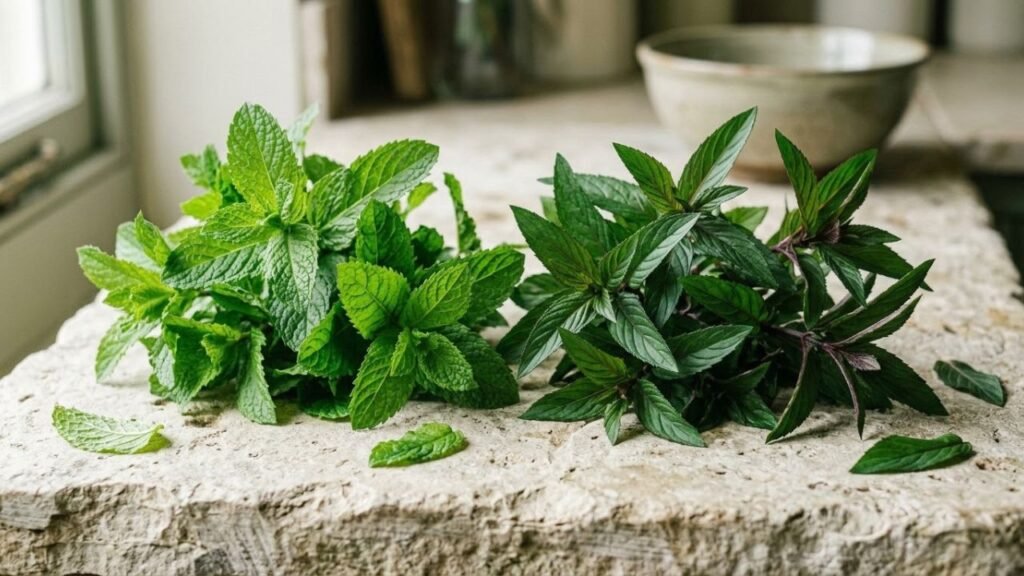
The word “mint” can mean quite different things once you get closer to the leaves themselves. Spearmint and peppermint may belong to the same family, but they create noticeably different cups. Knowing which one you are using can make more difference than simply adding more leaves.
Spearmint has a softer, greener flavour with a mild sweetness, while peppermint brings a much stronger cooling sensation and a sharper menthol note.
That is why spearmint is often the better choice for a gentle, familiar mint tea, while peppermint suits anyone looking for a bolder and more refreshing finish.
2. Fresh Leaves Change the Whole Impression
Fresh mint brings something that dried mint cannot quite reproduce, especially in the way it looks and smells. The leaves have a greener, livelier character, and their aroma is noticeable before the first sip. That freshness can make the whole drink feel more immediate.
Look for leaves that are firm, bright and holding their shape. Leaves that appear limp, dark or badly bruised are less likely to give the same fresh character.
Keeping a few leaves visible in the cup also changes the experience. You can see exactly what gives the drink its flavour, rather than being left with something that simply tastes minty.
3. Green Tea Gives Mint Something to Work Against
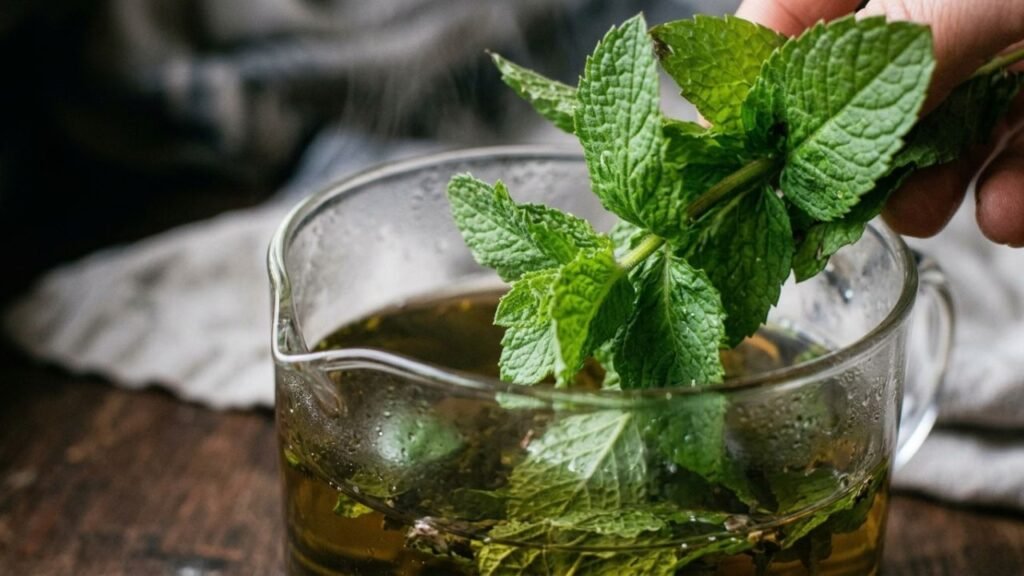
Mint tea does not always include green tea, but when the two meet, each one changes how the other tastes. Green tea brings a deeper, slightly bitter and vegetal character, while mint adds a cleaner note that lifts the cup and keeps it from feeling too heavy. The distinction matters because green tea is not a separate plant from other traditional teas, but one expression of the tea plant itself, as explained in Smithsonian Magazine’s history of tea.
When the green tea becomes too strong, the freshness of the mint gets lost. When there is too much mint, the tea beneath it barely has a chance to show itself.
The aim is not to make both flavours equally strong. It is to let you notice the tea first, then find the mint still present in the finish.
4. Heat Can Push Mint in the Wrong Direction
Mint responds quickly to heat, and that can change the character of the drink more than you might expect. Too much heat can make its herbal flavour feel heavier, while a gentler approach keeps the aroma brighter and cleaner. The longer the leaves stay in hot water, the more noticeable their flavour becomes.
There is no need to chase an exact rule. What matters is noticing how the flavour changes as the mint spends more time in the water.
If the cup tastes weak, adding more mint is not always the answer. If it already tastes too herbal, using even more leaves can push it further in the wrong direction.
5. Sweetness Should Have a Purpose
Sugar has long been part of Moroccan-style mint tea, where sweetness is closely tied to the character of the drink. It also changes how the mint and tea come across, making their sharper edges feel softer.
A little sweetness can round out green tea and bring the mint forward, while too much can cover the flavours that make the drink interesting.
Taste before adding more. The aim is for sugar to support the tea, not become the flavour you notice first.

6. The Moroccan Version Has a Social Life
Moroccan mint tea is easy to recognise by its presentation, but its real character comes from what happens around the glass. It is closely tied to hospitality, with tea shared among guests and family as people sit, talk and spend time together. The serving itself can become part of the gathering, which is why copying only the visual details can miss what makes the tradition meaningful.
There is also no single formula followed in every home. The balance and way of serving can change with the occasion and the person preparing it.
That variation does not make the tradition less authentic. It shows that traditions can remain recognisable while still leaving room for personal and regional differences.
7. The Best Cup Is Usually About Balance
It is easy to assume that a stronger cup must be a better one, with more mint, more sweetness or stronger tea. But too much intensity can quickly cover the details that give mint tea its character.
A good cup lets the mint stay fresh and noticeable while the tea still has enough presence underneath it. The flavours should work together rather than compete for attention.
When something feels off, change one thing at a time. Too bitter may mean the tea is taking over, while an overly cold or medicinal taste can point to too much mint. If sweetness hides everything else, there is simply too much of it.
Small Details That Make a Noticeable Difference
- Choose the mint deliberately. Spearmint is softer; peppermint is more intense.
- Check the aroma. Fresh mint should smell lively rather than dull or stale.
- Think about proportion. If you taste only mint, the underlying tea has probably disappeared.
- Pay attention to heat. Mint does not need aggressive treatment to make itself known.
- Taste before adding lots of sugar. It is easier to add sweetness than correct an overly sweet cup.
- Don’t chase intensity. A large amount of tired mint will not necessarily produce a better drink.
- Know which tradition you’re making. A simple mint infusion and Moroccan-style mint tea are not quite the same thing.
Common Mistakes That Make Mint Tea Feel Flat
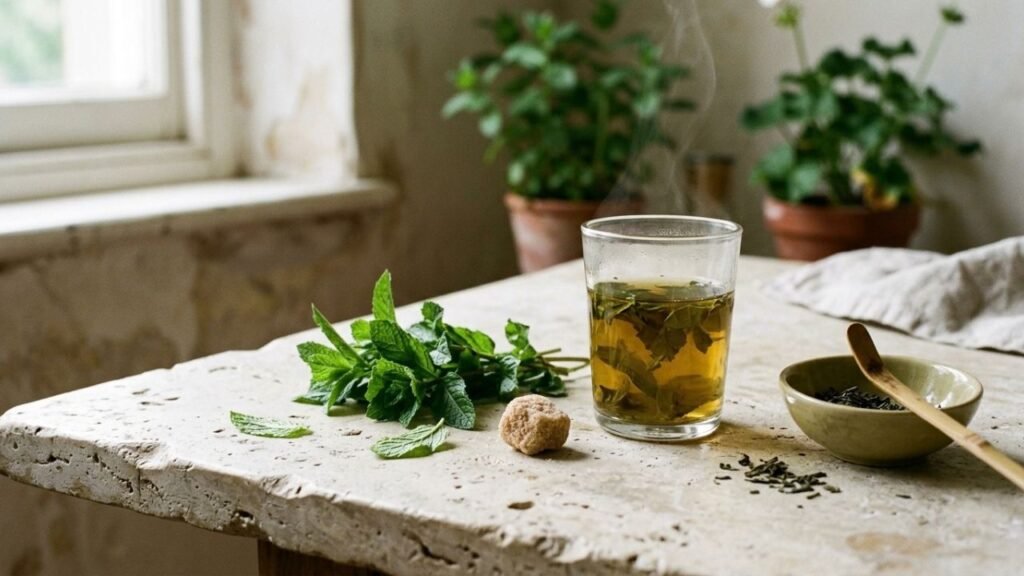
A stronger flavour does not always make better mint tea. Too much mint can become heavy and mentholated, leaving little of the fresh character that makes the drink appealing.
The tea underneath deserves attention too. When green tea is part of the cup, its bitterness and vegetal notes give the mint something to work with rather than something that needs to be completely covered.
Freshness also matters. Using more tired mint will not necessarily make the flavour livelier, just as there is no single formula that defines every traditional mint tea. Different places and households have their own ways of making and serving it.
FAQs
1. Is mint tea the same as herbal tea?
A drink containing only mint and water is generally an herbal infusion. When green tea is included, it combines true tea with mint.
2. Which mint works best?
Spearmint gives a softer, greener flavour. Peppermint is more intense and noticeably mentholated.
3. Can dried mint be used?
Yes. It produces a useful infusion, although its flavour and aroma differ from fresh mint.
4. Why does mint tea sometimes taste bitter?
The bitterness may come from the tea itself, particularly green tea. Strength and heat can also affect the impression.
5. Does Moroccan mint tea contain green tea?
The familiar Moroccan style commonly combines green tea, fresh mint and sweetness, although preparations vary.
6. Is mint tea supposed to be sweet?
Not always. Sweetness is strongly associated with Moroccan-style mint tea, while a simple mint infusion can be enjoyed without it.
A Simple Way to Think About the Cup
Mint tea may look like a simple drink, but its character comes from the small choices behind it. The type of mint changes the freshness, green tea can add depth, and sweetness can soften the sharper notes without hiding them. Even the way it is served can give the drink a different sense of place and occasion.
Once you understand those details, making mint tea becomes less about following a fixed idea of the “right” cup. It becomes easier to recognise what you like, what feels out of balance, and why one cup tastes more satisfying than another.