Ajitama, also called ajitsuke tamago or ajitama eggs, is the seasoned soft-boiled egg commonly served with Japanese ramen. Its name comes from ajitsuke, meaning seasoned, and tamago, meaning egg. Although closely associated with ramen shops, this humble topping has become a favourite among home cooks who want to recreate the details that make a bowl of ramen feel complete.
Getting the perfect ajitama at home can be tricky, especially when the yolk turns too firm or the marinade makes the egg too salty. This recipe helps you get the balance right.
Ajitama Recipe at a Glance
| Preparation detail | Estimated time |
| Prep time | 10 minutes |
| Cooking time | 7 minutes |
| Cooling and peeling | 15–20 minutes |
| Marinating time | 8–24 hours |
| Total time | Approximately 8–25 hours |
| Servings | 4 eggs |
These times are estimates rather than fixed rules. Your actual cooking time may vary with egg size, starting temperature, stove heat and personal preference. Marinating also takes patience, so plan ahead if you want the eggs ready for dinner.
Ingredients for Four Japanese Ramen Eggs
- 4 large eggs
- Water, for boiling
- Ice and cold water, for cooling
- 4 tablespoons Japanese soy sauce
- 4 tablespoons mirin
- 4 tablespoons sake
- 4 tablespoons water
- 1 teaspoon sugar (optional)

Ingredient swaps that still work
Some traditional Japanese ingredients may not be readily available in every kitchen. These alternatives can help, although the finished flavour will differ slightly.Use the same total liquid volume when
| ingredient | Possible replacement | What changes |
| Mirin | 1 tablespoon sugar mixed with 3 tablespoons water | Adds sweetness, but lacks mirin’s characteristic flavour |
| Sake | Water | Keeps the marinade simple, with less depth |
| Japanese soy sauce | Regular light soy sauce | Usually works, although saltiness and flavour can vary |
| Japanese soy sauce | Reduced-sodium soy sauce | Produces a milder, less salty marinade |
replacing mirin or sake. If your soy sauce is particularly salty, begin with a little less and adjust the next batch to suit your taste.
Cooking Directions for a Soft, Seasoned Centre
The key is to separate the cooking from the seasoning. First, give the egg the texture you want. Then let the cooled marinade develop its flavour gradually in the refrigerator.
1. Prepare the seasoning liquid
Combine the soy sauce, mirin, sake, water and optional sugar in a small saucepan. Warm gently until the sugar dissolves, then allow the mixture to cool completely. A hot marinade can continue cooking the eggs and interfere with the texture you have worked to achieve.
2. Boil the eggs
Bring a saucepan of water to a steady boil. Lower the refrigerator-cold eggs carefully into the water using a spoon. Cook for approximately 7 minutes, keeping the water at a gentle boil.
This timing is a starting point, not a guarantee. For a slightly firmer yolk, try another 30–60 seconds next time. Egg size and cooking conditions can make a noticeable difference.
3. Cool them quickly
Transfer the eggs immediately into a bowl of ice water. Leave them for around 10–15 minutes so the cooking stops and the eggs cool thoroughly. Skipping this step can leave the yolks firmer than intended.
4. Peel the shells gently
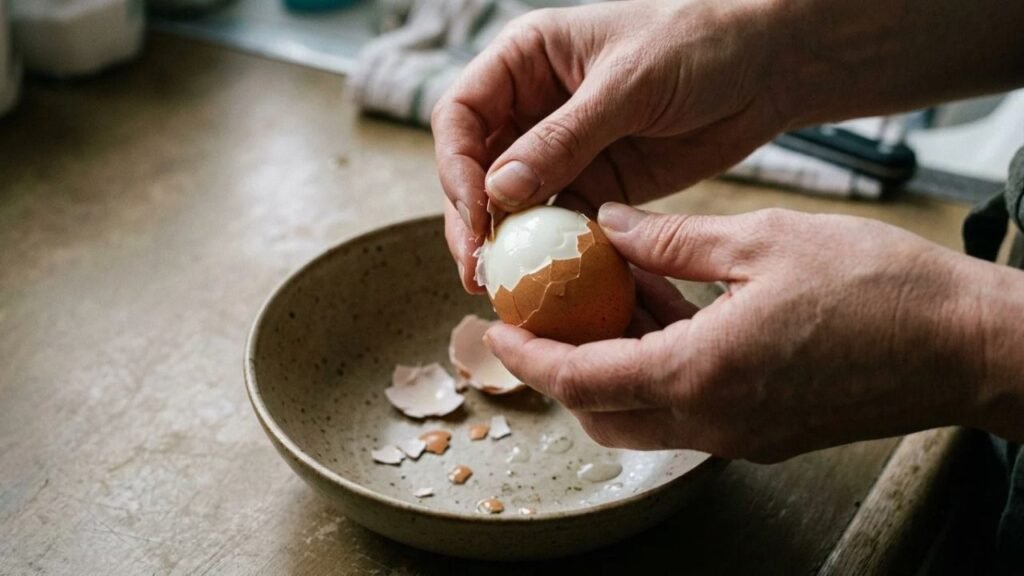
Tap each egg lightly on a hard surface and roll it to loosen the shell. Peel slowly, using a little running water if necessary. Damaged whites can still taste good, but intact surfaces produce a neater finish and more even-looking eggs.
5. Let the marinade do its work
Place the peeled eggs in a clean container or food-safe bag and cover them with the cooled marinade. Refrigerate for 8–24 hours, turning the eggs occasionally if they are not completely submerged.
An overnight soak is a useful starting point. Shorter marinating produces a milder flavour, while longer exposure can make the eggs saltier.
6. Slice just before serving
Remove the eggs from the marinade and cut them lengthwise with a sharp knife. Wipe the blade between cuts for a cleaner appearance. Add the halves to your ramen shortly before serving so the yolks retain their soft texture.
Serving Ajitama Beyond the Ramen Bowl
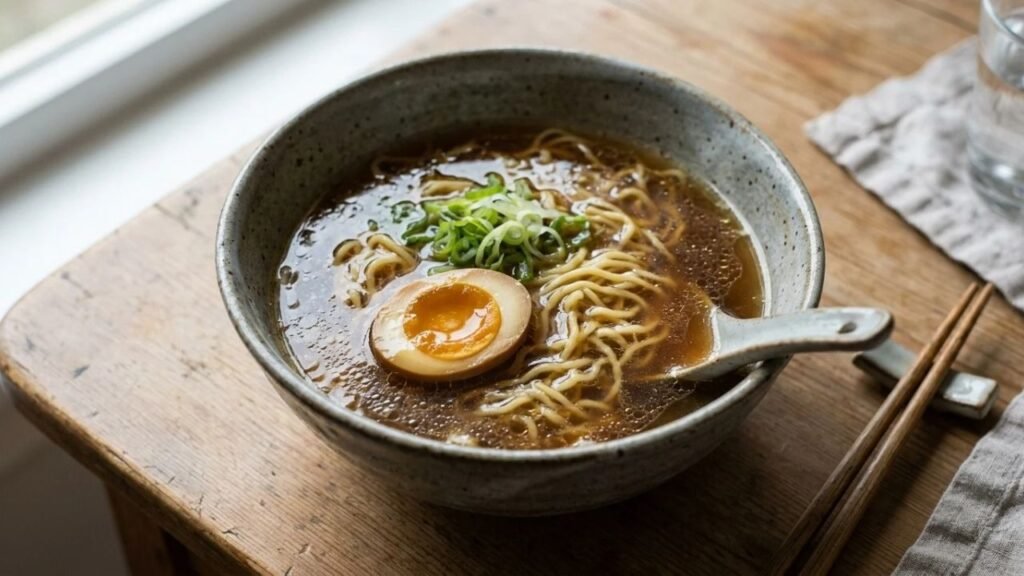
Ajitama is a natural companion to shoyu ramen, where the soy-seasoned egg complements the savoury broth. It also works with miso ramen, though its saltiness should be considered alongside the richer soup.
For a simpler meal, serve the egg over steamed rice with sliced spring onions, sesame seeds or a little chilli oil. It can also accompany cold noodles or a light vegetable bowl.
One small detail makes a difference: avoid simmering the finished eggs directly in the ramen broth. Adding them at the end preserves their shape and keeps the yolk from becoming firmer in the heat.
Keeping the Texture Right After Cooking
Ajitama should be refrigerated throughout marinating and storage. For the best texture and flavour, aim to use the eggs within two to three days, counting from preparation. This is a practical quality guideline rather than a guarantee of safety, storage conditions and how the eggs were handled.
Keep the eggs in a clean, covered container at 4°C (40°F) or below. Avoid leaving them at room temperature for extended periods, and follow established egg handling and refrigeration guidelines from the USDA to reduce the risk of foodborne illness.
Reheating is generally unnecessary. Ajitama is best served chilled or brought briefly towards room temperature before being placed in hot ramen. Avoid microwaving whole eggs, as they can burst during heating.
Common Mistakes That Change the Result
- Boiling for too long: The yolk becomes firm and loses its creamy centre. Adjust the cooking time gradually rather than making large changes.
- Adding eggs to warm marinade: Residual heat can continue cooking them. Always cool the marinade first.
- Peeling while too hot: The whites may tear easily. Give the eggs enough time in the ice bath.
- Using too much soy sauce: A very salty marinade can overpower the egg. Dilute it with water and taste the balance before preparing the next batch.
- Marinating for too long: More time does not automatically mean more flavour. Start with an overnight soak and adjust according to your preference.
- Leaving eggs uncovered in the refrigerator: Exposed areas may season unevenly. Use a suitable container or food-safe bag to keep the eggs in contact with the marinade.
Frequently Asked Questions
1. What does ajitama mean?
Ajitama is a shortened form of ajitsuke tamago, the Japanese term for a seasoned egg. It commonly refers to the soft-boiled, marinated eggs served with ramen.
2. Can ajitama be made a day ahead?
Yes. Preparing the eggs the day before serving gives the marinade time to season the whites. Refrigerate them throughout the process.
3. Why is my ramen egg yolk too runny?
The eggs may need slightly more cooking time, or they may be smaller or colder than the eggs used when you established your timing. Increase the boiling time in small increments.
4. How long should ajitama marinate?
Around 8–24 hours is a useful range for this recipe. The ideal duration depends on the marinade’s saltiness and how strongly seasoned you like your eggs.
5. Can I make ajitama without sake?
Yes. Replace it with water for a simpler marinade. The result will lack some of the depth associated with sake, but it can still be enjoyable.
6. Can I reuse the marinade?
It is better not to reuse marinade that has been in contact with raw or prepared eggs. Make a fresh batch for the next preparation.
7. Is ajitama served hot or cold?
It is usually added chilled or cool to freshly prepared ramen. The warm broth gently takes the chill off without requiring the egg to be reheated separately.
The Small Detail That Completes the Bowl
Ajitama proves that even a simple egg can change the character of a meal when prepared with care. A soft, creamy yolk, a well-seasoned white and a balanced marinade give it the flavour and texture that make it such a familiar part of Japanese ramen.
Once you get a feel for the cooking time and marinating process, it becomes easier to adjust the recipe to your taste. Homemade ajitama is worth mastering because it brings a little more flavour, texture and care to an everyday bowl of noodles.