Starch of maize is more commonly known as maize starch or cornstarch, depending on where you live. It comes from the starch-rich part of the maize kernel and has been used for generations, first becoming familiar in household and food settings before finding a much wider role in manufacturing. Today, the name may sound ordinary, but the material behind it is far from limited. Its ability to influence how other materials behave has made it useful well beyond the places where most people first encounter it.
Many people know maize starch by name but not why it works across so many different uses or what makes it so adaptable. This article explains the reasons behind its wide use.
1. Its Story Starts With What Maize Already Contains
Maize naturally contains a large amount of starch, giving manufacturers a readily available source of a material that can be separated and used for different purposes. The wider scale of maize production also helps put that availability into perspective; the USDA Economic Research Service’s overview of corn and other feed grains provides useful background on how extensively the crop is produced and used.
That helps explain its popularity, but availability alone is not enough. A material can be abundant and still be difficult or expensive to work with.
Maize starch became valuable because it offered both a dependable source and useful physical behaviour. Once separated from the grain, it can be handled as a fine, consistent material and adapted for different applications.
So its history is not simply a story about how much maize is grown. It is also a story about finding a particularly useful material inside a crop people were already producing at scale.
2. The Real Advantage Is Hidden Beneath the Surface
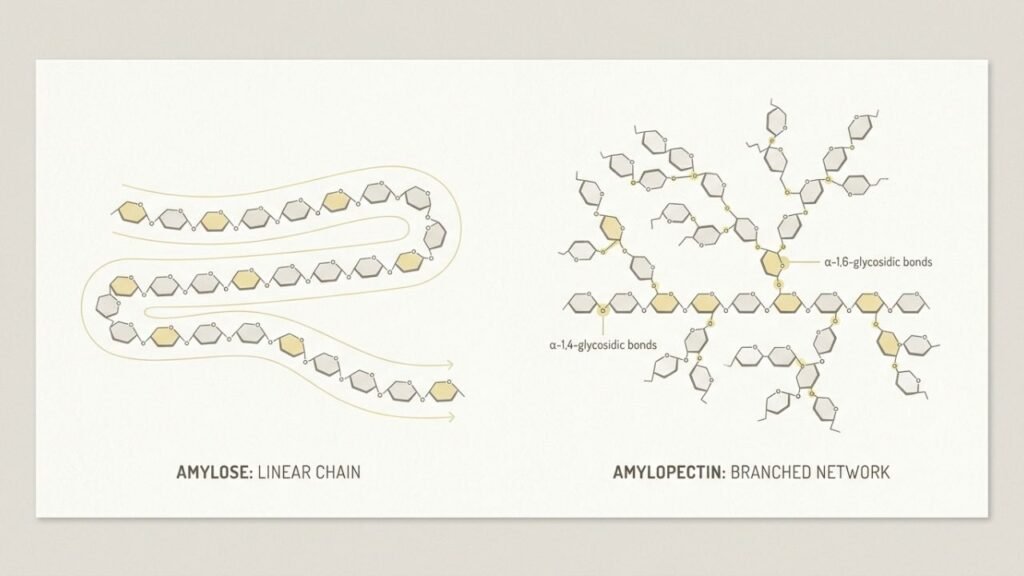
The white appearance of maize starch tells you very little about what actually makes it useful. Beneath that simple surface are two main components, amylose and amylopectin, and their molecular structures behave differently when the starch encounters water and heat. Amylose is relatively linear, while amylopectin is highly branched, and that difference influences how the starch swells, thickens, forms gels, and holds its structure under different conditions.
This is where much of maize starch’s usefulness begins. Its value is not simply that it comes from a plentiful crop, but that its molecular structure gives manufacturers a material they can adjust and work with for different purposes. The powder may look ordinary, but what happens at the molecular level is what gives it such a wide working life.
3. One Material, Several Different Personalities
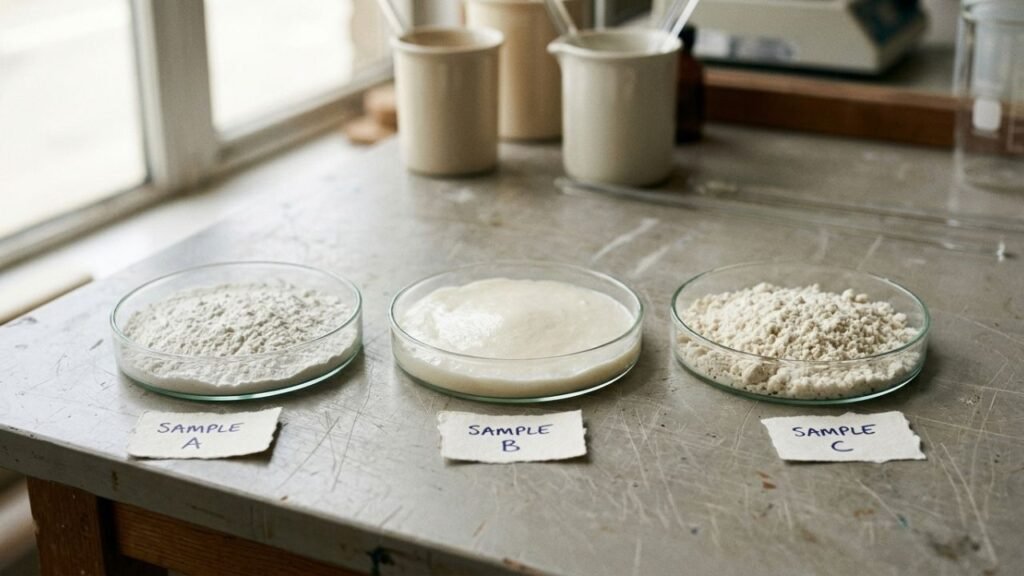
Not every maize starch behaves in exactly the same way. Different maize varieties can produce starches with different characteristics, while processing can change those characteristics further.
Waxy maize, for example, produces a starch dominated by amylopectin and can behave differently from conventional maize starch. Other forms can be pre-treated or modified so they perform differently under particular conditions.
This is one reason the phrase “maize starch” can be slightly misleading. It sounds like a single material with one predictable purpose.
In reality, it is better understood as a group of related starch materials whose behaviour can be adjusted according to the job.
That flexibility helps explain why it appears across such different industries.
4. Its Quiet Talent for Holding Things Together
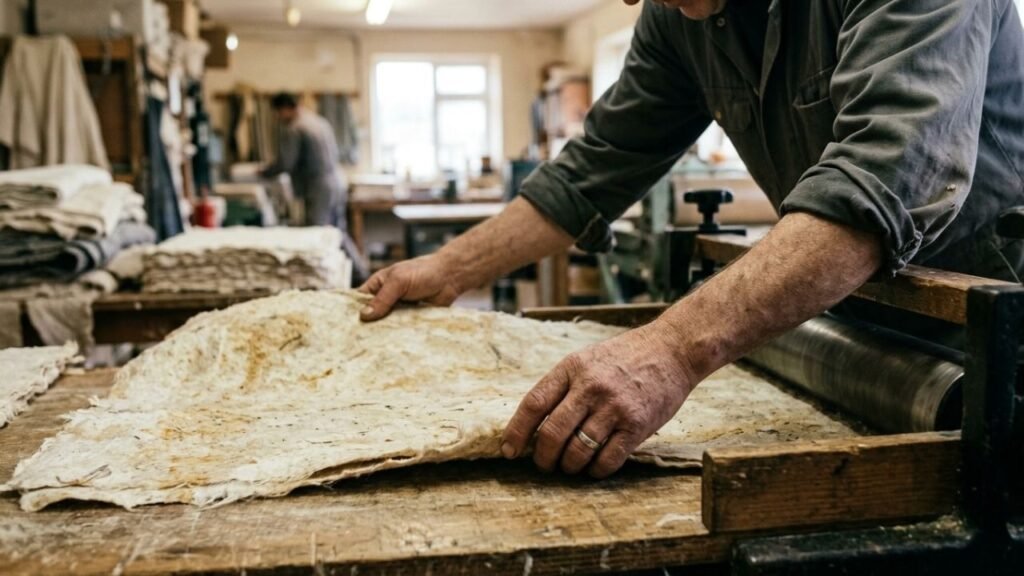
One of starch’s less obvious qualities is its ability to contribute to cohesion. When starch interacts with water and is processed under suitable conditions, it can form structures that help bind or hold other materials together. This helps explain applications in areas such as paper, textiles and adhesives.
The finished products may have almost nothing visually in common. A sheet of paper does not look like starch. A textile does not either. An adhesive may leave no obvious trace of the material that helped create it.
Yet the underlying requirement can be similar, manufacturers need a material that interacts usefully with fibres, surfaces, moisture or other substances. That is where maize starch becomes more interesting than its appearance suggests.
5. Why Manufacturers Value Materials They Can Adjust
Another reason for maize starch’s broad use is that it does not always have to be used exactly as it occurs naturally. Different forms of physical, chemical or enzymatic processing can alter starch characteristics. The purpose is not to make one universal version that is “better.” It is to produce behaviour that suits a particular application.
One product may require a certain viscosity. Another may need greater stability. Somewhere else, the way starch responds to moisture or temperature may matter more.
This makes maize starch useful as a functional material rather than simply a raw agricultural product. Its value comes partly from the ability to adapt to it.
6.Following the Material Reveals Its Uses
The long list of maize-starch applications can seem disconnected. Food products, paper, textiles, adhesives and industrial materials appear to belong to completely different worlds.
Look at the material rather than the finished product and the connection becomes clearer.
Many applications depend on starch interacting with water, creating structure, changing consistency, forming films or helping different materials work together.
This is why simply listing uses does not really explain its importance. The more useful approach is to understand what the starch can do, then see how different industries make use of those properties.
The application changes. The underlying material behaviour remains.
7. The Part Most People Never Notice
Maize starch has an unusual relationship with visibility. When it does its job successfully, people often do not notice it. It can influence the structure, surface, consistency or stability of something without becoming the feature anyone talks about.
In that sense, it is a quiet material.
Steel remains visible in a building. Wood is recognizable in furniture. Leather can define the character of an object. Starch often disappears into the finished product.
But invisibility does not mean insignificance. Manufacturing depends on many materials whose contribution is hidden precisely because they are doing their job effectively.
A Better Way to Understand Its Widespread Use
If you encounter maize starch in an unfamiliar application, three things are worth considering:
- What is it being asked to do? Different functions require different starch behaviours.
- What form is being used? Native, pre-treated and modified starches can perform differently.
- What conditions will it encounter? Water, heat, storage and other conditions can affect performance.
This is more useful than memorising every possible application.
Once you understand the relationship between structure, processing and function, the wide reach of maize starch becomes much easier to understand.
The Common Assumption That Needs a Correction
It is easy to assume that maize starch is widely used simply because maize is plentiful. That is only part of the explanation. If abundance were enough, many other agricultural materials would have developed the same range of applications. Maize starch has remained useful because it combines reliable availability with physical properties that can be controlled and adapted.
It is also a mistake to assume that every maize starch is interchangeable. The source of the starch, its molecular structure and how it has been processed can all affect its behaviour. The more accurate picture is simpler, maize starch became widespread because manufacturers could obtain it reliably and make its behaviour useful for different jobs.
Five Details Worth Remembering
- Maize starch and cornstarch are commonly used names for the same basic material, although terminology varies by region.
- Amylose and amylopectin influence starch behaviour because their molecular structures are different.
- Different maize starches are not necessarily functionally identical.
- Processing can change starch performance, expanding the number of applications it can serve.
- Its versatility matters as much as its availability.
FAQs
1. Is maize starch the same as cornstarch?
In most everyday contexts, yes. Both names commonly refer to starch obtained from maize.
2. Why is maize starch so widely used?
Its availability is one reason, but its adaptable physical and functional properties are equally important.
3. Is all maize starch the same?
No. Maize variety, molecular composition and subsequent processing can influence how it behaves.
4. Why does amylose matter?
Amylose is one of the main components of starch. Its relatively linear structure affects properties such as gel formation and behaviour during processing.
5. Why does amylopectin matter?
Amylopectin has a highly branched structure and influences characteristics including swelling and viscosity.
6. Why is maize starch modified?
Modification allows particular properties to be adjusted for a specific application rather than relying entirely on naturally occurring characteristics.
The Material Hiding in Plain Sight
Maize starch does not have the visual drama of materials we normally notice. It is a pale powder, familiar enough to become almost invisible in our minds. Look closer, however, and its story is more revealing.
Its widespread use comes from the combination of a dependable agricultural source and a molecular structure that can be processed and adapted for different purposes. The material can take on different roles without losing its fundamental usefulness.
That may be the clearest explanation for its long reach, maize starch is not important because it has one extraordinary purpose. It is important because it can quietly perform many different ones.