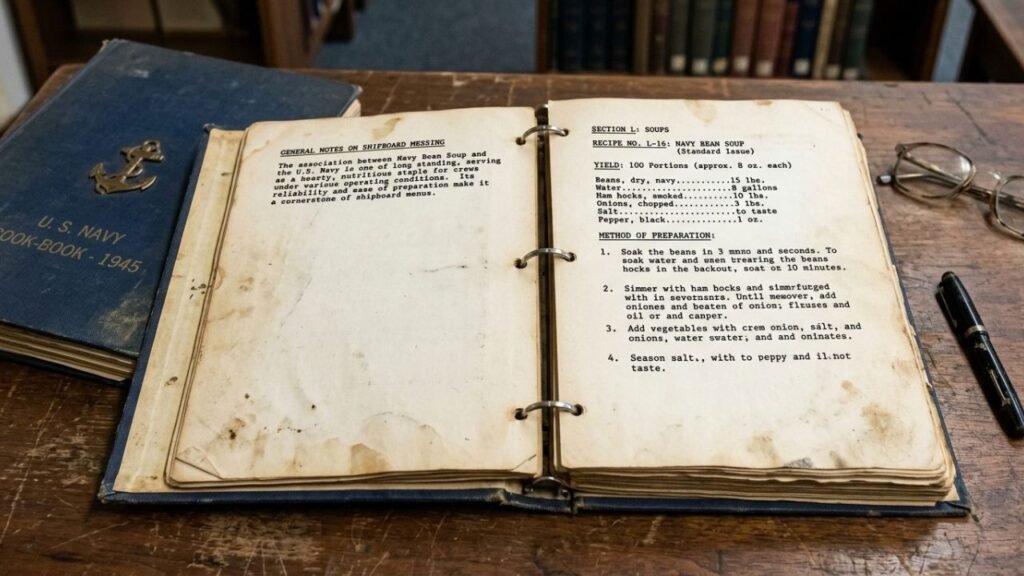
Navy beans are the small white beans many people know from baked beans, hearty soups, and old-fashioned pantry cooking. Their formal name is navy bean, although they are also called pea beans in some places, a name that makes sense once you see their small, compact shape. The name “navy bean” is tied to their long association with American naval provisions, where inexpensive dried beans offered practical nourishment and stored well. Today, they remain one of the smaller members of the white-bean family, valued less for a strong flavor than for their ability to become soft and creamy while taking on the character of the food around them.
Navy beans can sometimes stay hard, cook unevenly, or take much longer than expected. If you’ve faced this, this guide explains what may be causing it and how to handle it.
1. Their Small Size Changes More Than Appearance
Navy beans are smaller than several other familiar white beans, and that size affects how they behave once cooked. Their compact shape gives them a relatively high surface area, while their mild flavor makes them good at absorbing surrounding flavors.
That is one reason they work well in dishes where the bean is not supposed to dominate. They can become part of the texture rather than sitting in it as a separate, strongly flavored element.
The useful distinction is between flavor and function. Navy beans are quiet in flavor, but they can noticeably affect the body of a dish.
2. “White Bean” Does Not Mean One Thing
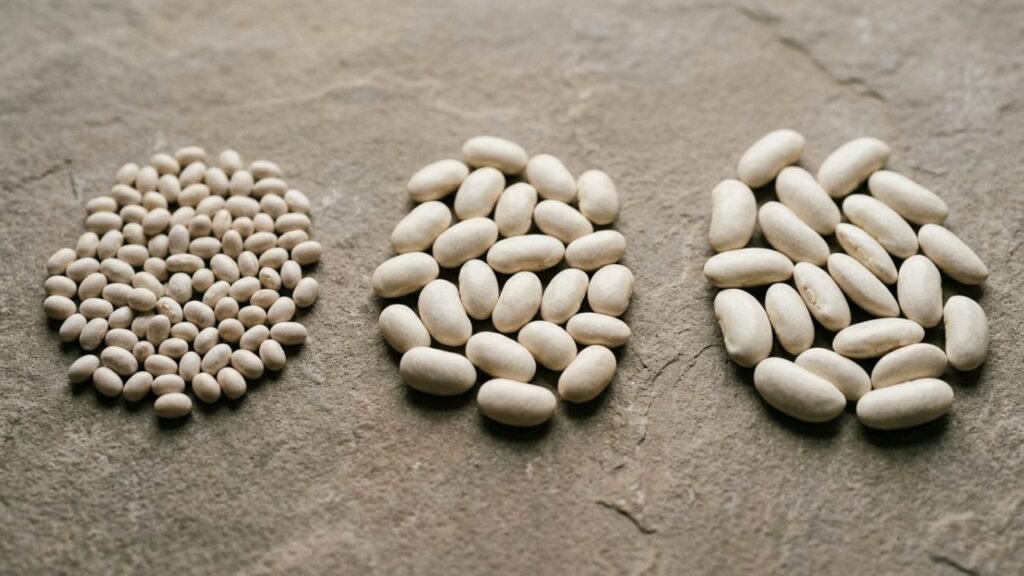
Navy beans, Great Northern beans and cannellini beans are often grouped together because they share a pale color. They are not identical. Cannellini beans are larger and kidney-shaped. Great Northern beans are larger than navy beans and tend to hold their shape well. Navy beans are smaller and particularly suited to dishes where a softer, creamier texture is welcome.
So when a recipe says “white beans,” there is room for interpretation. Substituting one for another may work, but the finished dish can change in texture and appearance.
For a thick soup, that difference may be helpful. For a dish where whole beans need to remain distinct, it becomes more noticeable.
3. The Age of the Bag Can Become the Hidden Variable
Dried beans look remarkably stable, but that can create the false impression that every bag will cook exactly the same way. Older beans can take considerably longer to soften. Storage conditions matter, too, and the way dried beans change during storage is one reason their performance can vary from one batch to another. This is why two batches prepared with identical instructions can produce different results.
If navy beans remain firm long after expected, don’t immediately assume the technique was wrong. The beans themselves may be the variable. This is also why rigid cooking times can mislead. Texture tells you more than a number printed in a recipe.
4. Soaking Is More About Predictability Than Tradition
Soaking has become surrounded by rules, overnight, quick-soak, always soak, never bother. In reality, it is better understood as a way of managing dried beans before they are fully hydrated.
A soak can make cooking more predictable and shorten the time needed to reach tenderness. It also gives you a chance to inspect the beans after they have absorbed water, rather than discovering later that a particular batch is unusually slow to soften.
But soaking is not a guarantee. Very old beans can remain difficult even after a long soak.
The useful mental model is simple: soaking changes the starting point. It does not erase differences between batches.
5. Salt Has Been Blamed for More Than It Deserves
For years, home cooks were often warned to keep salt away from beans until they were tender. That advice is still repeated, but the relationship between salt and bean texture is more complicated.
Salt can affect how beans hydrate and how their skins behave during cooking. The old idea that salt automatically makes dried beans tough is therefore too broad.
What matters is the overall cooking environment, not one ingredient acting as a villain. Cooking advice often survives long after the reason behind it becomes unclear.
6. Acid Belongs to the Flavor Conversation
Tomatoes, vinegar, citrus and other acidic ingredients can work beautifully with navy beans. The difficulty is timing. Acidic environments can slow the softening of dried beans. If beans are already struggling to become tender, introducing a strongly acidic ingredient early can make the problem more frustrating.
That doesn’t mean tomatoes or vinegar are incompatible with navy beans. They are excellent flavor partners. The important distinction is between getting the bean tender and building the final flavor. Treating those as separate stages gives you more control.
7. Their Quietest Quality May Be Their Most Useful
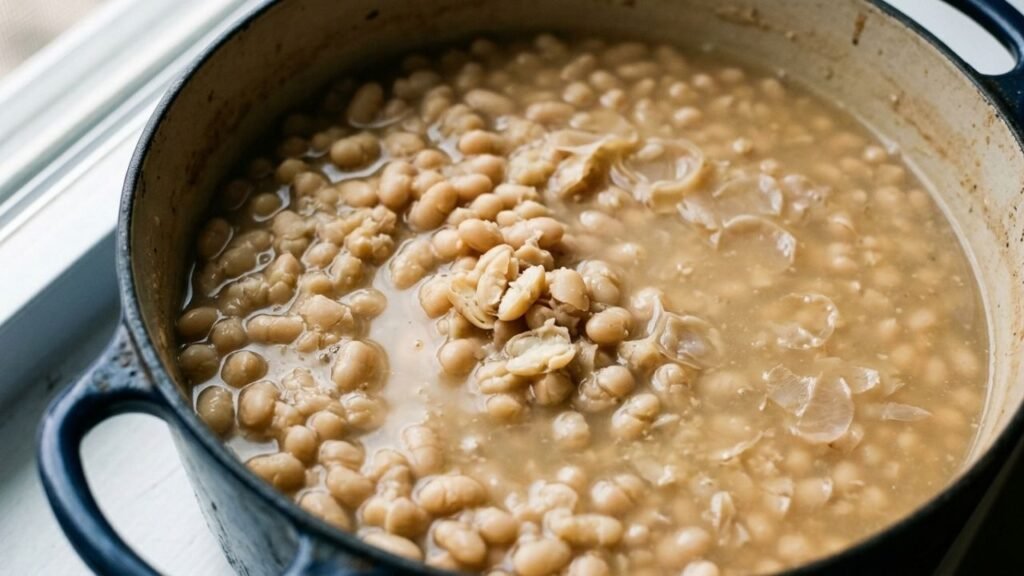
Navy beans are not especially dramatic ingredients. Their strength is what happens around them. As they soften, navy beans can release starch into their surrounding liquid, giving soups and stews a thicker, more cohesive texture. Some beans can remain intact while others become soft enough to almost disappear into the liquid.
That makes them useful when you want a body without introducing another obvious thickener. Their usefulness is therefore structural as much as nutritional. They can quietly change the character of an entire dish.
Small Details That Make Navy Beans Easier to Handle
A few practical distinctions can save you from treating every batch as though it follows the same rules.
- For creamy soups: Some navy beans can soften into the surrounding liquid while others remain recognizable.
- For dishes where beans must stay whole: Watch texture rather than relying on a fixed cooking time.
- When substituting white beans: Choose according to the texture you want, not simply the color.
- When beans stay unusually firm: Consider their age and storage history before changing everything else.
- When using acidic flavors: Remember that acidity can affect tenderness, so separate softening from final flavor-building.
- For a thicker natural texture: Navy beans contribute starch as they soften, so a separate thickener may not be necessary.
- When buying dried beans: Look for packages that have been stored well and don’t assume every bag will perform identically.
The broader lesson is that navy beans reward observation. They are forgiving, but not every batch behaves identically.
The Navy Bean Questions People Usually Have
1. Are navy beans the same as pea beans?
They are commonly used as alternative names for the same small white bean. “Pea bean” refers to the bean’s small size and shape, while “navy bean” reflects its historical association with naval food supplies.
2. Are navy beans a type of white bean?
Yes. Navy beans belong to the broader category of white beans, which also includes cannellini and Great Northern beans.
3. Why do navy beans sometimes stay hard?
Bean age is one possible reason. Storage conditions, water chemistry and the surrounding cooking environment can also affect tenderness.
4. Do navy beans have much flavor?
Their flavor is relatively mild. They take on the flavors of the surrounding dish without competing strongly with other ingredients.
5. Why are navy beans good for soup?
Their small size and tendency to soften make them useful when some beans can break down and add body while others remain whole.
6. Can navy beans replace other white beans?
Often, yes, but the result may not be identical. Navy beans are smaller and can produce a softer, creamier texture than larger white-bean varieties.
A Better Way to Think About the Humble Navy Bean
Navy beans are easy to overlook because they don’t demand much attention. Their appeal is quieter. They take on other flavors, soften into a creamy texture, and can give a dish more body without getting in the way. Even the differences between batches can reveal something about how dried beans behave, from their age and storage to the conditions around them. What looks like an ordinary pantry staple is actually an ingredient with more character than it first suggests.
Once you know those details, navy beans become easier to understand. There are fewer rules to memorize and more useful things to notice. You can recognize what is happening instead of simply guessing what went wrong.