Bavette steak is one of those cuts that can look a little unfamiliar until you know what you’re looking at. Often called flap steak, bavette comes from the lower sirloin area and is known for its loose grain, beefy flavor, and relatively thin shape. It has long been popular in French cooking, where “bavette” generally refers to flavorful, grain-forward cuts of beef rather than the thick, heavily marbled steaks many people automatically reach for.
The biggest problem with bavette is its tendency to turn chewy when cooked or sliced incorrectly. This guide shows you how to avoid that and get a tender, flavorful steak.
Timing at a Glance
| Prep Time | Cook Time | Total Time | Serves |
| 10 minutes | 8–12 minutes | About 20–25 minutes | 2–3 |
These times are a useful guide rather than a promise. Your steak may need a little more or less time depending on its thickness, your pan, your heat, and the doneness you prefer, so use the timing as a starting point rather than something you have to follow exactly.
What You’ll Need
- 1 bavette steak, about 1 to 1½ pounds
- 1 tablespoon neutral cooking oil
- 1½ teaspoons kosher salt
- ½ teaspoon freshly ground black pepper
- 3 tablespoons unsalted butter
- 3 garlic cloves, lightly crushed
- 1–2 sprigs fresh thyme or rosemary
- 1 teaspoon lemon juice, optional
Easy Swaps for Less Common Ingredients
| If you don’t have | You can use | What changes |
| Bavette steak | Flap steak | Very similar cut and texture |
| Fresh thyme | Dried thyme | Use less because dried herbs are stronger |
| Fresh rosemary | Dried rosemary | Use sparingly and crush it between your fingers |
| Kosher salt | Fine sea salt | Start with slightly less |
| Unsalted butter | Salted butter | Reduce the added salt a little |
Directions
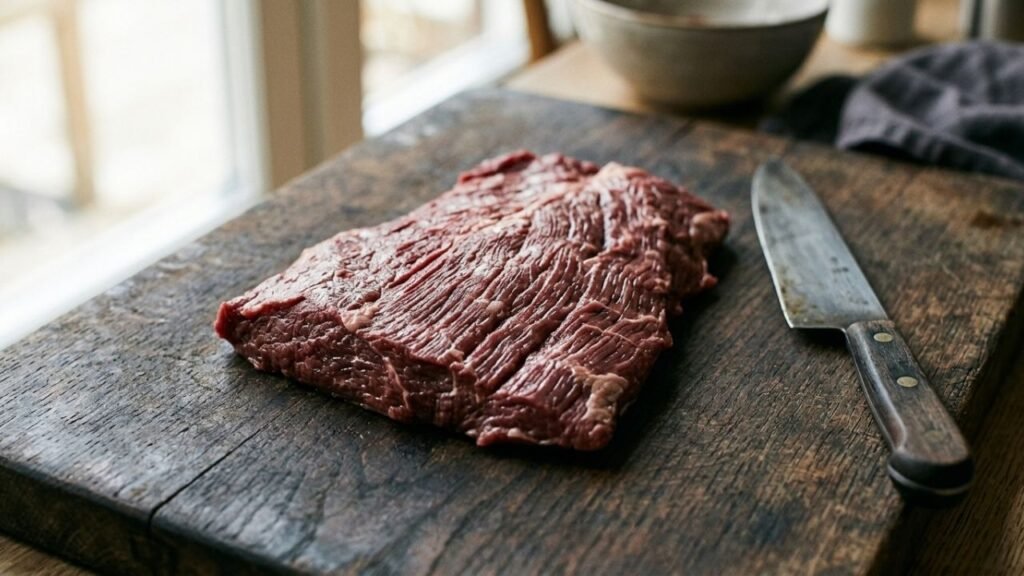
1. Give the bavette a dry surface
Take the steak out of its packaging and pat both sides thoroughly with paper towels. A dry surface gives the meat a better chance of developing the browned exterior you’re looking for.
Season both sides with salt and black pepper. If you have a little extra time, you can season the steak earlier and let it sit before cooking, but there is no need to turn a simple weeknight dinner into a long project.
2. Get the pan hot before the steak goes in
Place a heavy skillet over medium-high to high heat. Add the oil once the pan is hot and give it a moment to heat. Lay the bavette into the pan and leave it alone long enough to develop a good brown crust. For an average-sized bavette, around 2–3 minutes on the first side is a reasonable place to start.
Flip the steak and continue cooking the other side. Thinner pieces will finish quickly, while a thicker steak will naturally need more time.
Rather than relying completely on the clock, check the internal temperature if you have an instant-read thermometer. FoodSafety.gov’s 4 Steps to Food Safety offers further guidance on checking food with a thermometer.
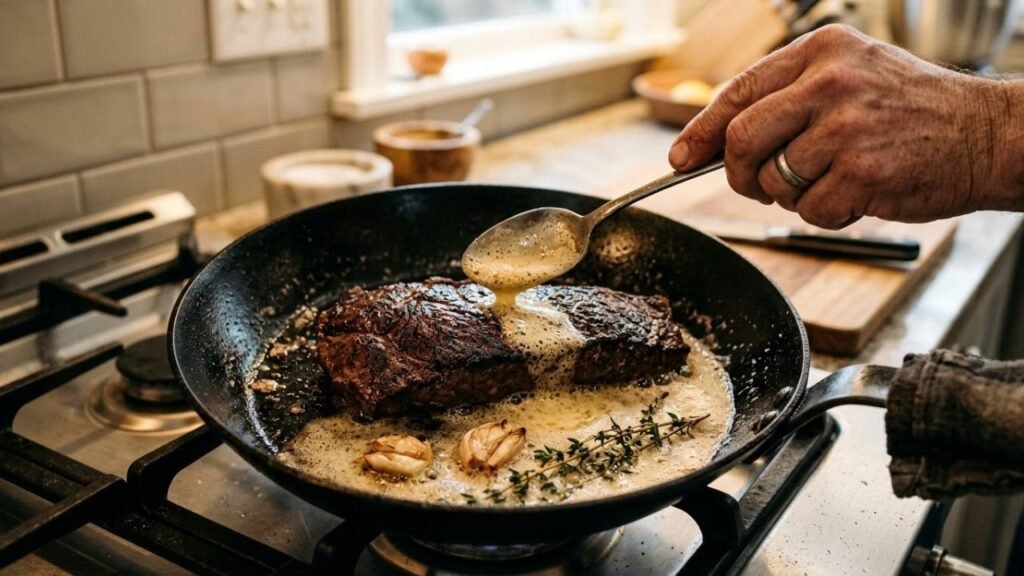
3. Bring in the garlic butter at the finish
Once the steak has developed a good color, lower the heat slightly and add the butter, crushed garlic, and thyme or rosemary.
As the butter melts and foams, spoon it over the steak for about 30–60 seconds. The garlic only needs enough time to become fragrant, leaving it over high heat for too long can make it bitter.
Remove the steak from the pan and let it rest before slicing.
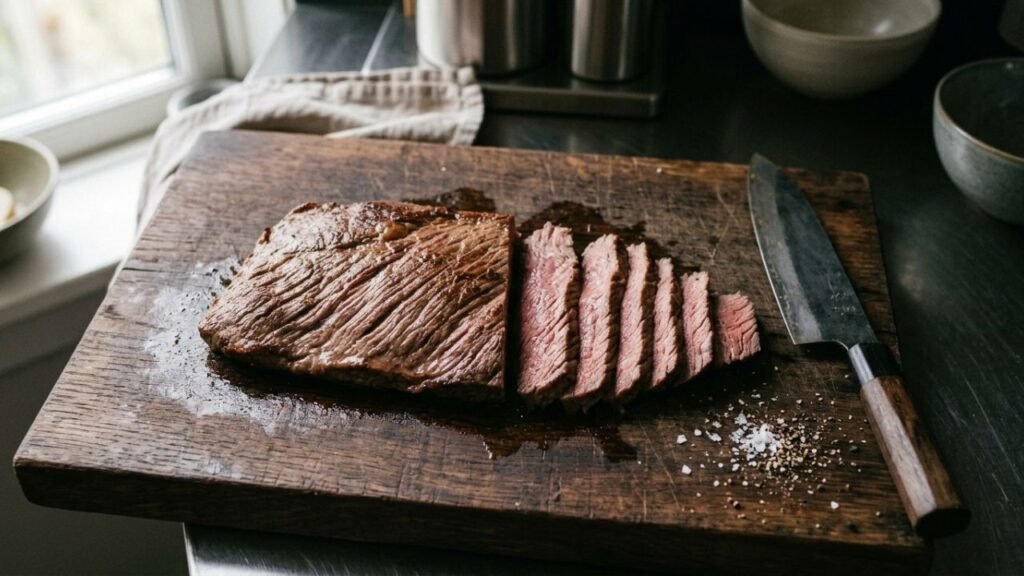
4. The knife matters more than you might expect
Look closely at the cooked steak and find the direction of the visible muscle fibers. Then slice across the grain, not along it.
This is particularly important with bavette. Cutting across those long fibers makes the steak easier to chew and gives you thinner, more manageable pieces. Slice on a slight diagonal if you want wider pieces for serving.
What to Put Beside It
Bavette with garlic butter already brings plenty of richness to the plate, so the best side dishes don’t need to compete with it.
A simple green salad with a sharp vinaigrette works especially well because the acidity cuts through the butter. Crispy potatoes, roasted vegetables, green beans, or a piece of crusty bread are also easy choices when you want something more substantial.
If you’re making this for a weeknight dinner, don’t underestimate a bowl of dressed greens and some good bread. The steak does most of the work.
Keeping Leftovers Worth Eating
If you have leftover bavette, let it cool and refrigerate it in a covered container. Around 2–3 days is a practical window for enjoying the leftovers, although how long you keep them is ultimately your choice and should depend on how they were handled and stored.
For reheating, gentle heat is preferable to aggressively cooking the steak again. A quick warm-up in a skillet or microwave can work, but try not to take it much further than necessary. Bavette can become tougher when reheated repeatedly.
Cold leftover slices are also useful in salads, sandwiches, wraps, or over warm potatoes, where you don’t have to heat the steak again at all.
The Mistakes That Usually Change the Result
Starting with a wet steak
Moisture on the surface can interfere with browning. Patting the steak dry takes only a few seconds and is worth doing.
Keeping the heat high after adding butter
Butter and garlic are finishing ingredients here. If they sit over very high heat for too long, the garlic can burn before the steak is ready.
Cooking entirely by the clock
Two bavette steaks of the same weight can behave differently if their thicknesses are different. Use time as a guide and temperature as a more useful check.
Cutting with the grain
This is probably the easiest mistake to overlook. If the steak seems tougher than expected despite being cooked the way you like it, check the direction of your slices.
Cutting immediately
A short rest gives the steak time to settle before you start slicing. You don’t need to leave it sitting around for ages, but cutting the moment it leaves the pan isn’t particularly helpful.
Overloading the pan
If you’re cooking several steaks, give them enough room. Crowding can reduce the heat around the meat and make it harder to develop the browned surface you’re after.
A Few Things Worth Knowing
1. Is bavette the same as flank steak?
No, although they are similar and are sometimes confused. Bavette is generally associated with the flap or sirloin area, while flank steak comes from the abdominal area. They have related qualities, including a pronounced grain, but they are different cuts.
2. Is bavette good for a quick dinner?
Yes. Its relatively thin shape means it can cook considerably faster than a thick steak. The exact time still depends on thickness and your preferred doneness.
3. Does bavette need to be marinated?
Not necessarily. Bavette has a strong beef flavor that works well with simple seasoning. A marinade can be used if you want a particular flavor, but it isn’t required for this garlic-butter version.
4. Why is my bavette chewy?
Cooking it too far can contribute, but the direction in which you sliced it is also important. Check the grain before cutting and slice across it.
5. Can I cook bavette without a cast-iron skillet?
Yes. A heavy stainless-steel skillet or another suitable frying pan can work. The important things are good heat control, enough space, and a pan capable of handling high heat.
6. Can I make the garlic butter ahead?
Yes. You can mix softened butter with finely chopped garlic and herbs ahead of time and keep it chilled. For this recipe, however, adding the ingredients directly to the pan at the end keeps the process simple.
7. What should I do if my bavette is very thick?
Give it more time and rely more heavily on an internal thermometer rather than trying to force it into the same cooking time as a thinner piece. Thickness makes a significant difference.
The Weeknight Steak Worth Knowing
Bavette doesn’t need much decoration. Its appeal is in the combination of a deeply beefy flavor, a browned exterior, and that characteristic texture when it has been cooked and sliced properly. Garlic butter adds richness without taking over.
The useful trick is simple: pay attention to the steak you actually have. Dry it well, cook according to its thickness rather than an arbitrary timer, and find the grain before you pick up the knife. Those few decisions are what turn an inexpensive-feeling weeknight dinner into one that feels considerably more deliberate.