Silken bean curd is one of those foods whose name can make it sound more complicated than it is. Usually called silken tofu, and known in Japan as kinugoshi tofu, it has a remarkably smooth, delicate texture that sets it apart from the firmer tofu most people recognize first. Tofu has a long history across East Asia, while silken tofu became particularly associated with Japanese food culture, where its soft texture and clean soybean character have given it a distinct place. To someone unfamiliar with it, the pale, trembling block can look almost like a dairy custard rather than tofu. That resemblance is part of what makes it interesting, but it is also where many misunderstandings begin.
Many people mistake silken bean curd for ordinary soft tofu, making it harder to understand its delicate texture and why it behaves differently. This article clears up that confusion.
1. Silken Is More Than a Softer Version
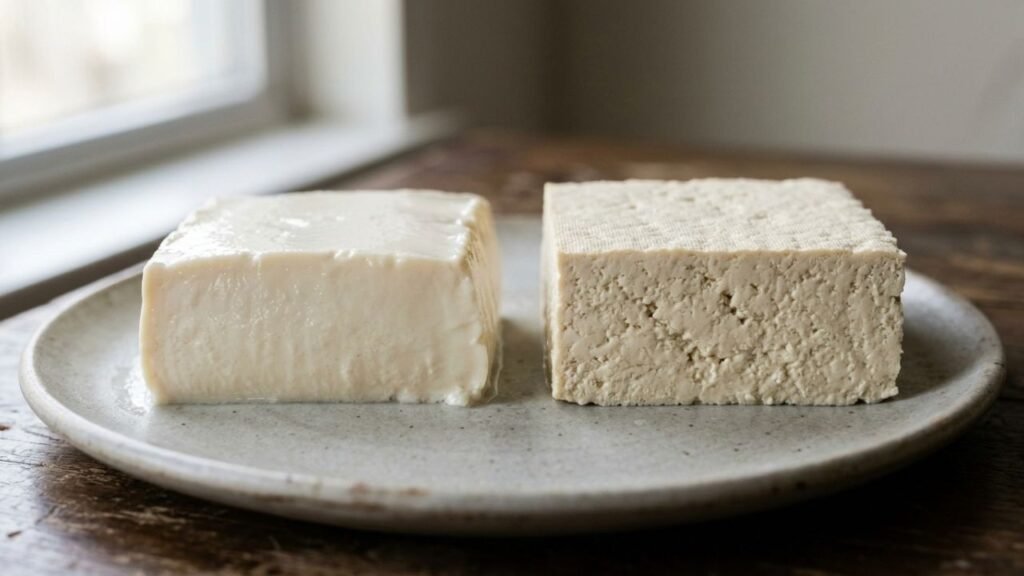
Calling silken tofu “soft tofu” is convenient, but it misses what makes it different. Unlike firm tofu, which is pressed into a denser block, silken tofu is set into a fine, delicate gel with a smoother interior.
That difference becomes clear when you handle it. Firm tofu has more resistance and holds its shape, while silken tofu feels delicate, soft, and much easier to disturb or break.
So “soft” describes the texture, but silken describes its character. It isn’t simply firm tofu with more water; its delicate structure is what gives it its distinct identity.
2. Kinugoshi Explains the Name Better
The Japanese name kinugoshi tofu offers a useful clue to what makes this tofu distinctive. The word is associated with silk, pointing directly to its remarkably smooth and delicate texture rather than simply describing how soft it feels.
That detail is easy to miss because “silken tofu” has become a familiar English term. Yet kinugoshi makes the comparison more vivid, drawing attention to the fine, almost silky quality that defines this variety.
It also explains why firmness alone isn’t enough to describe it. Silken tofu is not simply softer. Its smooth texture is the quality that gives it its identity.
3. The Wobbly Texture Is Actually the Point
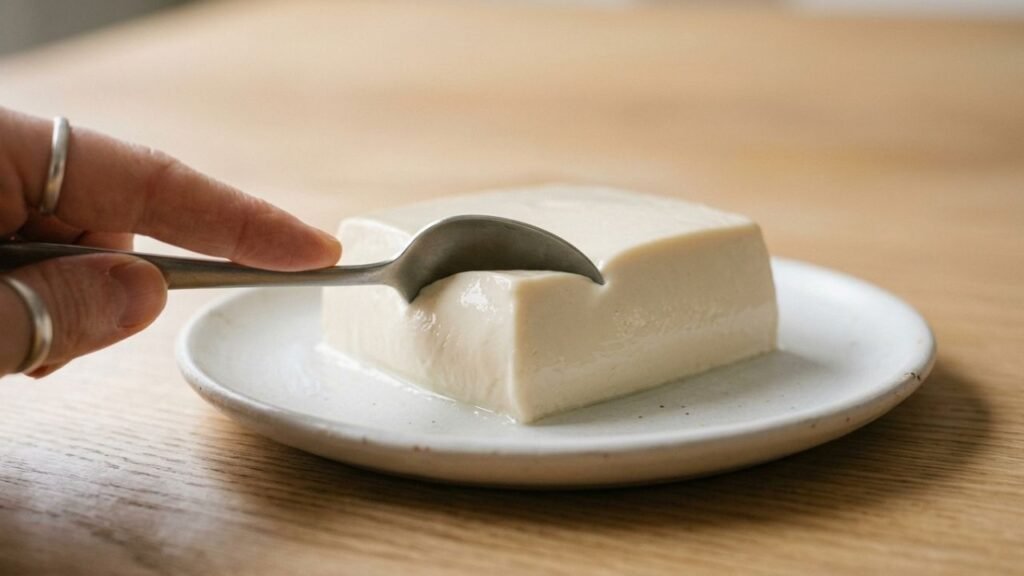
There is a strange habit of judging food by how well it holds its shape. Silken tofu often fails that test. It can tremble on the plate, split easily, and look almost too delicate to be useful, but that fragility is part of its character.
The better way to understand it is through texture rather than strength. Firm tofu offers resistance and a more substantial bite, while silken tofu feels smoother and softer, almost disappearing against the tongue.
Comparing them by which one is “better” misses the point. They offer different textures, and that difference is exactly why both exist.
4. More Moisture Doesn’t Mean Less Character
Another common assumption is that silken tofu’s wateriness makes it bland or inferior. That interpretation overlooks what its texture contributes. Its mild soybean flavor sits alongside a smooth, almost creamy texture, giving it a character that isn’t defined by strong flavor alone.
Its high moisture level isn’t simply excess water. It is closely tied to the experience of eating silken tofu, from its soft interior to the way it feels on the tongue.
The pale surface, delicate structure, and gentle flavor all work together. What may look like a weakness is actually part of what makes silken tofu distinct from firmer varieties.
5. Not Every Silken Tofu Feels Identical
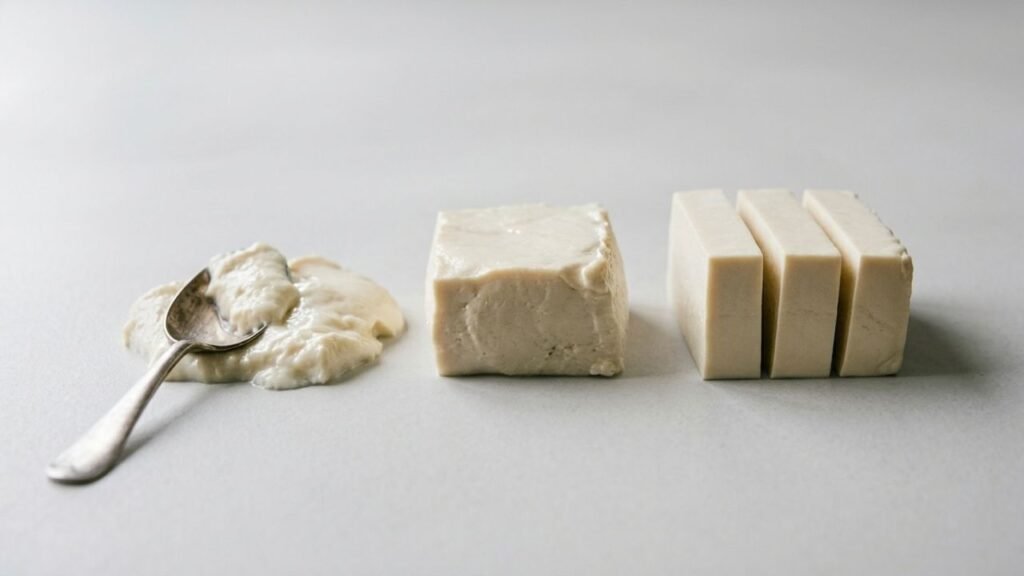
“Silken tofu” sounds like a single standardized product, but different brands can vary more than the name suggests. Some versions are extremely delicate and almost spoonable, while others are firm enough to cut neatly and still retain that smooth texture.
Those differences can come from factors such as soybean concentration, packaging, and the setting agent used. That matters because expecting every package to have the same consistency can lead to disappointment.
The word silken gives you a useful starting point, not a guarantee. When choosing one, the stated texture or firmness can tell you much more about what to expect.
6. Its Fragility Has Been Misread for Years
Silken tofu is often described as difficult simply because it doesn’t behave like the tofu people are used to seeing. That is a slightly unfair judgment. Its delicate nature isn’t a flaw; it is part of what separates it from firmer varieties.
A silk shirt is delicate because of its material, and silken tofu follows the same logic. Its fragile structure produces the smooth mouthfeel that defines it, while also making the block less forgiving to handle.
Once that trade-off is understood, silken tofu becomes much less mysterious. Its softness, fragility, and smoothness are connected, rather than separate qualities that need to be corrected.
7. “Bean Curd” Hides a Much Bigger Family
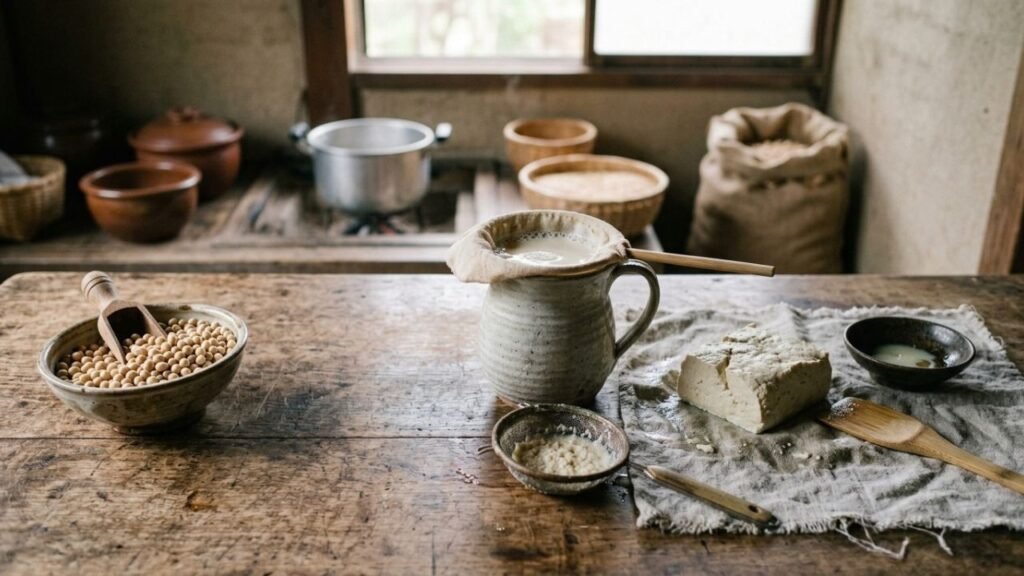
Perhaps the most misleading thing about “bean curd” is how singular the term sounds. Tofu exists in many textures and forms across East Asian food cultures, while Japanese food culture has its own long vocabulary of ingredients, preparations, and regional preferences.
Silken tofu is therefore not the definitive version of tofu. It is one expression of a much larger food tradition, with its own texture and identity.
That distinction matters because tofu is often reduced in Western descriptions to a neutral ingredient or meat substitute. Its history is broader, and its qualities can be appreciated for their own sake, from soybean flavor and freshness to texture and craftsmanship.
Small Details That Make Silken Tofu Easier to Understand
- Look beyond the word “tofu.” The texture matters more than the broad category.
- Don’t confuse delicacy with poor quality. A fragile block can be behaving exactly as intended.
- Expect variation. Different silken tofu can have noticeably different firmness and smoothness.
- Remember the Japanese distinction. Kinugoshi tofu emphasizes the silk-like texture that defines the style.
- Think in terms of texture first. Silken tofu makes more sense when you stop expecting it to imitate firm tofu.
- Check the packaging carefully. Products sold as silken tofu can be substantially different in firmness.
- Keep its cultural identity in view. Tofu has a history and vocabulary beyond the modern idea of plant-based substitution.
The Texture Is the Clue Most People Miss
The easiest way to understand silken bean curd is to stop asking why it is so delicate and notice what that delicacy gives it. Its smoothness, moisture, and tendency to break are all connected to the way this tofu is made.
Even the name kinugoshi points toward the central idea, linking its fine texture to silk. That detail says more about the food than simply calling it “soft tofu.”
Seen this way, silken tofu becomes more than the fragile version of a familiar ingredient. Its texture is not something to overcome; it is the quality that gives it a distinct identity.
FAQs
1. Is silken tofu the same as bean curd?
Silken tofu is a type of tofu, while “bean curd” is another common name for tofu more generally. The terms can overlap, but bean curd does not automatically mean silken tofu.
2. Why is silken tofu so delicate?
Its characteristic texture comes from the way it is set and its relatively high moisture content. It develops a fine, tender structure rather than the denser texture associated with pressed tofu.
3. What is silken tofu called in Japan?
A common Japanese name is kinugoshi tofu, a term associated with its smooth, silk-like texture.
4. Is silken tofu supposed to be watery?
A noticeable amount of moisture is normal. Silken tofu is naturally more delicate and moist than many pressed tofu varieties.
5. Can silken tofu vary in firmness?
Yes. Products can differ considerably in consistency, even when they are all described as silken tofu.
6. Why does silken tofu break so easily?
Its fine, delicate structure provides less physical resistance than pressed tofu. The same quality that makes it fragile is responsible for its smooth texture.
A Better Way to Look at It
Silken bean curd doesn’t need to be defended as a substitute for firmer tofu or treated as something exotic. Its appeal is simpler because it offers a particular texture that other forms of tofu cannot quite reproduce, and that delicacy is central to its identity.
Once that is understood, many common misunderstandings fall away. Silken tofu isn’t trying to be firm tofu, nor should it be judged by the same qualities. It has its own texture, history, and place at the table, which makes it worth understanding on its own terms.