Pickled onions, often called quick-pickled onions, have become a familiar kitchen staple far beyond the cuisines where preserved onions have long been used. Vinegar, salt, sugar, spices, and fermentation have all been used to change the character of onions, making them sharper, brighter, and easier to pair with other foods. Today, the bright pink version is often found alongside tacos, grilled meats, sandwiches, eggs, rice dishes, and salads. The color may catch your eye first, but the real change is in the onion itself. Its raw bite softens while the crunch and fresh acidity remain.
Getting the balance right can be tricky, especially when pickled onions turn out too sharp, too sweet, or too soft. This guide keeps the process simple and helps you avoid those common problems.
Recipe at a Glance
| Stage | Time |
| Prep | 5–10 minutes |
| Pickling liquid | 3–5 minutes |
| Resting before eating | 30 minutes minimum |
| Better flavor | Several hours or overnight |
| Total active time | About 10–15 minutes |
The times above are only a guide. Your slicing speed, stove, preferred onion thickness, and how quickly you want to eat them will change the actual timing. The important part is not chasing an exact minute; it is giving the onions enough time to take on the flavor you want.
What You Need for One Small Jar
- 1 medium red onion
- ½ cup white vinegar
- ½ cup water
- 1 tablespoon sugar
- 1 teaspoon salt
- ½ teaspoon black peppercorns, optional
- 1 small garlic clove, optional
- A clean glass jar or lidded container
Red onion is the usual choice because its color becomes especially striking as it pickles, but the recipe does not depend on that color. White or yellow onions can also work when you want a less vivid appearance and a slightly different onion flavor.
Easy Swaps When the Pantry Is Missing Something
| Ingredient | Possible replacement | What changes |
| White vinegar | Apple cider vinegar | Slightly softer, fruitier acidity |
| Red onion | White or yellow onion | Less pink color and a different onion bite |
| Sugar | Honey | Adds a more rounded sweetness |
| Black peppercorns | Coriander seeds | A warmer, more aromatic flavor |
| Fresh garlic | Garlic powder | Less fresh and pungent, but still adds savory character |
The replacements are mainly about flavor. If you change the vinegar substantially, the result can also change in acidity, so it is better to keep the basic vinegar-and-water balance intact rather than treating every vinegar as interchangeable. For more background on how acidity fits into home food preservation, see the University of Minnesota Extension’s Preserving food at home: Pickling produce.
The Directions
1. Slice the onion
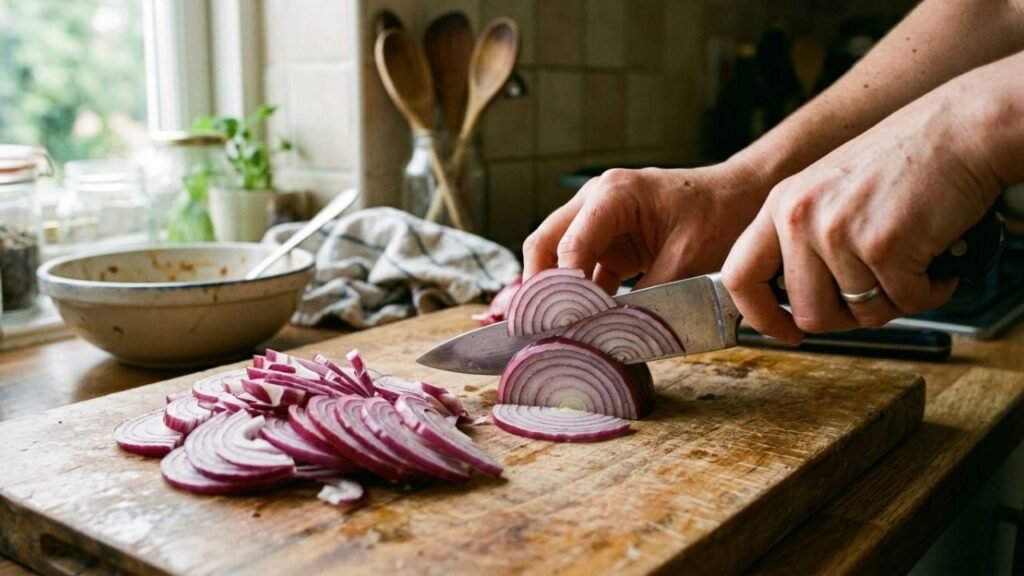
Peel the onion and cut it into thin slices or half-moons. Try to keep the slices reasonably even so they soften at roughly the same rate.
Place the sliced onion into your clean jar.
2. Warm the pickling liquid
Add the vinegar, water, sugar, and salt to a small saucepan. Warm over medium heat, stirring until the sugar and salt dissolve.
You do not need to cook the mixture for a long time. Once everything has dissolved and the liquid is hot, it is ready.
3. Cover the onions
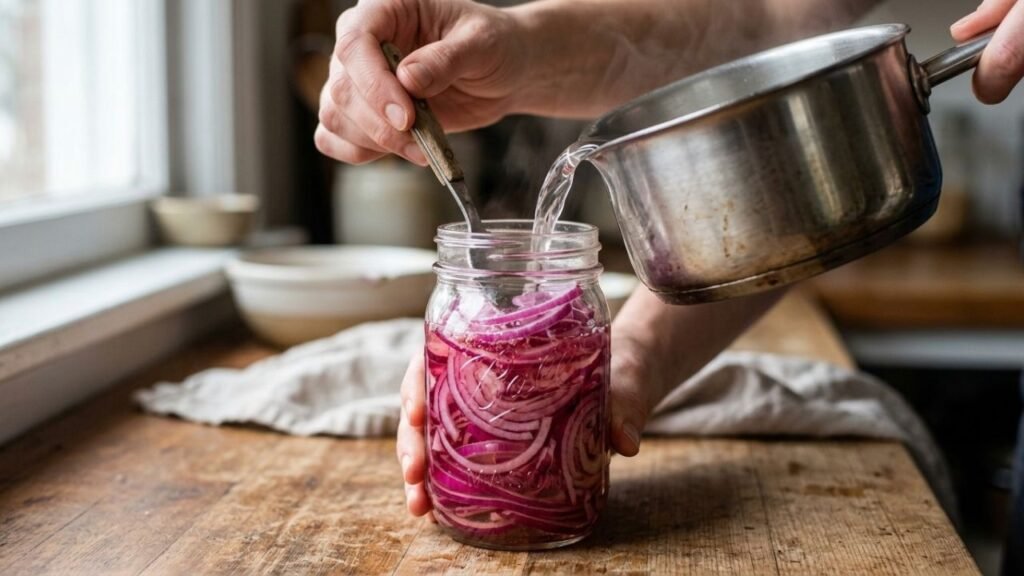
Pour the warm liquid over the onions. Press them down gently with a spoon so that as much onion as possible sits beneath the liquid.
Add the peppercorns or garlic now if you are using them.
4. Let them change
Allow the jar to cool before covering it and placing it in the refrigerator.
You can start eating the onions after about 30 minutes, although several hours will give the flavor more time to settle. Overnight usually gives you a more developed pickle with a softer bite while keeping plenty of crunch.
Where the Pink Onion Earns Its Place
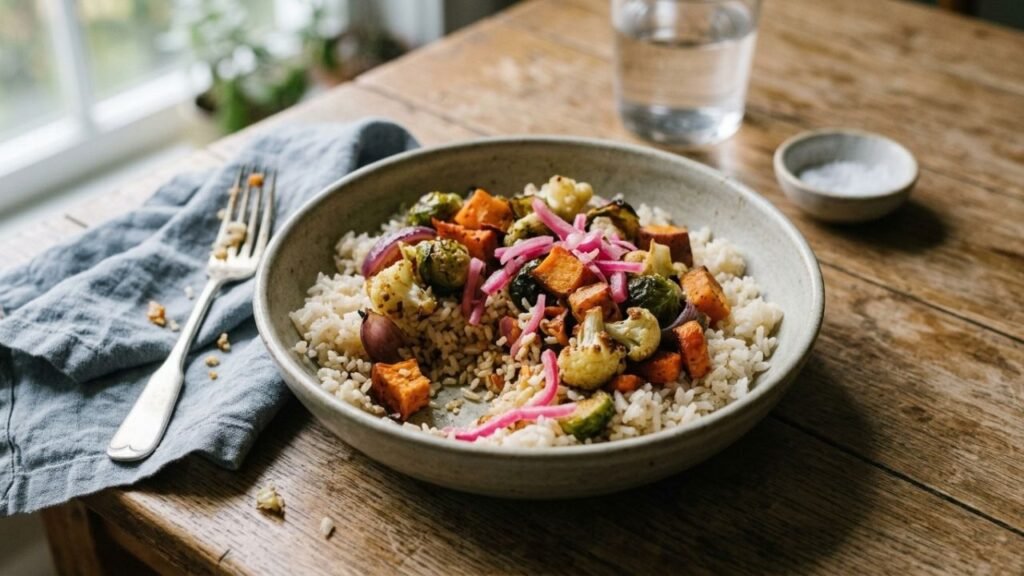
Pickled onions are more than a garnish. Add them to tacos, burgers, grilled chicken, kebabs, fried eggs, avocado toast, rice bowls, roasted vegetables, lentils, chickpeas, or salads. Their acidity works especially well with rich, creamy, oily, or smoky foods, giving the plate a fresher edge.
They also add contrast to soft foods. Creamy eggs, tender meat, rice, and roasted vegetables all benefit from their crisp bite.
Even leftovers can use them. A few slices can bring acidity and crunch to reheated rice, vegetables, or meat without needing another sauce.
Keeping the Jar Fresh
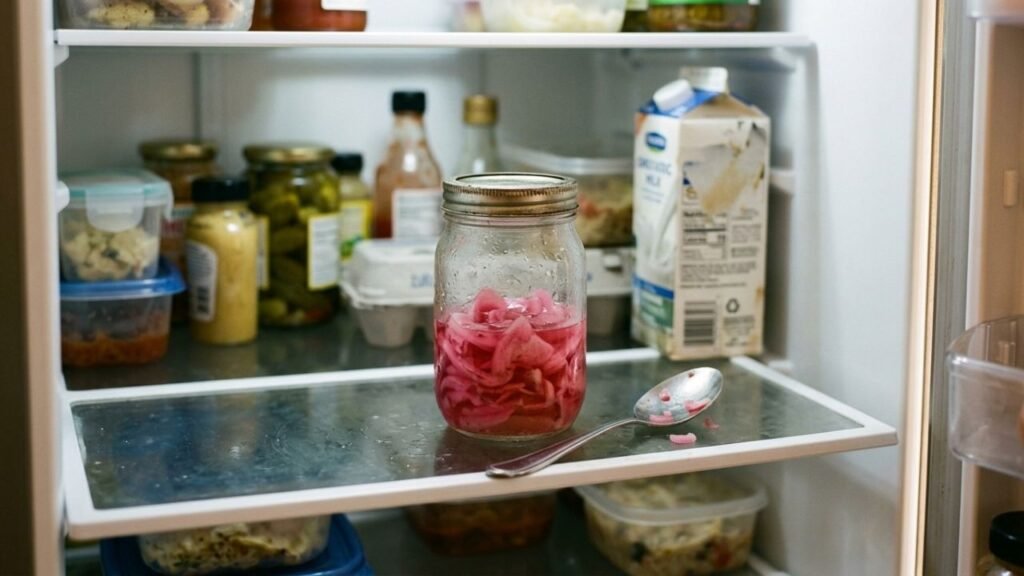
Keep the pickled onions refrigerated in a covered jar, and use a clean utensil whenever you take some out. Keeping the jar chilled helps the onions stay crisp and fresh for longer, while limiting unnecessary contact helps keep the batch in better condition.
How long they remain good depends on how they were prepared, how cold your refrigerator stays, and how often the jar is opened. Check them before using and discard the batch if you notice mold, an unusual smell, or other clear signs of spoilage.
These are refrigerator pickles, so keep them chilled rather than leaving the jar at room temperature.
Small Mistakes That Can Ruin a Good Jar
Cutting the onions too thick
Large pieces take longer to absorb the pickling liquid and can remain aggressively raw in the center.
Adding too much sugar
The sugar should soften the vinegar, not turn the onions into a sweet relish. Start with the amount in the recipe and adjust future batches if you prefer a sweeter result.
Using very little liquid
The onions need enough pickling liquid to become properly coated and immersed. If your jar is tightly packed, gently press the slices down rather than leaving a large dry section at the top.
Eating them immediately
They are technically usable quite quickly, but flavor develops with time. If you have the patience, let the jar sit in the refrigerator for several hours.
Treating the leftover liquid like a permanent ingredient
Once onions have been sitting in the liquid, it has been exposed to the food and should not simply be assumed to be suitable for repeated batches.
A Few Things People Usually Want to Know
1. Can I use white onions instead of red onions?
Yes. The main difference will be appearance and flavor. Red onions give you the familiar bright pink result, while white onions produce a paler pickle.
2. Do I have to boil the vinegar mixture?
No long boil is necessary. The purpose of warming it is mainly to dissolve the sugar and salt and help the liquid combine evenly.
3. How quickly can I eat them?
You can try them after about 30 minutes. For a more developed flavor, give them several hours or leave them overnight.
4. Why did my onions turn pink?
The acidic pickling liquid changes the onion’s natural pigments, which is why red onions can develop that vivid pink or magenta appearance.
5. Can I make them less sour?
You can adjust the balance in your next batch by using a milder vinegar or slightly changing the vinegar-to-water balance. Keep in mind that changing the proportions changes the character of the pickle, so make small adjustments rather than changing everything at once.
6. Can I make them spicy?
Yes. Add sliced fresh chili, chili flakes, or another dried spice you enjoy. Additions like these change the flavor without requiring a completely different method.
The Jar Worth Keeping in the Fridge
Pickled onions are useful precisely because they occupy such a small space in a meal. They are not meant to dominate a dish. A little acidity, a little crunch, and that familiar sharp onion flavor can make everything around them feel more balanced.
Once you make them at home, the jar tends to become less of a recipe and more of a habit. You stop asking what to do with pickled onions and start noticing which meals were missing them.