Taco toppings are often the part people remember without realizing it. Across Mexico, toppings vary with the region and taco style, but onion, cilantro, salsa, lime, avocado, cabbage and pickled vegetables are familiar companions to grilled meat, fish, beans and vegetables. They are not simply decoration; acidity can cut through richness, fresh vegetables can lift a smoky filling, and something crisp can keep a soft taco from becoming one-note.
The problem is knowing which topping will actually improve a taco instead of overwhelming it. This guide shows seven simple combinations that bring the right balance to each bite.
1. Pico de Gallo That Stays Fresh and Chunky
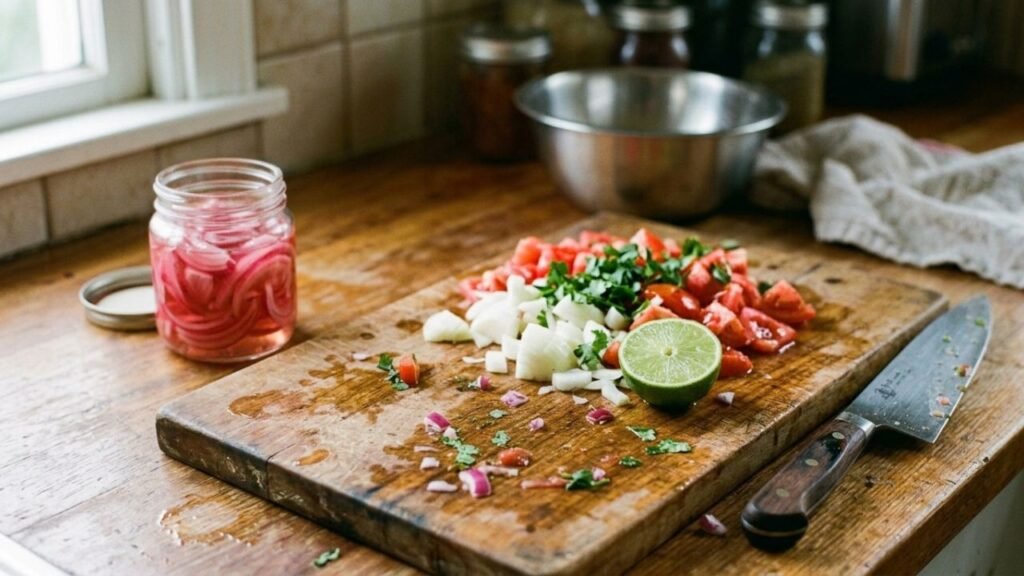
Pico de gallo is the topping to reach for when a taco needs freshness rather than another heavy sauce. Its combination of tomato, onion, chile, cilantro and lime takes only a few minutes to put together.
Ingredients
- 2 medium ripe tomatoes
- ¼ small white or red onion
- 1 small jalapeño
- 2 tablespoons fresh cilantro
- Juice of ½ lime
- ¼ teaspoon salt
Method
Dice the tomatoes and onion into small, similar-sized pieces. Finely chop the jalapeño and cilantro. Mix everything in a bowl, then add the lime juice and salt.
Leave it for about 10 minutes before serving. For a drier pico de gallo, remove some tomato seeds before chopping.
Serve it with grilled chicken, beef, beans or seasoned vegetables.
2. Pink Pickled Onions With a Sharp Edge
Pickled red onions bring acidity to tacos that are rich, salty or smoky. They are also easy to prepare ahead.
What Goes In
- 1 medium red onion
- ½ cup white or apple cider vinegar
- ½ cup water
- 1 teaspoon salt
- 1 tablespoon sugar
How to Make It
Slice the onion into thin rings or half-moons and place them in a clean jar or heatproof bowl.
Stir the vinegar, water, salt and sugar until dissolved. Pour the mixture over the onions, making sure they are mostly submerged.
Leave them for at least 20–30 minutes before using. They become softer and more flavorful if left longer in the refrigerator.
Try them with beef, pork, fried fish or black beans. Their sharpness is useful when the filling is fatty.
3. Guacamole With Enough Texture to Hold Its Own
For tacos, guacamole works best as a simple topping rather than an elaborate side dish. The avocado provides richness and moisture, while lime and onion keep it lively.
For the Topping
- 2 ripe avocados
- ¼ small onion, finely chopped
- Juice of 1 lime
- 1 small jalapeño, finely chopped, optional
- 1 tablespoon chopped cilantro
- Salt to taste
Making the Topping
Scoop the avocado into a bowl and mash it with a fork, leaving some small chunks.
Fold in the onion, cilantro and jalapeño if using. Add the lime juice and salt gradually, tasting as you go.
If the guacamole tastes dull, it usually needs more salt or lime rather than more ingredients. Spoon it over grilled chicken, steak, beans or roasted vegetables.
4. Cabbage Slaw That Brings the Crunch
Cabbage is useful when the rest of the taco is soft. It stays crisp, takes seasoning well and adds texture without making the taco feel heavy.
What to Gather
- 2 cups finely shredded green or red cabbage
- Juice of 1 lime
- 1 tablespoon neutral oil
- 1 tablespoon chopped cilantro
- ¼ teaspoon salt
- 1 tablespoon mayonnaise or sour cream, optional
How to Prepare It
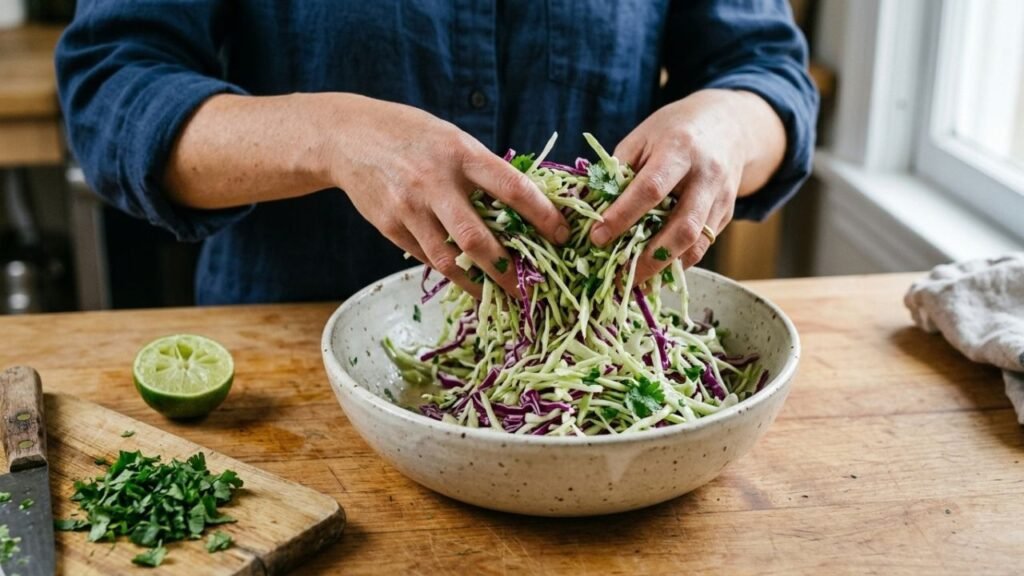
Put the cabbage in a bowl and add the lime juice, oil, cilantro and salt. Toss and let it sit for five minutes.
For a creamy version, stir in the mayonnaise or sour cream.
Do not prepare it too far ahead if you want maximum crunch. It works especially well with fish, chicken, roasted vegetables and bean tacos.
5. Charred Corn With Lime and Chile
Corn becomes more interesting when some of its natural sweetness is replaced by the deeper flavor of browning. Its importance goes well beyond the taco, with the deeper history of maize in Mexican food offering useful context for why corn remains such a central ingredient. In this topping, it is particularly useful for vegetarian tacos, where texture can be harder to create.
What to Have
- 2 cups corn kernels, fresh or frozen
- 1 tablespoon cooking oil
- Juice of ½ lime
- ¼ teaspoon chili powder
- 2 tablespoons chopped cilantro
- Salt to taste
From Bowl to Taco
Heat the oil in a wide skillet over medium-high heat. Add the corn and spread it into an even layer.
Leave it undisturbed for a minute or two rather than stirring constantly. Once several kernels develop dark golden or brown patches, stir and continue cooking until lightly charred.
Remove from the heat and season with lime juice, chili powder, cilantro and salt.
Serve warm or at room temperature with black beans, chicken, roasted peppers or vegetable fillings.
6. Roasted Tomato Salsa With Smoky Depth
Fresh salsa gives brightness, but roasting the vegetables first creates a darker flavor. It works particularly well when the taco itself has been grilled or roasted.
You’ll Need
- 3 medium tomatoes
- 1 jalapeño
- ¼ small onion
- 1 garlic clove
- Juice of ½ lime
- Salt to taste
- Small handful of cilantro
Putting It Together
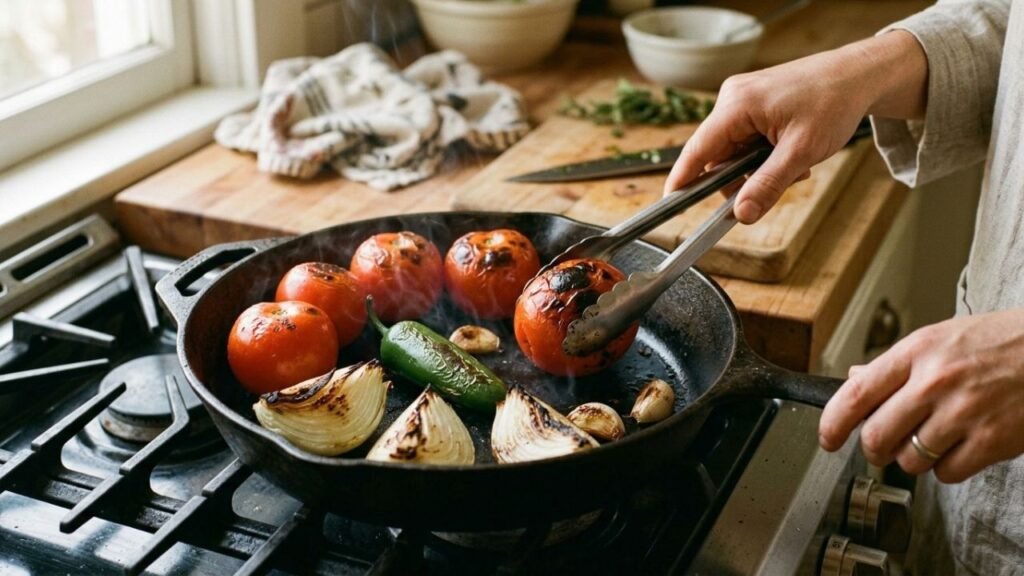
Heat a dry skillet over medium-high heat. Add the tomatoes, jalapeño, onion and garlic.
Turn the vegetables occasionally until they develop darkened spots and soften. Remove the garlic earlier if it begins to burn.
Let everything cool slightly, then blend or finely chop the vegetables. Add lime juice, salt and cilantro.
Keep the salsa slightly chunky if the taco filling is soft. A smoother salsa works when you want something easy to drizzle.
7. Lime Crema for a Cooler Finish
Some taco fillings do not need more heat or acidity. They need something cool and creamy to bring everything together.
The Ingredients
- ½ cup sour cream
- Juice of ½ lime
- ¼ teaspoon salt
- 1–2 teaspoons water
- 1 tablespoon chopped cilantro, optional
The Simple Method
Stir the sour cream, lime juice and salt together. Add water a teaspoon at a time until it becomes loose enough to drizzle.
Taste before serving. If it feels too rich, add another small squeeze of lime.
Drizzle it over spicy chicken, roasted vegetables, seasoned beans or grilled meat. A small amount is usually enough.
Matching the Topping to the Filling
The easiest way to avoid a disappointing taco is to choose the topping according to what the filling lacks.
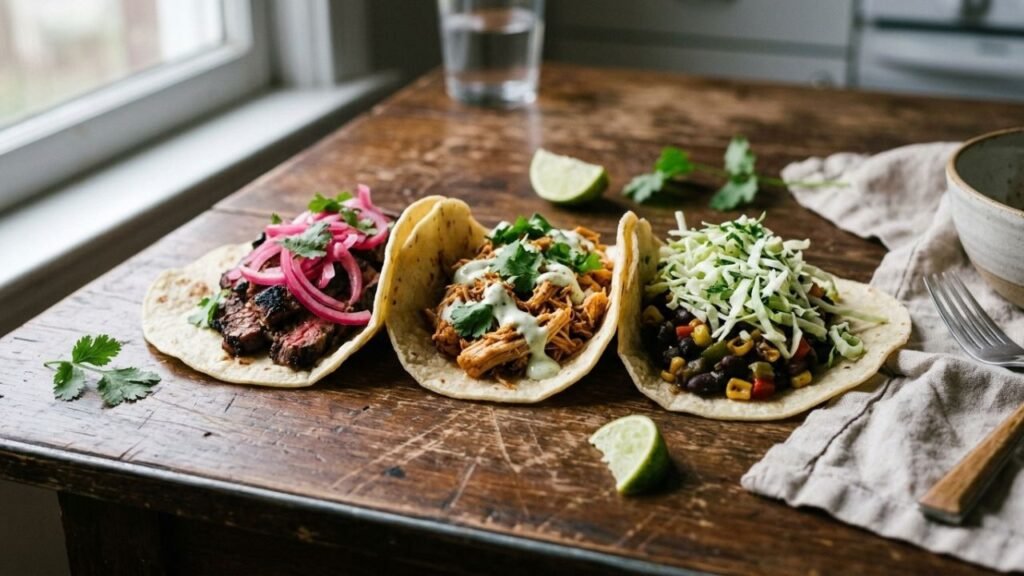
Rich beef or pork benefits from something sharp and fresh, which is where pickled onions or pico de gallo earn their place.
Spicy chicken calls for a gentler counterpoint. Lime crema cools the heat, while guacamole adds richness without competing with the seasoning.
With fish tacos, cabbage slaw brings the crunch, while pico de gallo adds the brightness that lighter fillings often need.
Beans can take on toppings with more texture and depth. Charred corn, cabbage and roasted salsa all give them another layer of character.
Roasted vegetables are especially good with something creamy or acidic. Guacamole, pickled onions and lime crema each add moisture while keeping the vegetables from tasting too heavy.
There is no need to fit all seven toppings onto one taco. Two or three that complement the filling will usually make more sense than a pile of competing flavors.
Small Decisions That Make the Difference
Fresh toppings benefit from being cut shortly before serving. Keep tomatoes chunky, slice cabbage thinly, and add lime gradually.
With cooked toppings, browning is often more valuable than extra seasoning. Corn needs contact with a hot pan, while tomatoes need time to char. Those browned edges create flavors that another spice cannot replace.
Season each topping separately. A bright salsa, fresh cabbage and cool crema should taste distinct rather than identical.
FAQs About Taco Toppings
1. Can taco toppings be prepared ahead?
Some can. Pickled onions can be made several days ahead, while cabbage slaw can usually be prepared earlier the same day. Guacamole and fresh tomato salsa are best made closer to serving.
2. How many toppings should go on one taco?
Two or three is a good starting point. Choose toppings that provide different qualities, such as one fresh or acidic topping and one creamy or crunchy topping.
3. What can replace cilantro?
If you dislike cilantro, simply leave it out. Fresh parsley can provide some herbal freshness, although the flavor will be different.
4. How do I stop toppings from making tortillas soggy?
Drain watery salsas before serving and avoid adding large amounts of wet toppings. Add very wet toppings shortly before eating.
5. Which topping is easiest for beginners?
Pico de gallo is probably the simplest. There is no complicated technique, and the balance can be adjusted easily with more lime, salt or chile.
The Best Topping Is the One the Taco Needs
Homemade taco toppings do not have to become another elaborate cooking project. Look at the filling first. If it is rich, bring acidity. If it is soft, add crunch. If it is spicy, introduce something cool. If it tastes flat, reach for freshness or char rather than simply adding more salt.
That approach makes these seven toppings more than a collection of recipes. They become a way to build a taco with intention, using ordinary ingredients to give each bite more contrast and character.