Steamed dumplings are one of those foods that can look deceptively simple. A small parcel of dough wrapped around a savory filling, usually served hot with something salty, sour, spicy, or all three. Across Chinese cooking, dumplings appear in many forms, from jiaozi to delicate steamed xiaolongbao, while similar filled doughs have found their own traditions throughout Asia. What most people recognize, however, is the pleasure of biting through a soft wrapper into a warm, juicy center, then dipping it into a sauce that brings the whole thing into sharper focus.
The real problem is keeping dumplings tender without soggy wrappers, loose filling, or an overpowering sauce. This recipe shows you how to keep each part in balance.
A little time before the steamer
| Stage | Approximate Time |
| Preparation | 25 minutes |
| Cooking | 10-12 minutes |
| Total | about 35-40 minutes |
| Yield | About 30 Dumplings |
These are useful working times rather than promises. Your actual prep and cooking time can be shorter or longer depending on how quickly you chop, fill, fold, and steam, so use the timings as a guide rather than a deadline.
What goes into the dumplings
For the filling
- 450 g ground pork
- 1½ cups finely chopped cabbage
- 3 scallions, finely sliced
- 2 garlic cloves, minced
- 1 tablespoon fresh ginger, grated
- 2 tablespoons soy sauce
- 1 tablespoon sesame oil
- 1 tablespoon rice vinegar
- ½ teaspoon sugar
- ¼ teaspoon black pepper
What Holds It All Together
- 30 round dumpling wrappers
- A small bowl of water for sealing
- Cabbage leaves or perforated parchment for the steamer
The Sauce That Brings It Together
- 3 tablespoons soy sauce
- 2 tablespoons rice vinegar
- 1 teaspoon sesame oil
- 1 teaspoon chili oil or chili crisp
- 1 teaspoon honey or sugar
- 1 small garlic clove, finely grated
- 1 scallion, thinly sliced
- 1 teaspoon sesame seeds, optional
A few ingredients have easy stand-ins
You don’t need to stop making the recipe because one less-common ingredient is missing. Some substitutions change the character of the dumplings slightly, but they can still work well.
| Ingredient | Possible replacement | What changes |
| Rice vinegar | White vinegar + a small pinch of sugar | Slightly sharper acidity |
| Sesame oil | Neutral oil | Less toasted, nutty flavor |
| Chili crisp | Chili oil or crushed red pepper | Different texture and heat |
| Fresh ginger | ½ teaspoon ground ginger | Less fresh and aromatic |
| Pork | Ground chicken or turkey | A lighter, leaner filling |
| Dumpling wrappers | Gyoza wrappers | Very similar result |
Build the filling before you think about folding
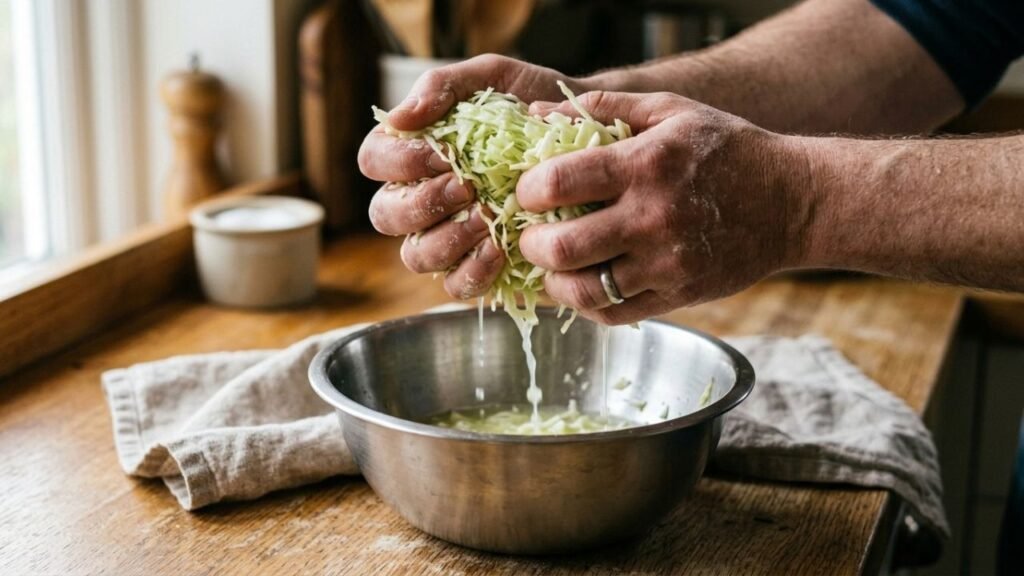
Finely chop the cabbage and toss it with a small pinch of salt. Leave it for about 10 minutes, then squeeze out as much excess liquid as you comfortably can.
This prevents one of the more annoying dumpling problems. Excess water collects inside the filling and makes the wrappers harder to handle.
Add the cabbage to the pork along with the scallions, garlic, ginger, soy sauce, sesame oil, rice vinegar, sugar, and black pepper. Mix until everything is evenly combined and the mixture feels cohesive.
Don’t spend too much time trying to make the filling perfectly smooth. A little variation in texture is part of what makes a homemade dumpling feel homemade.
The fold does not need to be perfect
Place a wrapper in your hand and put roughly 1 tablespoon of filling in its center. Resist the temptation to add more. An overfilled dumpling becomes difficult to close and more likely to split while steaming.
Moisten the outer edge of the wrapper with water, fold it over the filling, and press firmly to seal. You can make simple half-moon dumplings or add a few pleats along one edge.
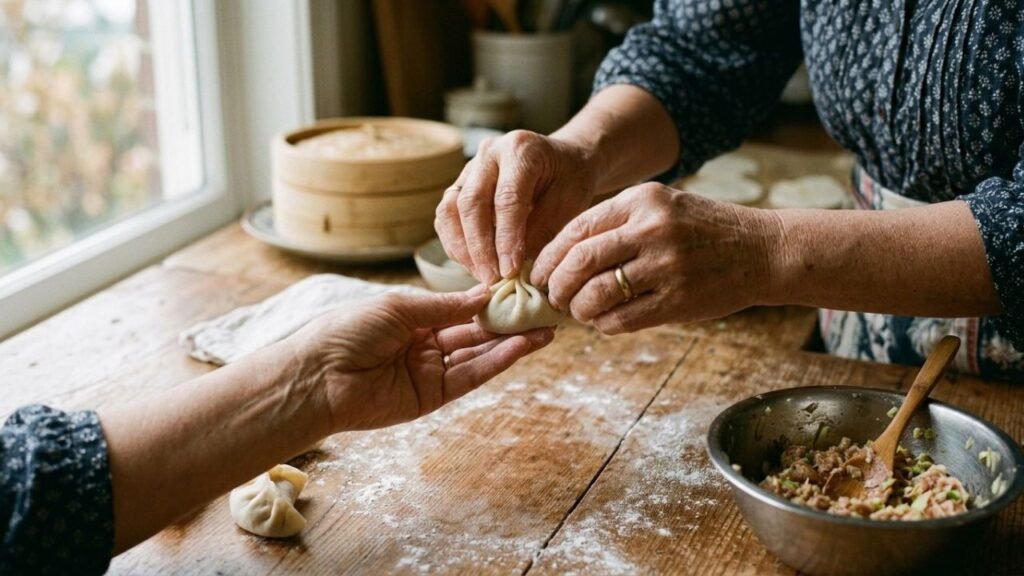
The important part is the seal, not the decoration.
Keep the finished dumplings covered with a clean, slightly damp towel while you continue working. Exposed wrappers can dry out quickly.
Let steam do the quiet work
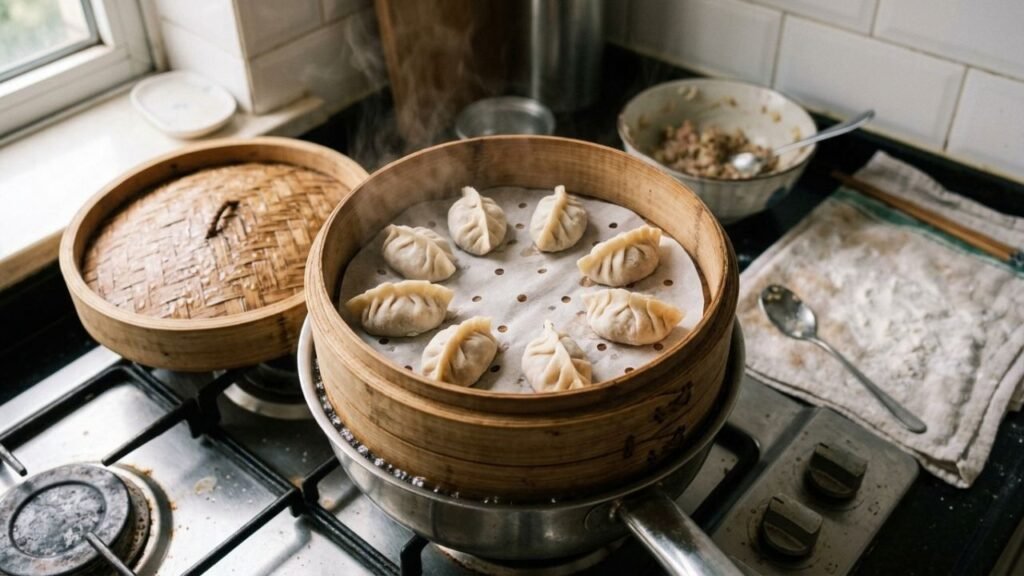
Prepare your steamer by lining the surface with perforated parchment or cabbage leaves. Arrange the dumplings with a little room between them so they don’t stick together.
Bring the water underneath to a steady simmer, place the steamer on top, and cover. Steam for around 10–12 minutes, depending on the size of the dumplings. For a more precise check when using ground pork, you can also follow the USDA’s guidance on safe ground-meat temperatures.
Try not to keep lifting the lid to check them. Escaping steam changes the cooking environment and can make the timing less predictable.
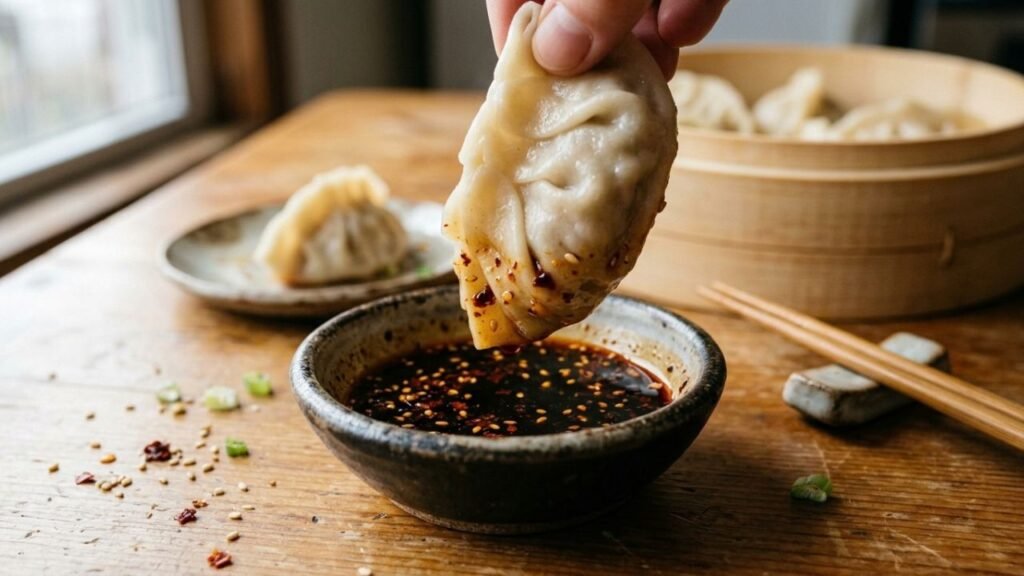
While the dumplings cook, stir together the soy sauce, rice vinegar, sesame oil, chili oil, honey, garlic, scallion, and sesame seeds. Taste the sauce and adjust it to your preference. More vinegar will make it sharper, extra honey or sugar will soften the edges.
Give the sauce some room
Serve the dumplings immediately while the wrappers are still soft and warm. Put the dipping sauce in small individual bowls or one shared dish.
A little sliced scallion, sesame seed, or chili oil over the top is enough if you want some color. There is no need to cover the dumplings with garnish.
For a fuller meal, serve them with steamed greens, cucumber salad, stir-fried vegetables, or a simple bowl of rice.
If you have leftovers
Cooked dumplings can be kept in the refrigerator and reheated when you want them again. As a practical guide, many people prefer to use them within 2–3 days, but how long they remain enjoyable depends on how quickly they were cooled, how they were stored, and the conditions of your refrigerator.
For reheating, steaming is usually a gentler choice because it helps prevent the wrappers from becoming excessively dry. You can also warm them in a covered pan with a small splash of water.
If you freeze uncooked dumplings, arrange them separately on a tray first so they don’t freeze into one solid mass. Once firm, transfer them to a freezer-safe container or bag.
Small mistakes that change the result
The filling is too wet.
Cabbage can release a surprising amount of liquid. Squeezing it before mixing helps keep the filling manageable.
The wrappers keep tearing.
They may have dried out. Keep unused wrappers covered and avoid stretching them around an overfilled center.
The dumplings open during steaming.
Usually, the edge wasn’t sealed firmly enough or there was too much filling. Press the seam together carefully before steaming.
The bottoms stick to the steamer.
Use perforated parchment, cabbage leaves, or a lightly prepared steaming surface. Leave some space between dumplings.
The sauce tastes too salty.
Add a little more rice vinegar rather than simply adding water. The acidity can bring the sauce back into balance without making it taste flat.
The dumplings taste heavy.
The filling may need more freshness and acidity. Scallion, ginger, cabbage, and a sharper dipping sauce can make a rich filling feel lighter.
FAQs
1. Can I use chicken instead of pork?
Yes. Ground chicken works well, although the filling may be leaner. A little extra sesame oil can help keep the texture pleasant.
2. Can I make the dumplings ahead?
Yes. You can assemble them ahead and keep them covered in the refrigerator for a short period before steaming. If making them considerably earlier, freezing is usually more practical.
3. Why does my dipping sauce taste too strong?
Soy sauce varies in saltiness, while different vinegars have different levels of sharpness. Start with the basic proportions, taste, and adjust gradually.
4. Can I freeze homemade dumplings?
Yes. Freeze uncooked dumplings separately first, then transfer them to a freezer-safe container. They can be steamed from frozen, although they may need a little additional cooking time.
5. Do I need a bamboo steamer?
No. A metal or other suitable steamer can work perfectly well. The important thing is keeping the dumplings above the water while allowing steam to circulate.
The small details are what make them work
A good steamed dumpling doesn’t depend on elaborate folds or a long ingredient list. The more important details happen quietly, cabbage with its excess moisture removed, a filling that isn’t packed too tightly, a wrapper that stays supple, enough space in the steamer, and a sauce that brings acidity and heat without burying the filling.
Once those details become familiar, the recipe becomes easier to make your own. You can change the meat, adjust the heat, add different vegetables, or make the sauce brighter or sweeter. The basic idea stays the same, a soft wrapper, a well-balanced center, and something on the side that makes you want another bite.