Bratwurst, usually called a “brat,” is one of the sausages most closely associated with German food culture. The name covers more than one style, and sausages sold today can differ in size, seasoning, texture, and processing. Some are fresh and uncooked, while others are already cooked. On the outside, however, that difference is not always obvious. Both can look like ordinary plump sausage links, which is why they are often treated as though they were the same thing.
The problem is knowing how long a bratwurst actually needs, especially when fresh and precooked links can look nearly identical. This article clears up that difference.
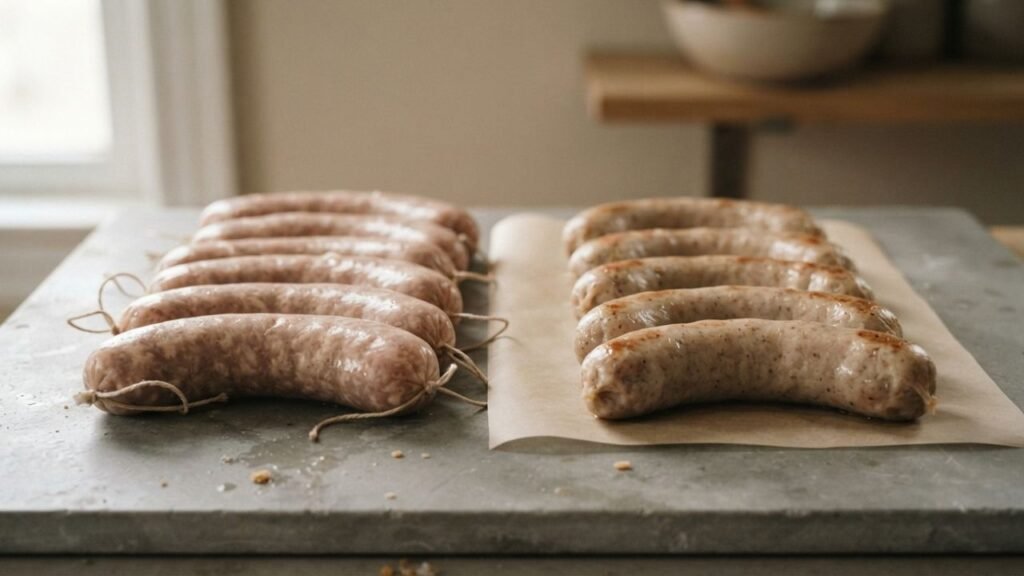
Fresh Bratwurst Needs More Than Browning
Fresh bratwurst is uncooked, so heat has to do more than simply brown the casing. Because the outside is exposed directly to the heat while the center is surrounded by meat and fat, the surface can become nicely browned well before the middle is properly cooked. That is the part that makes fresh bratwurst easy to misread. What looks finished from the outside may still need more time inside.
Color, then, is only part of the picture. Browning tells you that the surface has changed, but it cannot tell you whether the center is ready. For fresh sausage made from pork, beef, lamb, or veal, the commonly used safe internal temperature is 160°F (71°C), a point also covered in the USDA’s guidance on food thermometers and internal temperature.
A thermometer is useful because it checks the part of the sausage you cannot see. Inserted into the thickest section, it gives a much clearer indication of what is happening inside than the casing’s color.
Heat also affects texture. Too much heat too quickly can split the casing and let some fat and moisture escape. The aim is a properly cooked center and a browned exterior, not simply the darkest sausage on the grill.
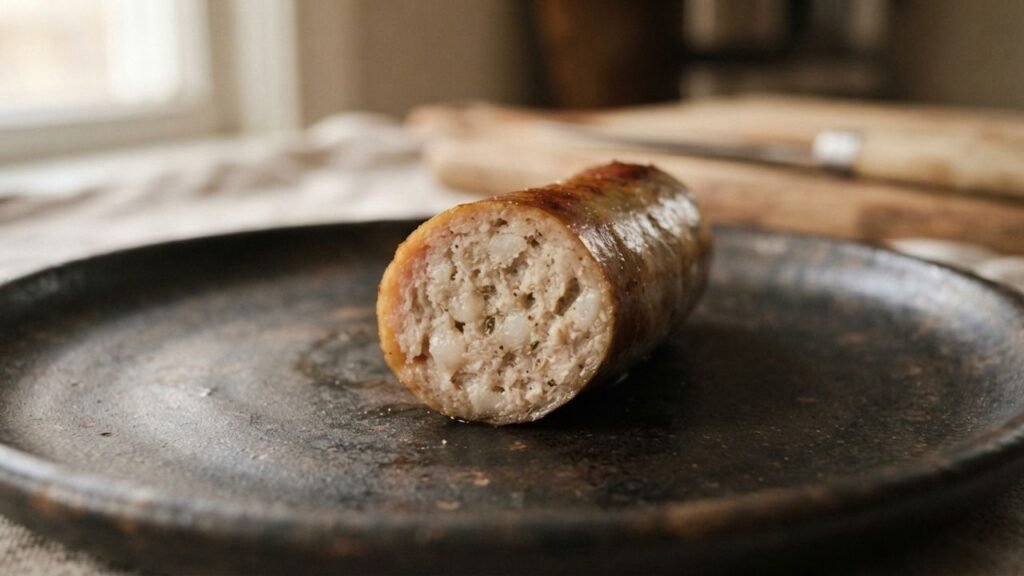
Precooked Bratwurst Starts With an Advantage
A precooked bratwurst arrives in the kitchen with one important stage already behind it. The sausage has been cooked before it reaches you. That changes the purpose of heating it. Unlike a fresh brat, you are not starting with raw meat that needs to be cooked through. You are warming an already cooked sausage and, if you want, giving the casing some extra color.
This is where using the same approach for every brat can work against you. A precooked link does not need to remain over heat simply until it looks as browned as a fresh one. Leaving it there too long can dry the interior, toughen the casing, or cause it to split.
Heating and browning are also separate things. A precooked brat can be warmed without excessive surface heat, which gives you more control over its final texture.
The label remains important because “bratwurst” alone does not tell you how a particular product was processed. Knowing whether you have a fresh or precooked link should come before deciding how to treat it.
Why the Casing Matters
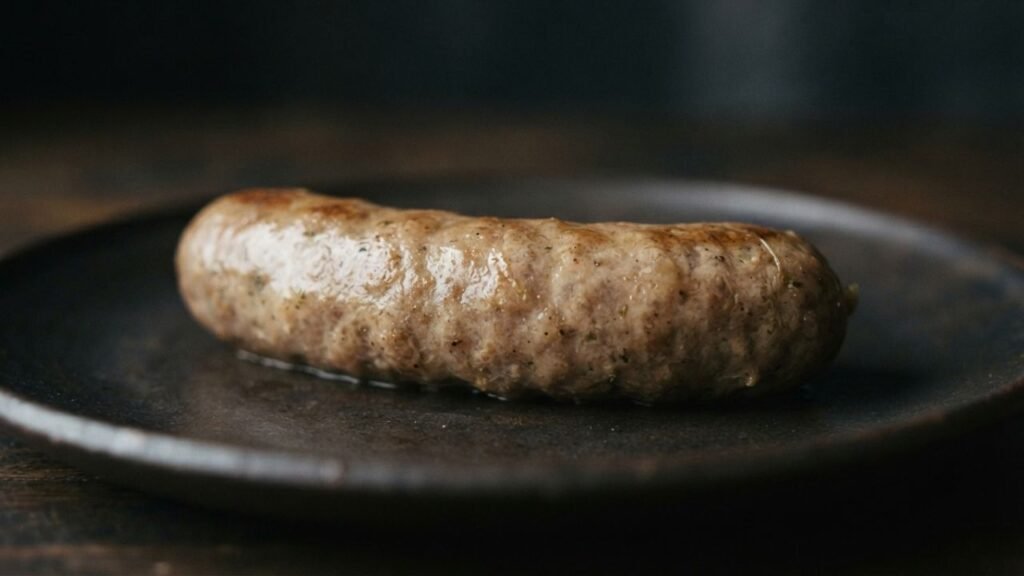
The casing is more than a simple covering. It holds the filling together and helps keep the fat and moisture inside, both of which contribute to the bratwurst’s texture. That thin outer layer also takes most of the heat first, so its condition can tell you something about how aggressively the sausage is being heated.
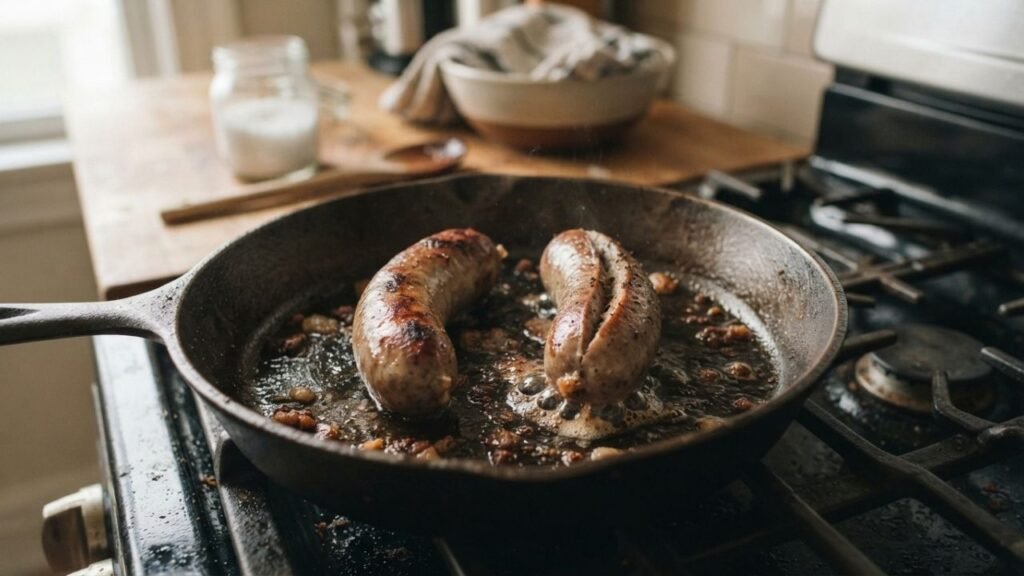
When the casing splits, some moisture and fat can escape, leaving the brat less juicy. A split sausage is not ruined, but it can affect the final texture.
A deeply browned exterior is not necessarily better. The aim is enough color for texture and flavor while keeping the casing intact and the filling moist.
Piercing the Sausage
Piercing a bratwurst with a fork may seem harmless, but the opening can let more than steam escape. Fat and moisture can leak out, taking some of the richness and tenderness with them.
It is also a poor way to judge whether the center is properly cooked. For fresh bratwurst, a thermometer gives a much clearer answer without damaging the casing. With precooked bratwurst, there is even less reason to puncture it just to check whether it has warmed through.
Keeping the casing intact helps the sausage retain more of what makes it juicy and flavorful.
Finding the Right Heat
The right heat depends on whether the bratwurst is fresh or precooked. Fresh bratwurst needs enough time for heat to reach the center, so if the casing is darkening quickly, the outside is moving faster than the inside. Precooked bratwurst has already been cooked, giving you more room to focus on even warming and the amount of browning you want.
Timing is useful, but it is not exact. A sausage’s thickness, starting temperature, position, and distance from the heat can all change how quickly it warms.
Two brats can sit beside each other and still finish differently. For fresh links, internal temperature is a more dependable guide than time or appearance alone.
Why Size Affects Cooking
The thickness of a bratwurst affects how quickly heat reaches the center. A thin link has less distance to travel, while a thicker one can brown on the outside while the middle is still warming.
That is why two sausages can spend the same amount of time over the same heat and still reach different internal temperatures. Position matters, too, one link may sit closer to a hotter area than another.
For fresh bratwurst, checking the center removes much of the guesswork. With precooked bratwurst, size still affects heating time, but the sausage has already been cooked.
The Label Tells You Where to Start
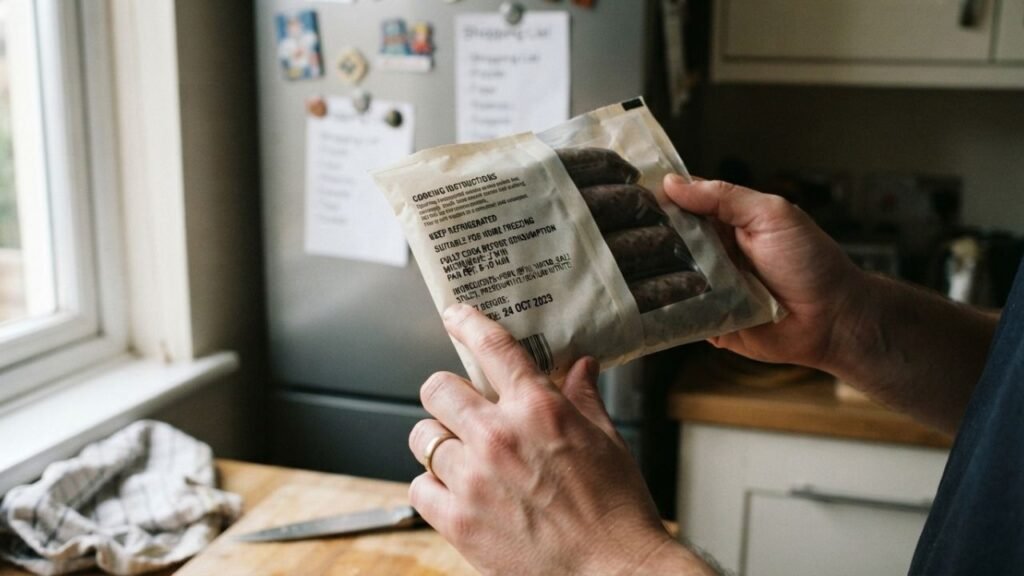
The most useful bratwurst habit may happen before it ever touches the heat, read the label. Words such as “fresh,” “uncooked,” “fully cooked,” “smoked,” or “ready to eat” tell you more than appearance does. A pale casing does not necessarily mean raw, just as a browned casing does not prove that the sausage is fully cooked.
Bratwurst products can be processed differently even when they look nearly identical. Once you know what you have, the approach becomes clearer. Fresh bratwurst needs attention to its center, while precooked bratwurst starts with the cooking already done and needs to be heated without losing its texture.
FAQs
1. Is fresh bratwurst raw?
Yes. Fresh bratwurst is uncooked and needs to be properly cooked before eating.
2. Is precooked bratwurst already cooked?
Yes. A product labeled precooked or fully cooked has already undergone its cooking stage before sale.
3. Can you overcook a precooked bratwurst?
Yes. It can become dry, tough, or develop a split casing when exposed to excessive heat.
4. Why does bratwurst sometimes split?
Strong or uneven heat can cause the casing to break, allowing some of the fat and moisture inside to escape.
5. Is a thermometer useful for fresh bratwurst?
Yes. It gives you a clearer indication of internal temperature than relying on color.
6. Does the size of the brat affect cooking?
Yes. A thicker sausage generally takes longer for heat to reach the center.
Closing
Fresh and precooked bratwurst may look almost identical in the package, but they do not begin from the same point. Fresh bratwurst still needs to be cooked through, while precooked bratwurst has already gone through that stage and mainly needs to be heated without being pushed too far. That difference affects how you judge browning, heat, timing, and texture.
Once you know which type you have, the rest becomes much easier to judge. The label tells you where the sausage starts, while the casing, its thickness, and the way it responds to heat can help you understand what is happening as it warms. Knowing that difference is what keeps a simple bratwurst from being treated like something it isn’t.