Swedish pancakes, known in Sweden as pannkakor, are thin, soft pancakes traditionally served with lingonberry jam and sometimes whipped cream. This Swedish pancake recipe brings a taste of traditional Swedish home cooking to your kitchen. Although they resemble French crêpes, pannkakor have their own place in Swedish food culture. For generations, they have been enjoyed as a comforting meal, often following Thursday pea soup. Their delicate texture and simple, homely appeal set them apart from the thick, fluffy pancakes commonly associated with American breakfasts.
Getting Swedish pancakes thin and tender without tearing them can be tricky, especially when the batter or pan temperature is wrong. This recipe helps you get them right.
Swedish Pancakes at a Glance
| Preparation detail | Time or amount |
| Preparation time | 10 minutes |
| Batter resting time | 15–30 minutes |
| Cooking time | 20 minutes |
| Total time | Approximately 45–60 minutes |
| Servings | 4 people |
| Yield | About 8–10 pancakes |
| Cooking method | Pan-frying |
These times are estimates for a typical home kitchen. Your actual preparation and cooking time will depend on your experience, pan size, stove temperature and how many pancakes you cook at once.
Ingredients for Thin, Tender Pannkakor
- 2 large eggs
- 2 cups (480 ml) whole milk
- 1 cup (125 g) all-purpose flour
- 2 tablespoons (28 g) unsalted butter, melted
- ¼ teaspoon salt
- 1 teaspoon sugar (optional)
- Extra butter for greasing the pan
Ingredient Substitutions That Still Work
| Ingredient | Possible replacement | What to expect |
| Whole milk | 2% milk | The pancakes may be slightly less rich. |
| All-purpose flour | Plain flour | These are the same type of flour in common US and UK terminology. |
| Unsalted butter | Salted butter | Reduce or omit the added salt to suit your taste. |
| Lingonberry jam for serving | Cranberry or raspberry preserves | Both offer a fruity, tart contrast. |
For the most familiar texture, whole milk and all-purpose flour are reliable choices. Alternative ingredients can work, but changes to the flour or liquid may affect how easily the batter spreads.
Directions for Smooth Batter and Golden Edges
The important details are the consistency of the batter, the temperature of the pan and the moment you turn each pancake. Keep the heat moderate, and let the first pancake help you judge whether anything needs adjusting.
1. Whisk the Eggs and Milk
Crack the eggs into a large mixing bowl and whisk until blended. Add about half the milk and whisk again.
Gradually add the flour and salt, stirring until the mixture becomes smooth. Pour in the remaining milk and melted butter, then whisk until combined. Add the optional sugar if you prefer a slightly sweeter flavour.
2. Let the Batter Rest
Leave the batter to rest for 15–30 minutes at room temperature. This gives the flour time to absorb the liquid and helps the batter settle after mixing.
The mixture should be noticeably thinner than American pancake batter. If it looks thick enough to hold its shape in the bowl, add a little milk and mix again.
3. Prepare the Pan
Heat a non-stick frying pan or well-seasoned skillet over medium heat. Add a small amount of butter and allow it to melt across the cooking surface.
Avoid letting the butter turn dark brown before adding the batter. If the pan is excessively hot, the pancake may colour too quickly before it has cooked properly.
4. Pour and Spread the Batter
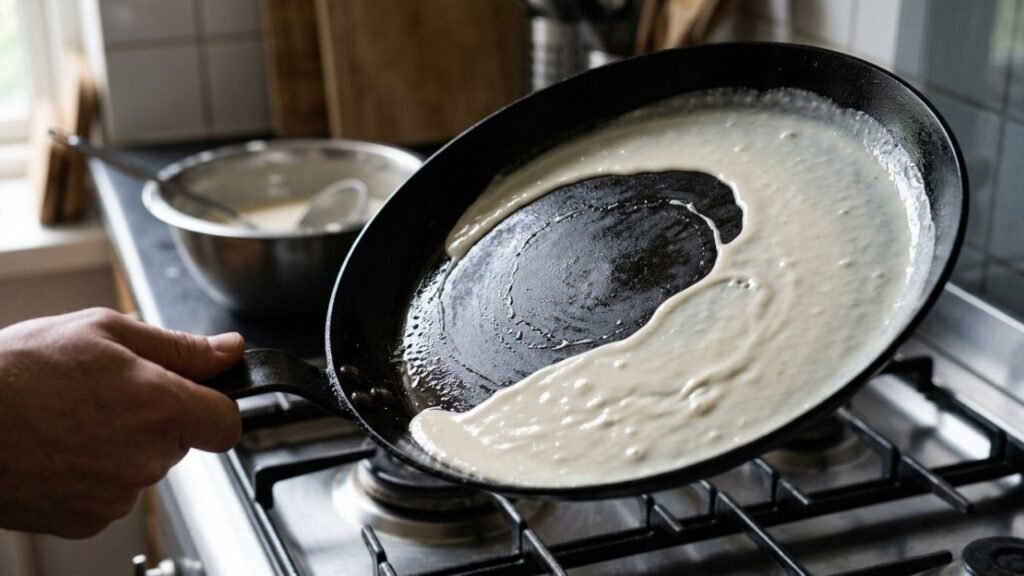
Pour a small ladleful of batter into the centre of the pan. Immediately lift and tilt the pan in a circular motion so the mixture spreads into a thin, even layer.
Use enough batter to cover the base without creating a thick pancake. The exact quantity will depend on the diameter of your pan.
5. Cook Until Lightly Golden
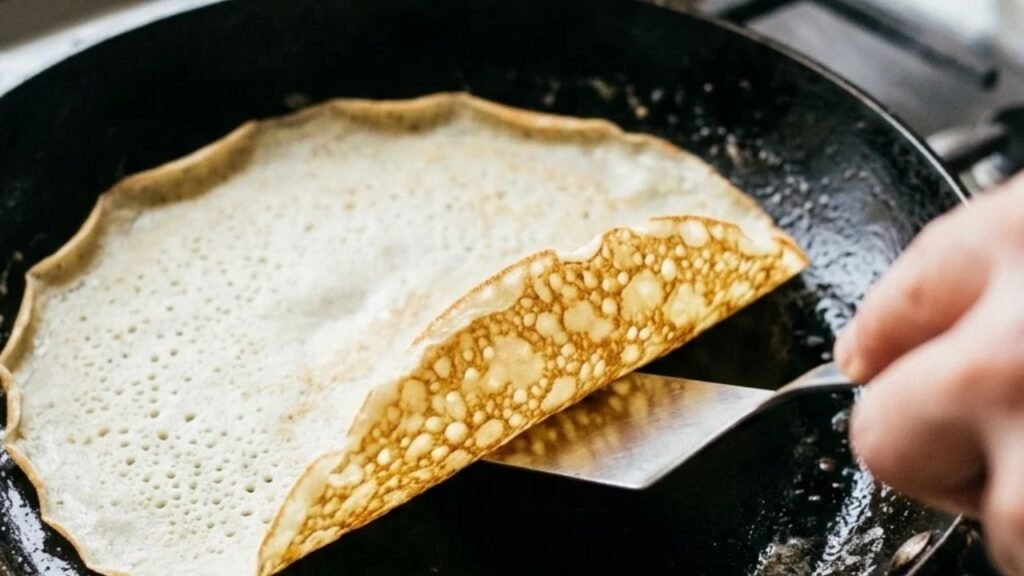
Cook for approximately 1–2 minutes, or until the edges begin to look dry and the underside is lightly golden. Slide a thin spatula underneath and turn the pancake carefully.
Cook the other side for another 30–60 seconds, then transfer it to a plate. Repeat with the remaining batter, adding a little butter when needed.
If the first pancake tears, give the next one a little longer before flipping or adjust the heat. Small changes often make the remaining batch easier to handle.
Serving Ideas Beyond the Familiar Jam
Lingonberry jam is the classic accompaniment to Swedish pancakes, bringing a sharp, fruity flavour that balances their buttery richness. Its natural tartness keeps the pancakes from tasting overly sweet and makes this traditional pairing particularly satisfying for breakfast or dessert.
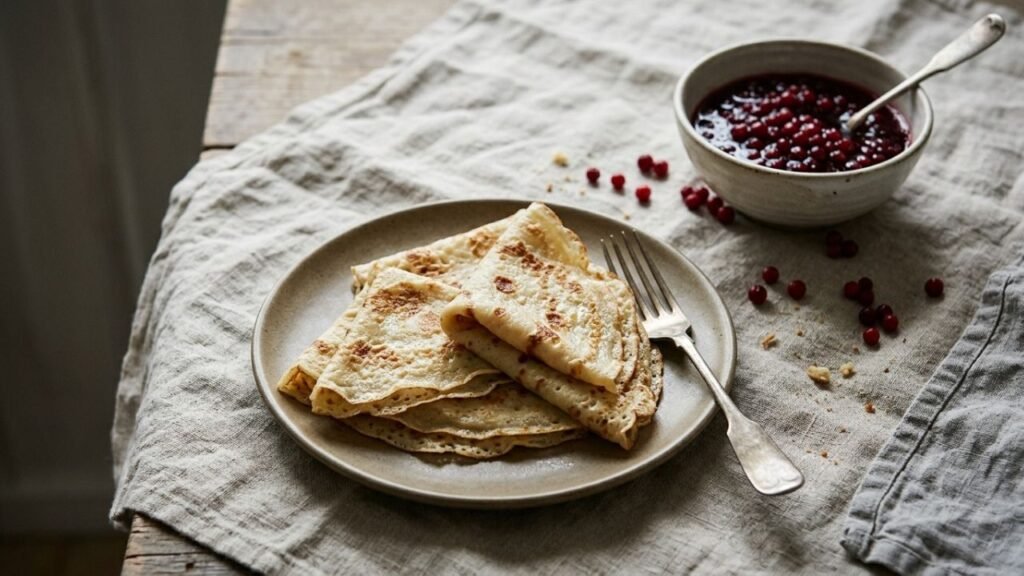
If lingonberries are difficult to find, cranberry or raspberry preserves make good alternatives. Fresh strawberries, blueberries and raspberries also work well, especially when served with a spoonful of whipped cream or a light dusting of sugar.
For a lighter option, try plain yoghurt or a squeeze of lemon juice. Savoury toppings such as smoked salmon, sautéed mushrooms and fresh herbs offer another variation without added sugar.
Keeping Leftovers Fresh and Reheating Them
Cooked Swedish pancakes are easy to keep for another meal. Let them cool completely, stack them with baking paper between each layer, and place them in an airtight container before refrigerating to help prevent sticking.
When refrigerated promptly at 4°C (40°F) or below, Swedish pancakes can generally be kept for 2–3 days, depending on how they are handled and stored. For further guidance on safe food storage and refrigeration, follow established food-safety practices and discard leftovers that show signs of spoilage.
To reheat, warm the pancakes in a lightly buttered skillet over medium-low heat or use a microwave for convenience. You can also freeze them between baking paper for up to two months for best quality.
Common Mistakes That Affect the Texture
Making the batter too thick. Too much flour makes the pancakes harder to spread and can leave them heavy. Measure the flour carefully and adjust with a little milk if necessary.
Cooking over excessive heat. A very hot pan browns the underside too quickly. Medium heat gives the centre enough time to cook while the surface develops a light golden colour.
Flipping too early. If the pancake has not set, it may tear when lifted. Wait until the edges look dry and the underside releases from the pan.
Using too much butter. A light coating helps prevent sticking, but excess butter can create uneven browning. Add small amounts as you cook.
Skipping the resting time. Resting is not essential for every pancake recipe, but it helps this thin batter become more uniform and easier to work with.
Frequently Asked Questions
1. Are Swedish pancakes the same as crêpes?
They are similar because both are thin and made in a pan. Swedish pancakes are often more egg-rich and tender, although recipes vary and the two styles overlap considerably.
2. Why are my Swedish pancakes tearing?
The batter may be too thin, the pancake may have been flipped too early, or the pan may not be properly prepared. Let the underside set before turning and use a thin spatula.
3. Can I prepare the batter in advance?
Yes. Cover it and refrigerate it overnight. Stir before cooking, and add a little milk if the flour has absorbed enough liquid to make the batter noticeably thicker.
4. Do traditional Swedish pancakes contain baking powder?
Usually, no. Their characteristic thin texture comes from the liquid batter and eggs rather than the raising agents commonly used in fluffy American pancakes.
5. Can I make them without sugar?
Yes. Sugar is optional in this recipe, and leaving it out allows the flavour of the butter and eggs to come through more clearly. Sweet toppings can provide sweetness when serving.
6. Can I freeze Swedish pancakes?
Yes. Cool them completely, separate the layers with baking paper and store them in a freezer-safe container. Reheat until thoroughly warm before serving.
7. What is the best pan for Swedish pancakes?
A non-stick skillet is convenient because it makes turning the thin pancakes easier. A well-seasoned frying pan can also work, provided it is heated correctly and lightly greased.
A Familiar Swedish Breakfast Worth Repeating
Traditional Swedish pancakes show how a few everyday ingredients can create a breakfast worth making again. The secret lies in a smooth, fluid batter, moderate heat and giving each pancake enough time to set before flipping. These small details help achieve the thin, tender texture that makes pannkakor special, without needing complicated techniques or equipment.
Serve them warm with lingonberry jam or a tart berry preserve. Whether enjoyed for weekend breakfast, dessert or a simple meal at home, pannkakor is a comforting Swedish classic worth keeping in your kitchen routine.