Squid ink pasta, known in Italian as pasta al nero di seppia, has long been associated with coastal Italian cooking, particularly Sicily and Venice, where squid and cuttlefish feature in local seafood traditions. Its deep black colour makes it instantly recognisable, but beneath its dramatic appearance lies a delicate, savoury flavour that pairs naturally with the freshness of the sea.
Choosing a sauce for squid ink pasta can be tricky, especially when you want to balance its briny flavour without masking it. This guide explores eight pairings worth trying at home.
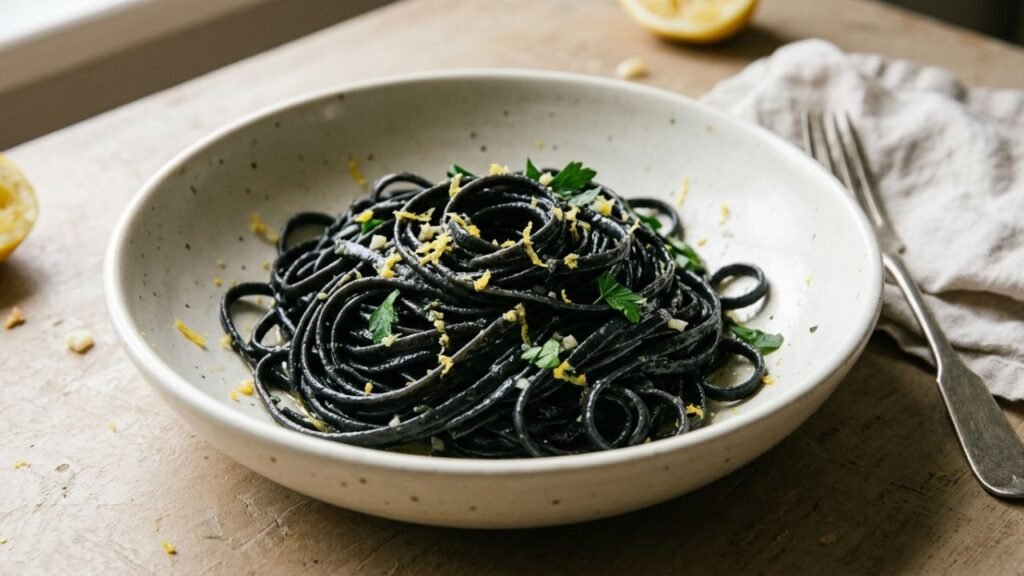
1. Lemon Garlic Butter for a Bright, Silky Finish
Lemon garlic butter is a natural starting point for squid ink pasta because it combines richness with freshness. Butter gives the strands a smooth coating, garlic adds savoury depth, and lemon cuts through the richness without competing with the pasta’s seafood character.
The important distinction is balance. Too much butter can make the dish feel heavy, while excessive lemon juice can dominate the more delicate flavours. Lemon zest is especially useful when you want citrus aroma without adding too much acidity.
Best pairing: Squid ink linguine with prawns, parsley, and freshly grated lemon zest.
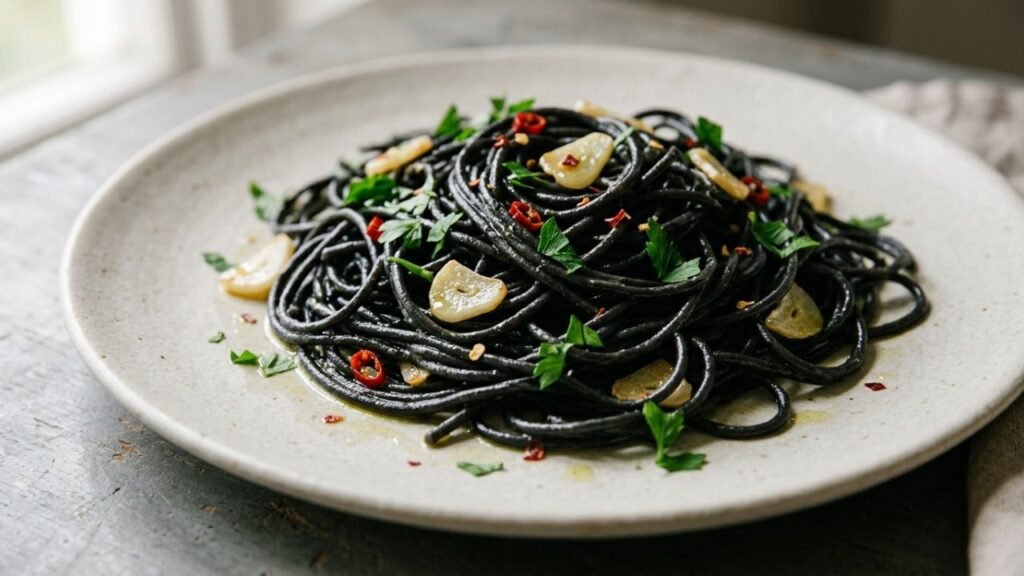
2. Garlic and Chilli Oil for a Little Heat
A garlic and chilli oil sauce offers a more direct approach. Olive oil carries the flavour, garlic provides warmth, and chilli introduces a gentle heat that develops as you eat.
This pairing works particularly well when you want the squid ink pasta itself to remain noticeable. Unlike a thick cream sauce, an oil-based dressing leaves the strands visually distinct and gives the dish a lighter finish.
The detail to watch is the garlic. A bitter, burnt flavour can overpower the pasta, so the aim is a mellow, fragrant result rather than a strong toasted taste.
Best pairing: Black spaghetti with parsley, mild chilli, and a little lemon zest.
3. White Wine Sauce for a Coastal Italian Feel
White wine sauce brings acidity and aromatic depth to squid ink pasta. Its appeal lies in the way it complements seafood without introducing the sweetness or heaviness of some richer sauces.
Dry white wine works particularly well alongside prawns, mussels, clams, and scallops. The sauce should remain light enough for the seafood and pasta to retain their individual character, rather than becoming a thick, wine-dominated reduction.
Fresh parsley adds a clean herbal note, while lemon can sharpen the finish if needed.
Best pairing: Squid ink linguine with mussels, prawns, and parsley.
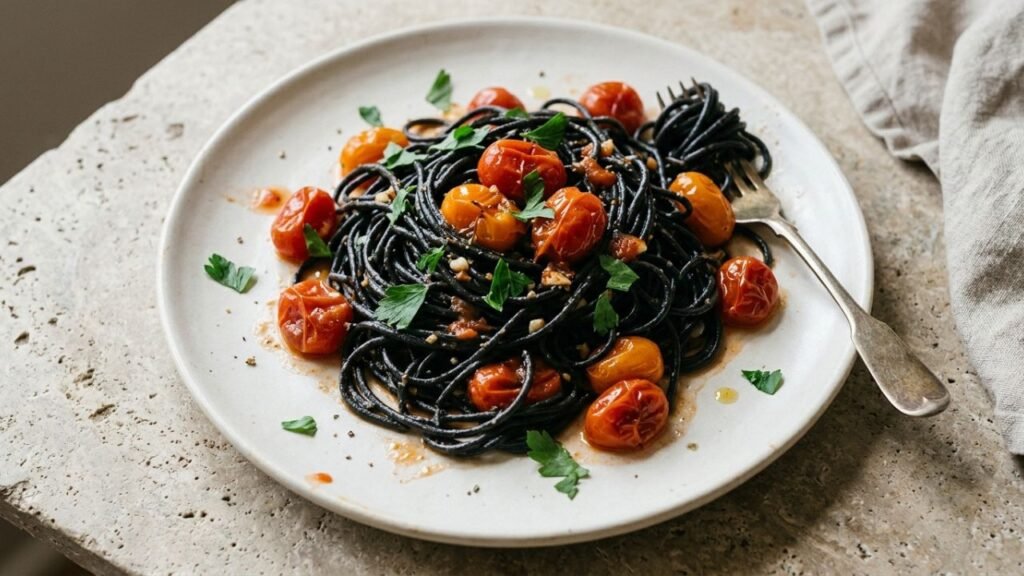
4. Cherry Tomato Sauce for Sweetness and Acidity
Tomatoes bring something squid ink pasta can benefit from. A gentle contrast between sweetness, acidity, and savouriness. Cherry tomatoes are particularly appealing because they tend to offer concentrated flavour while retaining a fresh, slightly fruity character.
Their red colour also creates a striking visual contrast against the black pasta, making this a good choice for a simple but expressive dinner.
Basil works well here, although parsley is often a better fit when seafood is the main addition. Avoid making the tomato sauce excessively sweet or reducing it until it becomes too dense.
Best pairing: Squid ink spaghetti with cherry tomatoes, basil, and sautéed prawns.
5. Creamy Parmesan Sauce for a Richer Plate
Cream and Parmesan create a fuller, more comforting dish. The cream softens the pasta’s savoury notes, while Parmesan contributes a salty, nutty depth that makes the sauce feel substantial.
The potential problem is that both ingredients can become dominant. A restrained amount of cream and finely grated Parmesan will usually serve the pasta better than a thick, cheese-heavy coating.
A little black pepper adds contrast, and lemon zest can bring the flavours back into focus.
Best pairing: Squid ink fettuccine with a light Parmesan cream sauce and cracked black pepper.
6. Spicy Tomato Sauce With Prawns
For a bolder dish, spicy tomato sauce offers a combination of acidity, sweetness, heat, and seafood flavour. Prawns bring a gentle sweetness that contrasts with the savoury pasta, while chilli gives the sauce a more pronounced finish.
This is a particularly useful pairing when you want the sauce to have a stronger presence without relying on cream or cheese.
The balance matters: too much chilli can obscure the seafood, and an overly concentrated tomato sauce can overwhelm the pasta. A little lemon at the end helps keep the flavours lively.
Best pairing: Squid ink spaghetti with prawns, tomato, chilli, and fresh parsley.
7. Lemon and Fresh Herbs for a Lighter Finish
Sometimes squid ink pasta benefits from less intervention rather than more. Olive oil, lemon, parsley, and chives offer a lighter alternative to richer sauces. Their fresh, aromatic flavours complement the pasta’s subtle seafood character without making the dish feel heavy or masking its natural brininess.
This combination works especially well when you want to preserve the pasta’s delicate briny flavour. Fresh herbs add an aromatic lift, while citrus provides contrast. For further guidance on selecting and using culinary herbs, explore Utah State University Extension’s Culinary Herbal Presentation.
It is also a versatile option for serving squid ink pasta alongside grilled fish or simply prepared seafood.
Best pairing: Squid ink linguine with olive oil, lemon zest, parsley, and chives.
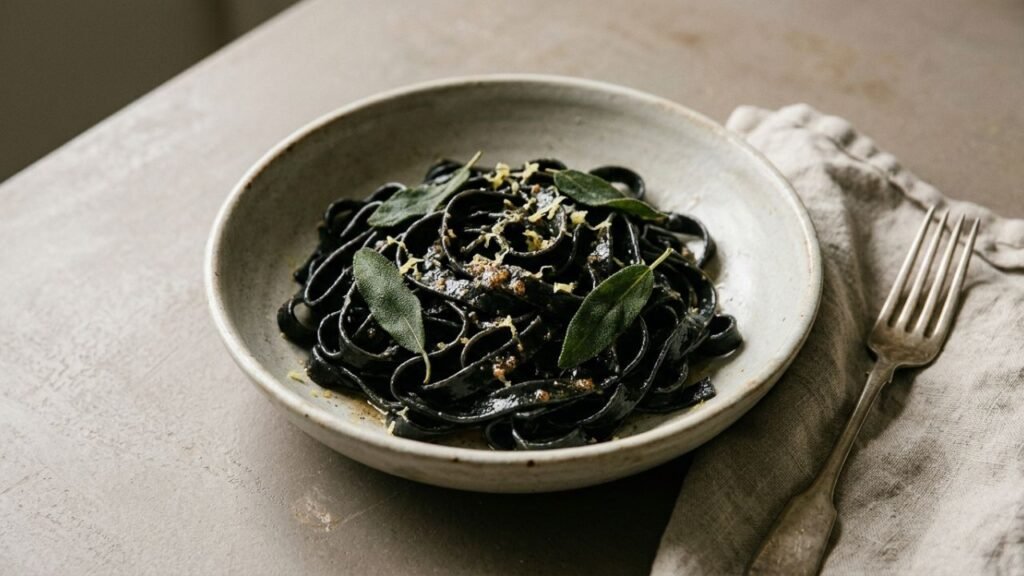
8. Brown Butter and Sage for an Unexpected Pairing
Brown butter and sage take squid ink pasta in a different direction. Heating butter until its milk solids turn golden produces a toasted, nutty aroma, while sage contributes an earthy, herbal character.
The combination creates a richer flavour profile without depending on cream. Lemon zest helps prevent the butter from feeling too heavy, and a small amount of acidity brings the overall dish into balance.
This is less traditional than a seafood-based pairing, but it offers an interesting alternative when you want to explore the pasta beyond its familiar coastal associations.
Best pairing: Squid ink tagliatelle with brown butter, crisp sage leaves, and lemon zest.
Small Pairing Details That Change the Result
- Match richness with acidity. Butter and cream benefit from lemon, while tomato sauces already contribute acidity.
- Keep seafood flavours distinct. Prawns, mussels, and scallops can complement squid ink pasta without requiring several competing ingredients.
- Choose herbs deliberately. Parsley is versatile with seafood, basil suits fresh tomato sauces, and sage offers a more earthy direction.
- Consider the pasta shape. Long strands work well with light oil-based and butter sauces; thicker or ridged shapes can hold more substantial coatings.
- Taste before adding salt. Squid ink pasta and Parmesan can both contribute savoury, salty notes, so additional seasoning should be adjusted at the end.
Frequently Asked Questions
1. What sauce goes best with squid ink pasta?
Lemon garlic butter, white wine sauce, and garlic olive oil are excellent starting points. Each complements the pasta without covering its distinctive flavour.
2. Can squid ink pasta be served with tomato sauce?
Yes. Cherry tomato sauce and spicy tomato sauce both work well because their acidity and sweetness contrast with the pasta’s savoury character.
3. Is cream sauce suitable for squid ink pasta?
Yes, particularly when you prefer a richer dish. A lighter cream sauce with Parmesan and black pepper is less likely to overwhelm the pasta.
4. Which seafood pairs best with squid ink pasta?
Prawns, mussels, clams, scallops, and squid are all suitable options. The best choice depends on whether you prefer a sweeter, delicate flavour or a more pronounced seafood character.
5. Can you serve squid ink pasta without seafood?
Absolutely. Garlic and chilli oil, lemon and herbs, cherry tomatoes, and brown butter with sage all provide satisfying alternatives.
6. Which herbs work best with squid ink pasta?
Parsley is a reliable choice, especially with seafood. Basil complements tomato-based sauces, while sage adds a more earthy flavour to brown butter.
Finding the Right Balance
Squid ink pasta has a distinctive character that doesn’t need much to make it stand out. Its deep black colour and subtle briny flavour work with a range of sauces, from the gentle richness of lemon butter to the freshness of tomatoes and the savoury simplicity of garlic-infused olive oil. Each pairing brings something different to the plate, making the choice of sauce just as important as the pasta itself.
The best pairing complements the pasta’s natural flavour without overpowering it. Seafood sauces enhance its coastal character, while butter, fresh herbs, and tomatoes bring their own balance. Knowing how these flavours work together makes choosing the right sauce easier and helps create a more satisfying dish at home.