Hogget is one of those names that can disappear behind the more familiar words lamb and mutton. It refers to sheep that are older than lamb but younger than mature mutton, giving the meat a fuller flavour and firmer character without taking it all the way into the stronger territory associated with older sheep. In South Asian kitchens, there is another layer of confusion because “mutton” is also commonly used for goat meat, so the name alone does not always tell you exactly what you are buying.
The main problem with hogget is knowing how to treat it once you bring it home. Its age and cut can affect tenderness and cooking time, which is exactly what this recipe helps you understand.
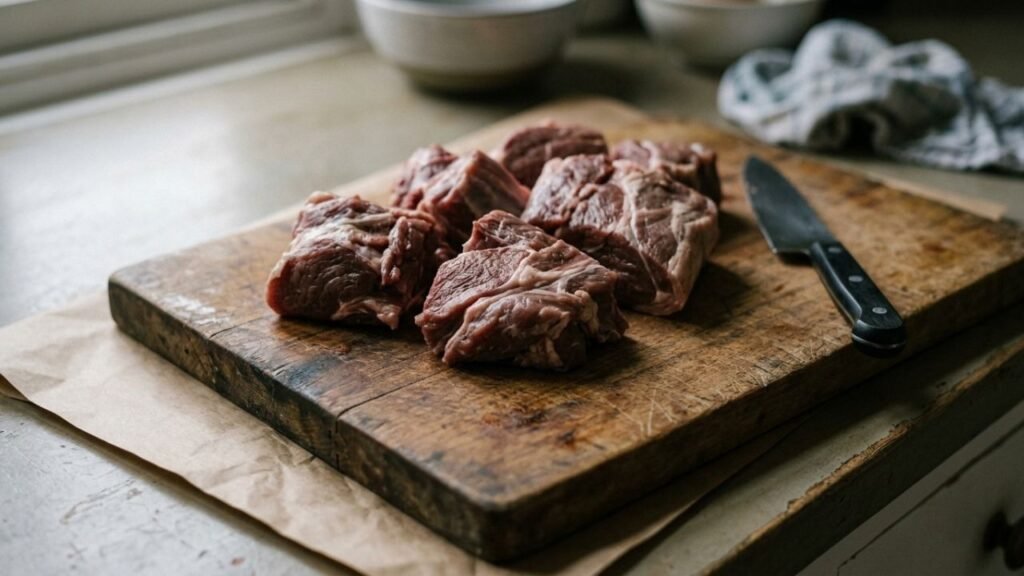
Before You Start
This recipe keeps the hogget at the centre rather than covering its flavour with an excessive amount of seasoning. The quantities below are a starting point, so adjust salt, chilli and liquid according to your meat and the consistency you prefer.
The timing is also only an estimate. Your cut of hogget, pan, heat and preferred tenderness can change the actual cooking time, so use the clock as a guide rather than a fixed rule.
Recipe at a Glance
| Stage | Approx. time |
| Preparation | 20 minutes |
| Initial cooking | 20 minutes |
| Slow cooking | 60–90 minutes |
| Resting | 10 minutes |
| Total | About 1½–2 hours |
You may take less or more time than these estimates. The meat itself should tell you when it is ready.
What You’ll Need
- 1 kg hogget mutton, cut into medium pieces
- 3 medium onions, thinly sliced
- 3 medium tomatoes, chopped
- 4–5 garlic cloves, crushed
- 1-inch piece fresh ginger, crushed
- ½ cup plain yogurt
- 3–4 tablespoons cooking oil
- 1 teaspoon cumin seeds
- 1 teaspoon ground cumin
- 1 teaspoon coriander powder
- ½ teaspoon turmeric
- 1 teaspoon chilli powder, or to taste
- 1 teaspoon garam masala
- 1–2 green chillies, sliced
- 1 small cinnamon stick
- 3–4 green cardamom pods
- 2–3 cloves
- Salt, to taste
- 1½–2 cups water, as needed
- Fresh coriander, for finishing
Simple replacements when needed
| Ingredient | Possible replacement |
| Plain yogurt | Thick unsweetened yogurt |
| Fresh ginger | Ginger paste |
| Fresh garlic | Garlic paste |
| Green chillies | Chilli flakes or fresh chilli |
| Fresh coriander | Flat-leaf parsley |
These swaps will change the flavour slightly, but they can be useful when you are working with what is already in the kitchen.
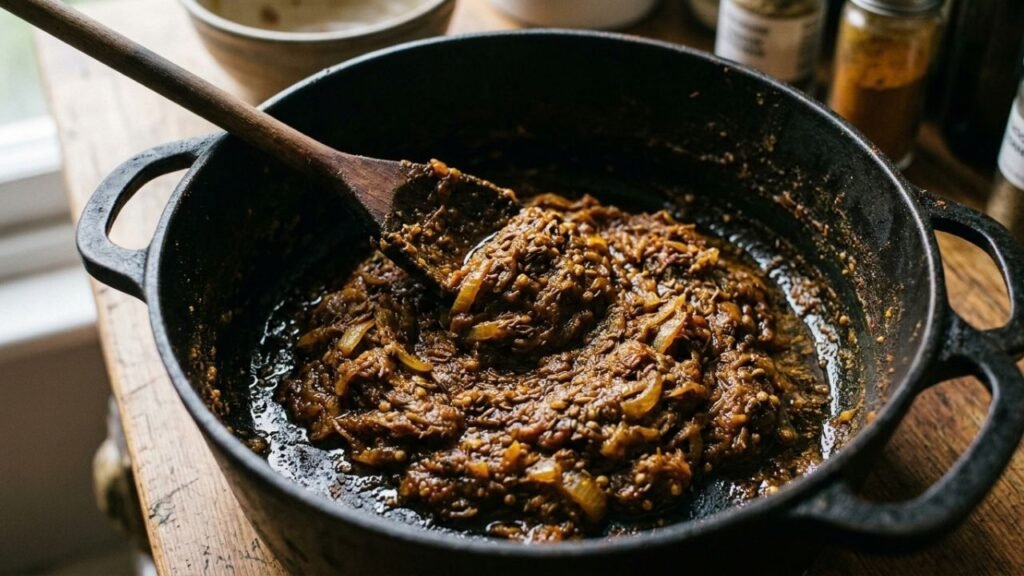
Where the Flavour Begins
Heat the oil in a heavy pot over medium heat. Add cumin seeds, cinnamon, cardamom and cloves, allowing them to become fragrant without burning.
Add the onions and cook until softened and lightly golden. Stir in the ginger and garlic, followed by the tomatoes, turmeric, chilli powder, coriander powder and ground cumin. Cook until the tomatoes soften and the mixture becomes thick.
Add the hogget and salt. Stir well so the meat becomes coated with the masala, then cook for several minutes.
Lower the heat and add the yogurt gradually, stirring as you do. Once it has blended into the mixture, add the water and cover the pot.
Let the hogget cook gently until the meat becomes tender. Check it from time to time and add a little more water if the gravy becomes too thick before the meat is ready.
When the meat has reached the tenderness you like, add the green chillies and garam masala. Stir and leave it to rest for about ten minutes before serving.
The stated cooking time is only a guide. A different cut or larger pieces may take longer, while smaller or more tender pieces may be ready earlier.
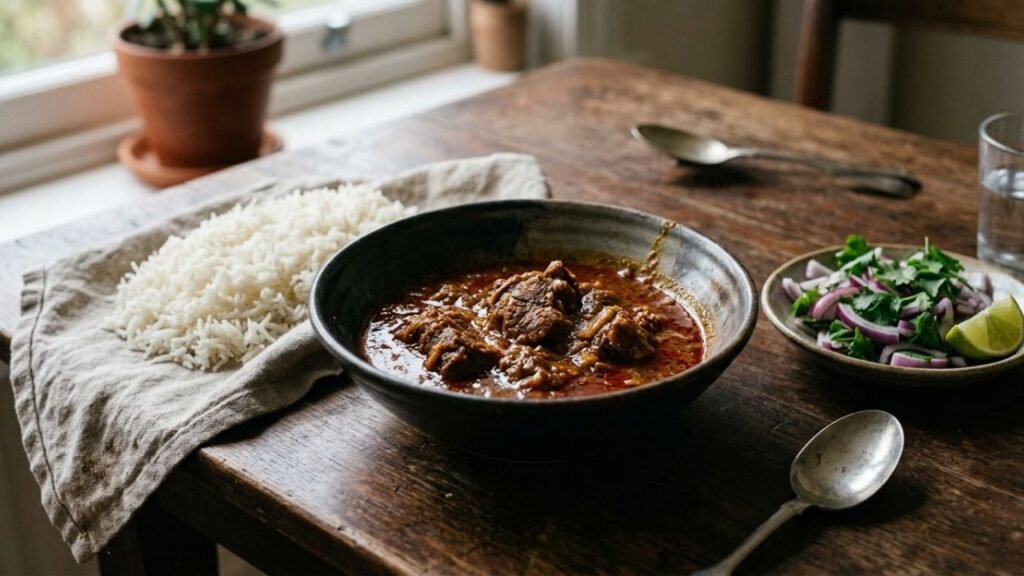
What to Put Beside It
Hogget has a rich, developed flavour, so it does not need a crowded plate around it. Basmati rice is a simple choice when you want the gravy to stay at the centre of the meal, while naan or roti works well when you prefer something to scoop up the sauce. A fresh onion and coriander salad can also bring a little sharpness and freshness to balance the richness of the meat.
Keep the sides uncomplicated. One starch and one fresh accompaniment are usually enough to make the meal feel complete without taking attention away from the hogget.
Keeping the Leftovers
If you have leftovers, let the hogget cool before transferring it to a covered container and placing it in the refrigerator. As a general home-cooking guide, cooked meat can be kept refrigerated for several days when it is cooled and stored properly; for more detailed guidance, see the USDA’s guidance on how long cooked meat can be kept in the refrigerator. The exact storage life still depends on how quickly the food was cooled and how cold your refrigerator is.
When you are ready to eat it again, reheat only the amount you need and warm it thoroughly. The gravy will often thicken while chilled, so adding a small splash of water during reheating can loosen it without changing the dish too much.
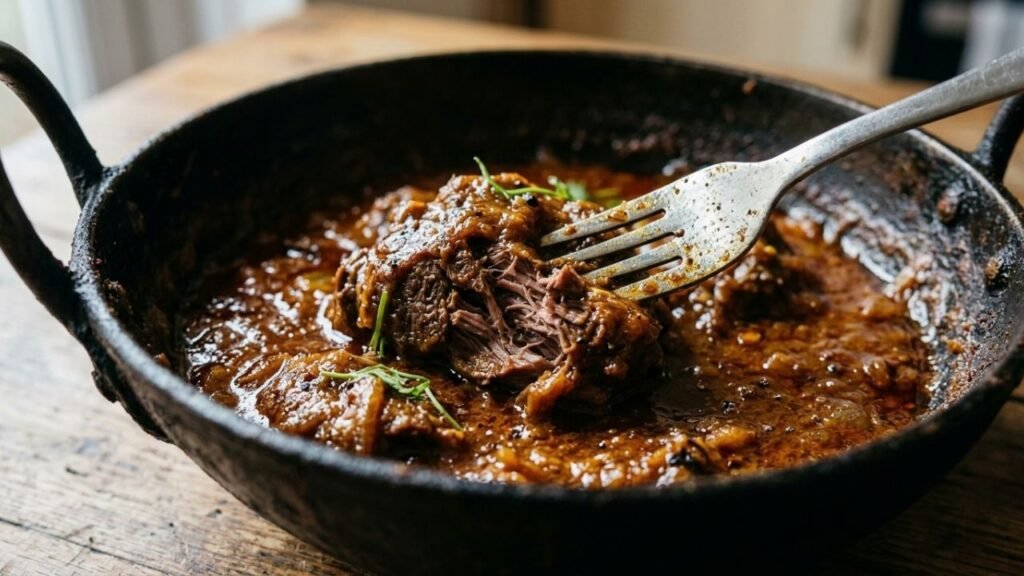
Small Mistakes That Can Change the Dish
Burning the onions. You want them golden and developed, not dark and bitter. Burnt onions can affect the whole gravy.
Adding yogurt over high heat. Gradually lowering the heat helps the yogurt blend into the sauce more smoothly.
Using too much water. Start conservatively. You can always add more, but reducing an overly thin gravy takes additional time.
Cut the meat too small. Medium pieces are easier to manage during longer cooking and are less likely to become dry.
Following the clock too closely. Hogget is not identical from one cut to another. Tenderness matters more than hitting an exact minute.
Assuming tougher means overcooked. With some cuts, meat can remain firm because it needs more time for its connective tissue to soften.
A Few Things People Often Get Mixed Up
1. Is hogget the same as mutton?
Not quite. Hogget generally describes sheep that are older than lamb but younger than mature mutton. Terminology can vary between places and butchers.
2. Can lamb be used instead?
Yes. Lamb will usually give you a milder flavour, and depending on the cut, it may need less cooking time.
3. Can mature mutton replace hogget?
It can, but the result may be stronger in flavour and firmer in texture. The cooking time may also change.
4. Why does my hogget still feel tough?
The cut may simply need more time. This is particularly true of pieces containing more connective tissue. Give them additional gentle cooking rather than immediately assuming something has gone wrong.
5. Does hogget always have a strong smell?
Not necessarily. The flavour is generally more developed than lamb, but the character of the meat varies with the animal, cut, handling and cooking.
6. Do I need lots of spices?
No. Hogget has enough flavour to work with a relatively straightforward spice mixture. Adding more and more seasoning is not necessarily going to make the dish better.
The Difference Is in the Middle
Hogget is interesting because it sits in a part of the sheep-meat spectrum that many everyday shoppers rarely think about. It has moved beyond the mildness of young lamb but has not necessarily reached the intensity associated with mature mutton.
For everyday cooking, that can be a useful middle ground. The meat has enough character to hold its place beside a richly seasoned gravy, while still allowing the dish to taste familiar rather than dominated by the meat itself.
The main thing is to treat the cut, rather than the label alone, as your guide. Start with sensible pieces, allow enough time for them to become tender, and adjust the liquid and seasoning as the dish develops. The clock gives you an estimate, the meat gives you the answer.