Candied salmon has a name that makes it sound almost like a sweet treat, but there is much more to it than that. Often called salmon candy, this rich, smoky preparation has long been associated with the Pacific Northwest and Alaska, where salmon has been an important part of regional food culture. The appeal is easy to understand because salmon develops a deeper, more concentrated character while the surface takes on a dark, glossy finish. It sits somewhere between smoked fish and a snack, which is part of what makes it so distinctive. For people making it at home, though, that familiar look can be deceptive.
Getting candied salmon right at home can be tricky when it turns too salty, dry, sweet, or loses its ideal texture. These tips help you avoid those problems and get a better result.
1. Start With the Kind of Salmon That Holds Up
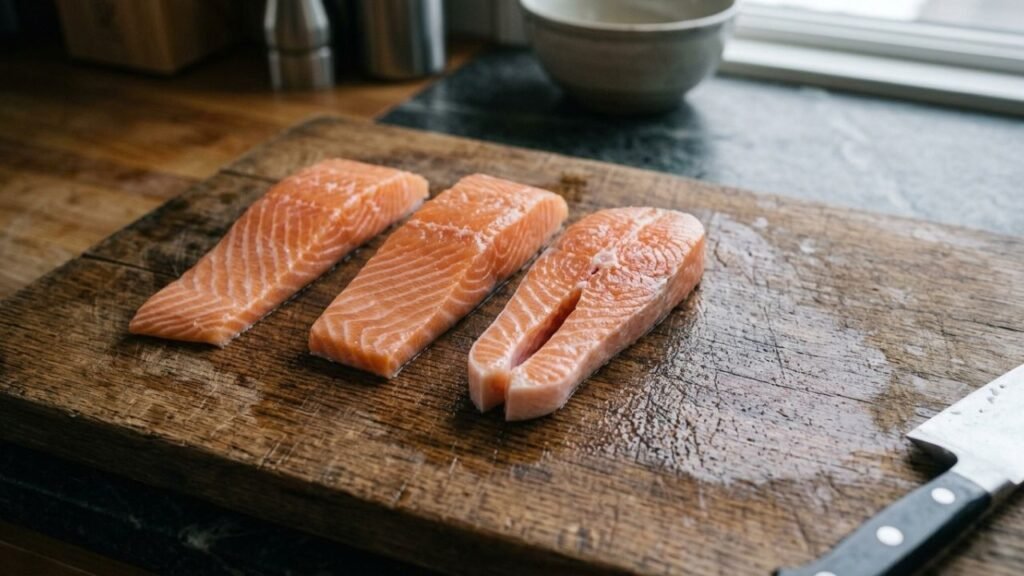
Not every piece of salmon behaves the same way once it is cured, dried and smoked. Some cuts have more fat, some are leaner, and thickness can vary dramatically even within the same fillet.
For a first attempt, consistency matters more than chasing a particular variety. Pieces with a similar thickness are easier to manage because they are less likely to leave you with one piece that is dry while another still feels soft.
Fat also has an important role. A richer piece tends to remain more succulent as moisture leaves the fish, while very lean salmon can become firm quickly. This is one reason salmon candy can taste excellent from one batch and disappointing from another even when the seasoning seems similar.
2. The Sweetness Should Not Hide the Salmon
The word “candied” can lead people in the wrong direction. The finished fish should not taste like salmon covered in dessert-like sweetness.
The attraction comes from contrast: the natural richness of salmon against salt, smoke and a concentrated sweet exterior. If the sweet element dominates every other flavour, the fish loses the character that makes the preparation interesting in the first place.
A useful way to judge the balance is to think about the final bite rather than the surface alone. You should notice sweetness first or alongside the smoke, then still recognize the salmon underneath.
3. The Surface Has More to Say Than You Think
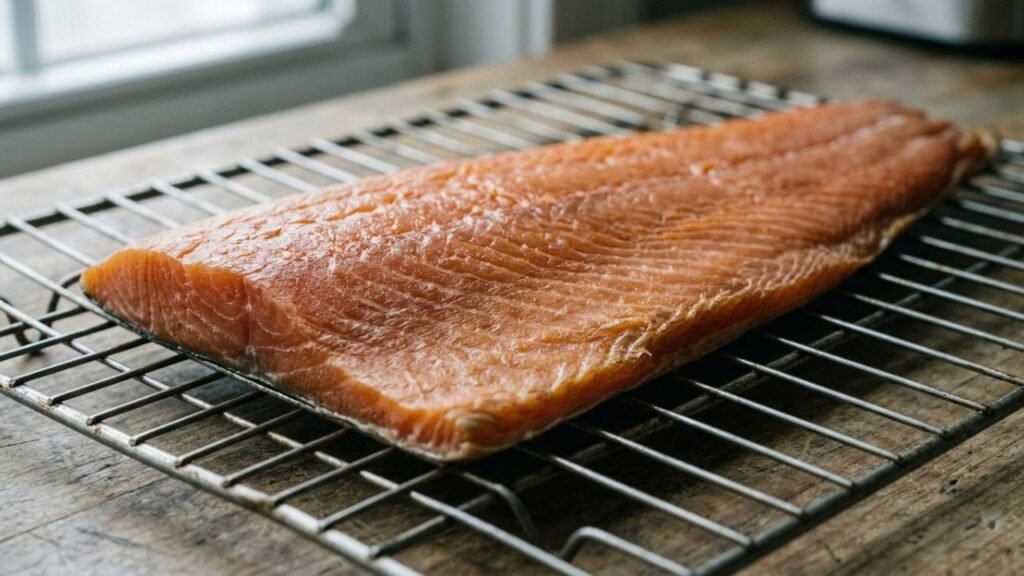
One of the less obvious details in smoked salmon is what happens to the outside of the fish before the main smoking stage. After curing, the surface needs time to change from wet to slightly tacky.
That seemingly minor change has a practical purpose. A drier, tackier exterior gives smoke something to cling to and helps create the characteristic darker surface associated with smoked salmon.
This is also where patience starts paying off. If the fish looks slightly less glossy and wet than it did when it first came out of the cure, that is not necessarily a problem. The surface is becoming part of the final texture and appearance.
4. Thickness Quietly Controls the Whole Batch
A thick piece of salmon is not simply a larger version of a thin piece. It has more flesh for heat and moisture to travel through, which changes how long it takes to reach the texture you want.
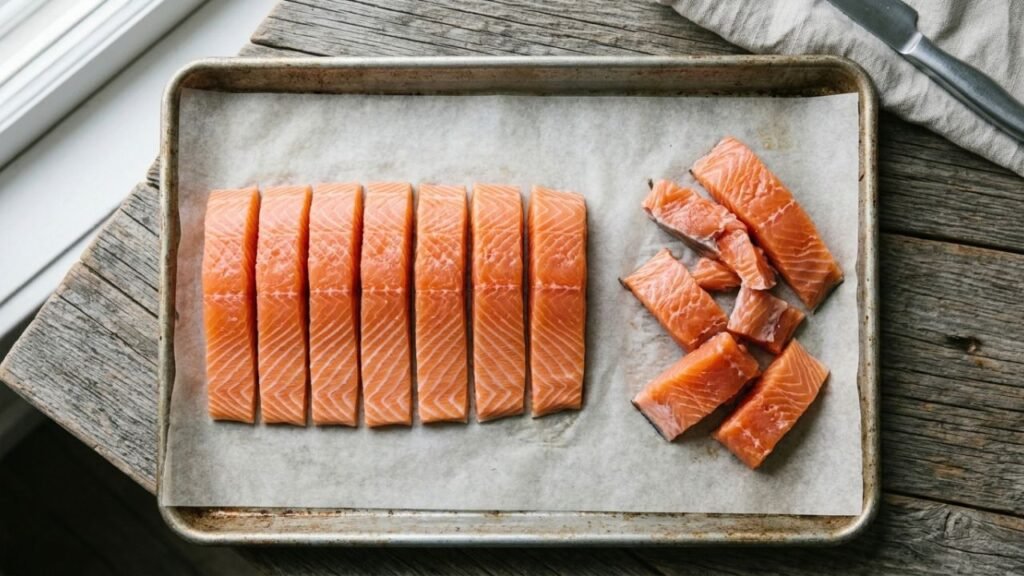
This is why cutting everything roughly the same size is more useful than obsessing over an exact cooking time. Uniform pieces make the batch easier to judge and reduce the chance of sacrificing smaller pieces while waiting for larger ones.
There is another advantage: similar pieces develop a more consistent exterior. Instead of a tray containing dramatically different textures, you get a batch that feels intentionally made.
5. Smoke Needs Restraint
Smoke is one of the defining flavours of salmon candy, but more smoke does not automatically make better smoked salmon.
Strong smoke can overwhelm the fish, particularly when sweetness and salt are already concentrated on the surface. A gentler smoke gives the salmon room to remain the centre of the flavour rather than turning the entire bite into a test of how much smoke you can tolerate.
The visual cue can be useful here too. You are looking for a surface that becomes progressively deeper in colour, not a piece so dark that its appearance suggests the smoke has become the dominant ingredient.
6. Texture Is Where Good Salmon Candy Separates Itself
People sometimes describe salmon candy as though there is one correct texture. There isn’t. Some prefer pieces that remain soft and rich in the centre, while others enjoy a firmer, chewier bite with a more concentrated exterior. Neither preference is inherently wrong. The important thing is understanding that moisture loss changes the character of the fish.
The mistake is allowing that process to happen without paying attention. If the salmon becomes hard throughout, the problem is no longer simply that it is “chewy.” The balance between a firm exterior and a moist interior has been lost. Texture, however, should not be the only consideration when preparing or storing smoked seafood at home; the FDA’s guidance on selecting and serving seafood is worth consulting for the food-safety side of the process.
7. The Final Finish Should Look Deliberate
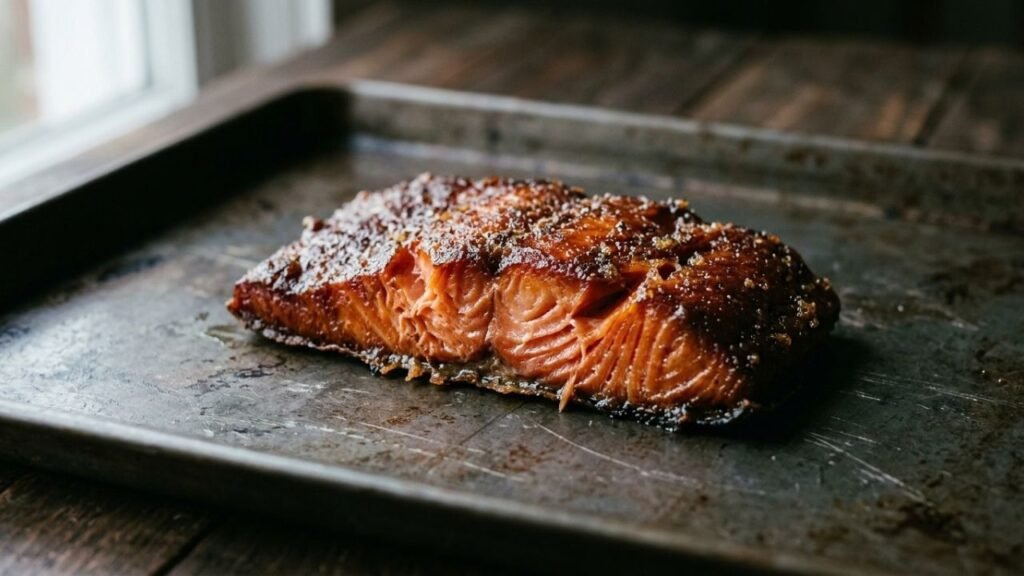
The surface is part of the pleasure of salmon candy. That dark, glossy exterior is what makes the food immediately recognizable, but gloss alone does not mean the result is successful.
Look for a finish that appears thin and concentrated rather than thickly coated. The surface should have enough colour and shine to signal what it is without becoming a heavy layer that separates from the fish.
This is also why salmon candy can be surprisingly sensitive to small changes. A little more time, a slightly different cut, or a wetter surface can change the final appearance considerably. Once you understand that, the process becomes less about following a rigid formula and more about reading the fish.
Small Details That Make a Bigger Difference
- Keep the pieces similar in thickness. It is one of the simplest ways to make the finished batch more consistent.
- Give the surface time to dry after curing. The tacky exterior is useful for developing the smoked character.
- Treat sweetness as a counterpoint. The salmon should still taste like salmon.
- Watch moisture, not just colour. A dark exterior can look finished while the texture underneath has already gone too far.
- Use smoke with restraint. The best result has smoke woven through the flavour rather than sitting heavily on top of it.
- Pay attention to the edges. Thin edges dry first and can tell you when the rest of the batch is approaching its finished texture.
- Take notes between batches. Small changes in thickness, curing time and moisture can explain why one attempt works better than another.
FAQs
1. Is salmon candy the same as smoked salmon?
Not quite. Salmon candy is generally sweeter and more concentrated, with a characteristic firm, glossy exterior.
2. Why is it called salmon candy?
The name refers to the sweet, concentrated character that develops on the outside of the salmon. It does not mean the fish is intended to taste like conventional candy.
3. Can lean salmon be used?
Yes, but leaner salmon can become firm or dry more quickly. The thickness of the pieces becomes particularly important.
4. Why does homemade salmon candy sometimes become too dry?
Usually, too much moisture has been lost relative to the texture you were aiming for. Thin pieces are especially vulnerable because their surface-to-flesh ratio is higher.
5. Why does the outside become darker?
The surface becomes increasingly concentrated as moisture leaves, while the combination of smoke, heat and sweetness creates the deeper colour associated with the finished product.
6. Should salmon candy be very sweet?
It can be, depending on preference, but sweetness works best when it balances the salt, smoke and richness of the salmon rather than completely covering them.

The Part Worth Remembering
Making candied salmon at home is less about finding one perfect formula and more about learning to recognize balance. The thickness of the fish, the amount of moisture left in it, the intensity of smoke and the level of sweetness all affect one another.
Once those relationships become familiar, salmon candy stops being mysterious. You start looking at the surface, the colour and the texture as information rather than simply waiting for a timer to tell you when it is finished.