Boysenberry have an identity that is easy to lose among more familiar summer fruits. Often described as a cross between blackberry and raspberry, the dark purple-red berry is known for its soft texture, tart sweetness, and deep, almost wine-like flavor. The name comes from Rudolph Boysen, the California grower associated with the early cultivation of the fruit, and the berry later became closely connected with the food history of Southern California. For many people, boysenberries still bring to mind old-fashioned pies, jams, cobblers, and homemade preserves.
The tricky part is getting the right balance of sweetness, texture, and tartness without drowning out the berry’s flavor. Follow along as we show you how to get it right.
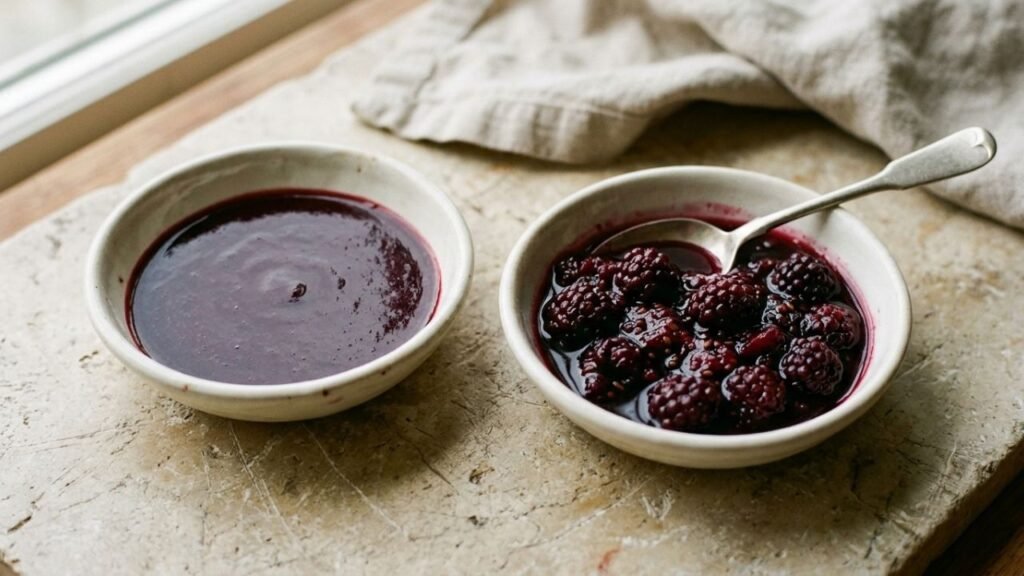
1. A Dark, Tangy Boysenberry Sauce
The Simple Lineup
- 2 cups boysenberries, fresh or frozen
- ⅓ cup sugar
- 1 tablespoon lemon juice
- ½ teaspoon vanilla extract
- 2 tablespoons water
From Berries to Sauce
Add the boysenberries, sugar, lemon juice, and water to a small saucepan over medium heat. Cook for 5–8 minutes, stirring occasionally, until the berries break down and the liquid thickens slightly. Remove from the heat and stir in the vanilla.
For a smooth sauce, press the mixture through a fine-mesh sieve. For a rustic texture, crush the berries lightly and leave them intact.
Keep in mind: Don’t cook the sauce until it looks like jam. It will become thicker as it cools.
2. Boysenberry Compote With the Fruit Left Intact
What Goes Into the Pan
- 2 cups boysenberries
- ¼ cup sugar
- 1 tablespoon lemon juice
- 1 teaspoon lemon zest
- 1 teaspoon cornstarch
- 1 tablespoon cold water
A Short Simmer Does the Work
Place the berries, sugar, lemon juice, and zest in a saucepan over medium heat. Simmer for about 5 minutes, stirring gently so some berries break down while others remain whole.
Mix the cornstarch with cold water. Stir it into the berries and cook for another 1–2 minutes, until lightly thickened. Remove from the heat and let it cool.
Keep in mind: Stop cooking while some berries are still intact. Residual heat will soften them further.
3. The Crisp That Lets the Juice Show
For the Juicy Layer
- 4 cups boysenberries
- ⅓ cup sugar
- 1 tablespoon lemon juice
- 2 tablespoons cornstarch
For the Golden Top
- ¾ cup rolled oats
- ½ cup all-purpose flour
- ½ cup brown sugar
- 5 tablespoons cold butter
- Pinch of salt
Build and Bake
Heat the oven to 180°C/350°F. Toss the boysenberries with sugar, lemon juice, and cornstarch, then spread them in a baking dish.
Mix the oats, flour, brown sugar, and salt. Rub in the cold butter until coarse crumbs form, then scatter the topping over the berries.
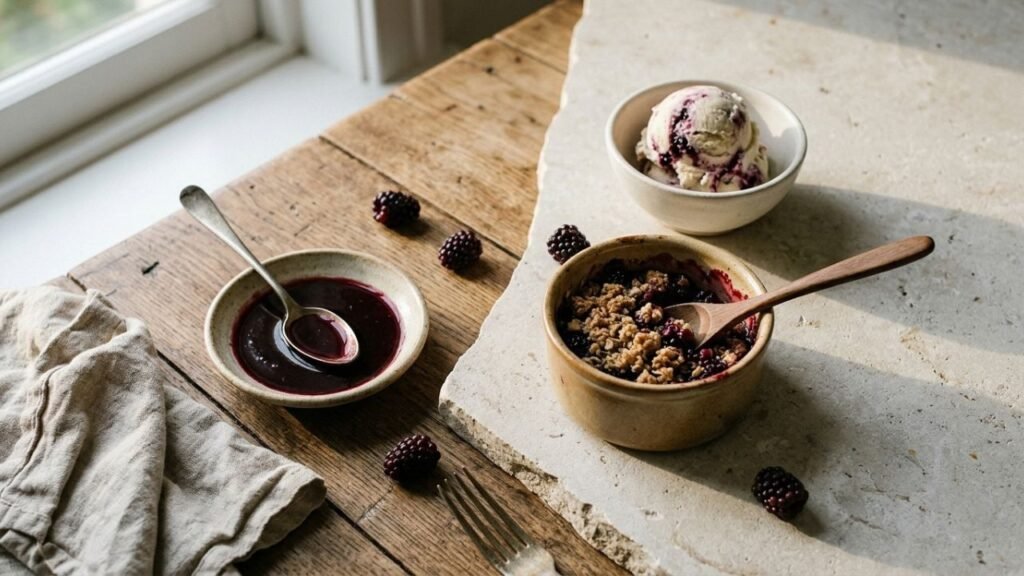
Bake for 30–40 minutes, until golden and bubbling around the edges. Let it rest for about 10 minutes before serving.
Keep in mind: The filling thickens as it cools, so don’t add extra cornstarch simply because it looks loose when hot.
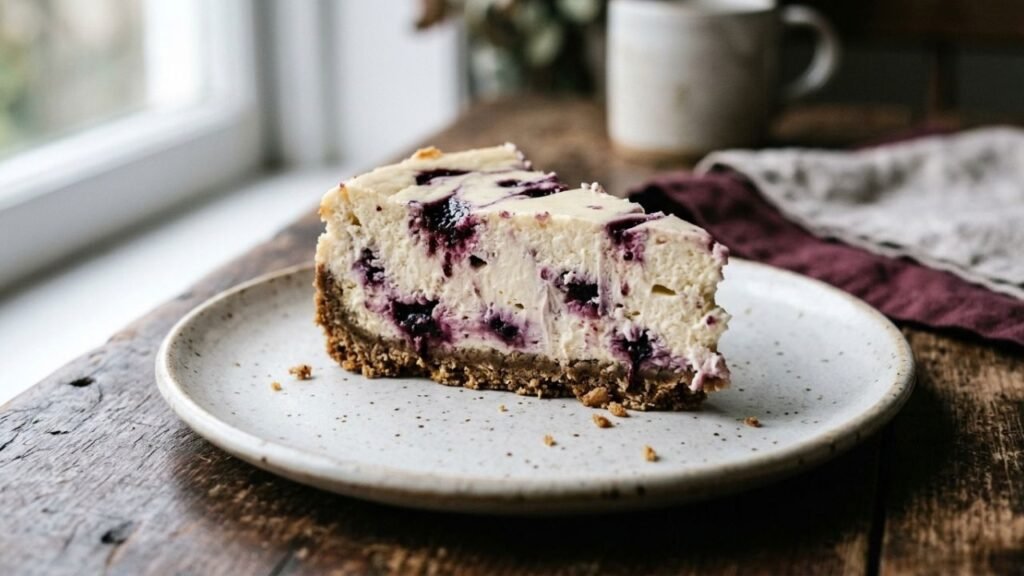
4. Cheesecake With a Rough Berry Swirl
Start With the Biscuit Layer
- 12 digestive biscuits or graham crackers
- 3 tablespoons melted butter
Bring in the Creaminess
- 450 g cream cheese, softened
- ½ cup sugar
- 2 eggs
- 1 teaspoon vanilla extract
- ½ cup boysenberry sauce
- 1 teaspoon lemon zest
Create the Swirl
Heat the oven to 170°C/340°F. Crush the biscuits and mix them with melted butter. Press the mixture into a lined 8-inch/20-cm cake tin.
Beat the cream cheese, sugar, eggs, vanilla, and lemon zest until smooth. Pour over the biscuit base.
Drop spoonfuls of boysenberry sauce over the surface and gently drag a knife through it to create loose swirls.
Bake for 35–40 minutes, until the center is just set. Cool completely, then refrigerate before slicing.
Keep in mind: A few deliberate streaks look better than stirring the berry sauce until the entire cheesecake turns purple.
5. Frozen Boysenberry Yogurt Pops
Four Things Are Enough
- 1½ cups boysenberries
- 1 cup Greek yogurt
- 3 tablespoons honey
- 1 tablespoon lemon juice
Blend, Taste, Then Freeze
Blend the boysenberries, Greek yogurt, honey, and lemon juice until smooth. Taste and add a little more honey if needed.
For extra texture, reserve a few berries, crush them lightly, and stir them into the mixture.
Pour into popsicle molds and freeze for at least 5 hours, or until firm.
Keep in mind: The mixture should taste slightly sweeter before freezing because cold temperatures reduce the perception of sweetness.
6. No-Churn Boysenberry Ice Cream
The Berry Mixture
- 1½ cups boysenberries
- ¼ cup sugar
- 1 tablespoon lemon juice
- 1 teaspoon vanilla extract
The Creamy Base
- 1½ cups heavy cream
- ¾ cup sweetened condensed milk
Fold, Don’t Flatten the Color
Cook the boysenberries, sugar, and lemon juice over medium heat for 5–7 minutes. Blend until mostly smooth and let the mixture cool completely.
Whip the heavy cream to soft peaks. Gently fold in the condensed milk and vanilla, then fold in the cooled berry mixture.
Leave visible streaks of berry rather than mixing until uniform. Transfer to a loaf tin, cover, and freeze for at least 6 hours.
Keep in mind: Let the ice cream sit at room temperature for about 5 minutes before scooping.
7. Warm Boysenberry Spoon Cake
Gather These First
- 2 cups boysenberries
- ½ cup sugar, divided
- ½ cup all-purpose flour
- 1 teaspoon baking powder
- Pinch of salt
- 3 tablespoons softened butter
- ½ cup milk
- 1 teaspoon vanilla extract
- ½ cup hot water
Let the Oven Do the Rest
Heat the oven to 175°C/350°F. Place the boysenberries in a buttered baking dish and sprinkle with ¼ cup sugar.
Mix the flour, baking powder, salt, and remaining sugar. Beat in the butter, then stir in the milk and vanilla to form a soft batter. Spread it over the berries.
Pour the hot water gently over the batter without stirring. Bake for about 40 minutes, until the top is golden and the berries are bubbling.
Keep in mind: Serve it warm rather than trying to cut perfect slices. Vanilla ice cream is all it needs alongside it.
Little Details That Change the Result
Use lemon carefully. A little acidity keeps sugar from masking the berry’s flavor.
Add sugar gradually. Boysenberries already have a strong sweet-tart character, so too much sugar can make them taste flat.
Don’t over-thicken the fruit. Sauce should pour, compote should hold together, and baked filling should remain soft enough to spoon.
Keep some berries intact. Smooth purées are useful, but whole or lightly crushed berries provide better texture.
Frozen berries are practical. They work especially well in sauces, crisps, cheesecakes, and ice cream because cooking or blending already changes the fruit’s texture. For a closer look at what freezing does to the texture of fruit, see the USDA’s guidance on preserving produce by freezing.
Use creamy partners. Yogurt, cream, custard, and ice cream soften the berry’s sharper notes without requiring excessive sugar.
Before You Cook With Boysenberries
1. Can frozen boysenberries be used?
Yes. They work well in sauces, baked desserts, compotes, and frozen treats. When the berries are cooked, they can usually go straight into the pan.
2. Should boysenberry seeds be removed?
Only when you want a smoother texture. Straining creates a silky sauce, while leaving the seeds gives it a more rustic finish.
3. Why does boysenberry sauce become watery?
Boysenberries release plenty of juice as they heat. Gentle reduction or a small amount of cornstarch can help control the consistency without making the sauce heavy.
4. What flavors go well with boysenberries?
Lemon, vanilla, cream, yogurt, oats, brown sugar, and buttery pastry all complement their sweet-tart flavor.
5. Are boysenberries the same as blackberries?
No. They are related, but boysenberries are generally softer and have a distinctive sweet-tart flavor with a dark reddish-purple color.
Let the Berry Decide the Dessert
Boysenberries can become much more than a pie filling. Their deep color, tart-sweet flavor, natural acidity, and soft texture make them useful across a surprising range of homemade desserts, from quick sauces and fruit-filled crisps to creamy cheesecakes and frozen treats. What makes them especially useful is how easily they can shift between simple and more indulgent preparations.
The trick is not to cover those qualities up. Keep the sweetness measured, use enough acidity to keep the flavor lively, and choose textures that let the fruit remain recognizable. With that balance, even a simple bag of boysenberries can give you several desserts without making the fruit feel lost.