Enchilada casserole is the layered, oven-baked cousin of traditional enchiladas, a dish that has become familiar far beyond its Mexican roots. Instead of treating each enchilada as a separate portion, the casserole format brings the same familiar combination of tortillas, chile-based sauce, filling, and cheese together in one dish. What makes it interesting, though, is how differently that combination can feel depending on the level of chile heat. A mild version can let the sauce, filling, and cheese speak more clearly, while a spicy one can make the chili itself a much stronger part of the experience. For many people, the choice comes down to more than simply liking or disliking spicy food.
The problem is knowing how much heat works for the casserole without overwhelming its other flavors or creating a problem for anyone at the table. Here’s how to choose wisely.
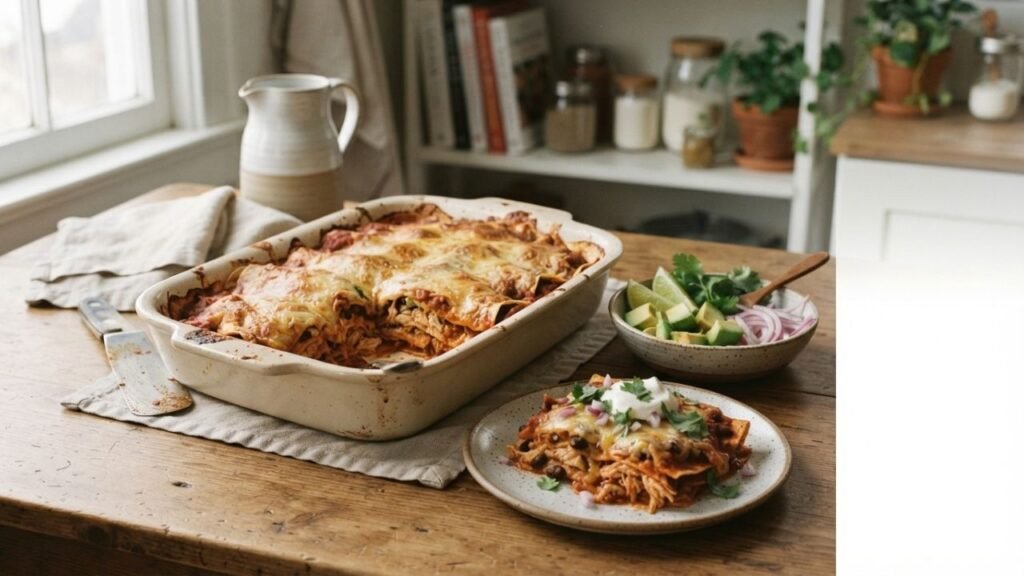
Don’t Mistake Heat for Chile Flavor
A mild enchilada casserole can still have rich chile flavor, especially when the sauce has smoky or roasted notes. Heat and flavor are not the same thing.
Choose mild or medium when you want the chile to complement the filling and cheese. Go hotter when you want the chile to take center stage.
Let the Filling Set the Mood
The filling has a quiet influence on how spicy an enchilada casserole feels. Hearty fillings such as beef, beans, or well-seasoned chicken can hold their ground beside a stronger chile sauce, while milder fillings may become harder to notice. The goal is to make the heat work with what is already in the casserole rather than cover it up.
Cheese can change that balance too. Its richness can soften the sharpness of chile and make a hotter casserole feel more rounded.
Instead of judging the sauce alone, consider how its heat will interact with the filling and cheese.
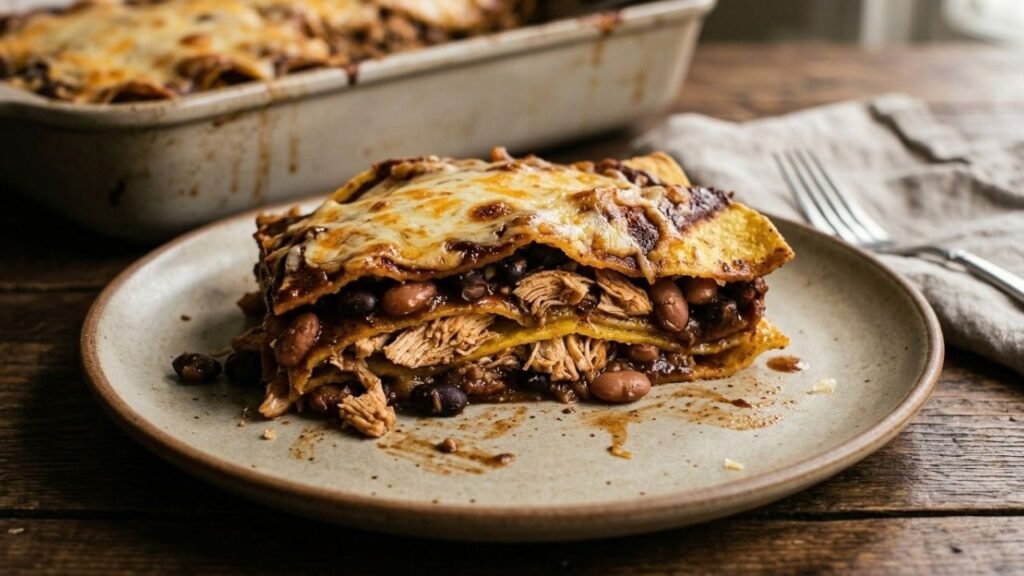
Keep Different Spice Tolerances in Mind
Choosing a heat level gets trickier when everyone at the table has a different idea of what “spicy” means. A casserole that feels pleasantly hot to one person may be too intense for another, and there is little you can do to make the whole dish milder once the heat is already built in.
For a mixed group, mild or medium is usually more flexible. People who want extra heat can increase it on their own serving.
That makes adaptability more useful than trying to find one level everyone will love.
Mild Does Not Mean Bland
A mild enchilada casserole is sometimes dismissed as the safer but less interesting choice. That overlooks what lower heat allows you to notice. When chile does not dominate, the savory filling, tang of the sauce, saltiness of the cheese, and texture of the tortillas can come through more clearly.
Mild can therefore be a deliberate choice rather than a compromise. It works particularly well when the meal already contains several bold flavors.
The casserole does not need to be the hottest thing on the table to have character.
Spicy Does Not Have to Mean Overwhelming
A spicy enchilada casserole should not have to turn eating into a test of endurance. When the heat becomes too dominant, it can hide the chile’s own flavor along with the filling, sauce, and cheese that give the casserole its identity.
The better spicy version has enough heat to make itself known while leaving other flavors intact. That balance is especially important when the filling has its own seasoning or richness.
Think of chile as part of the dish’s flavor, not a challenge to finish.
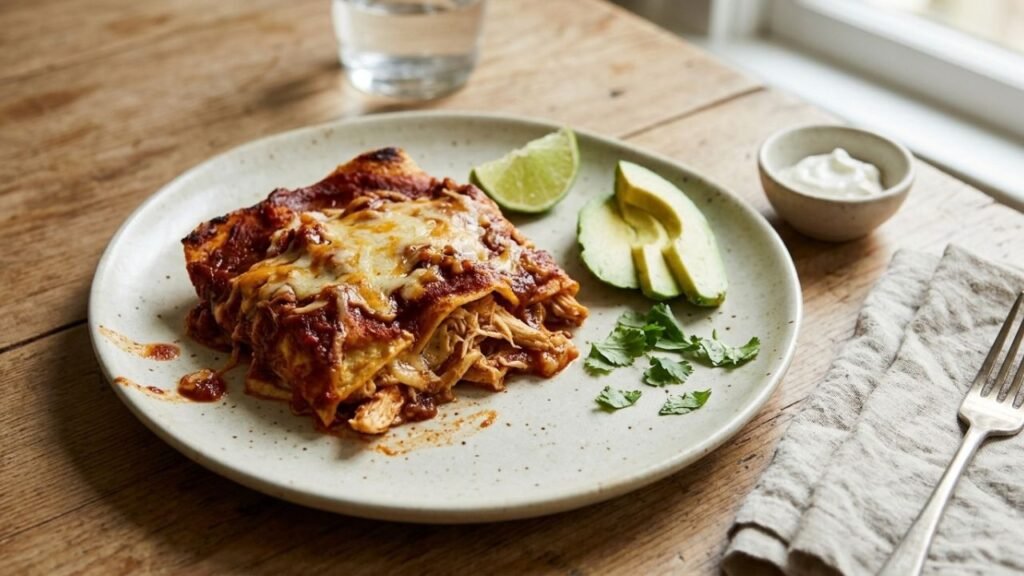
Build Contrast Around the Heat
A spicy casserole becomes easier to enjoy when something around it provides contrast. Cool, creamy, fresh, or acidic flavors can interrupt the heat and give your palate a different sensation between bites. That can make a strongly seasoned casserole feel more balanced without reducing its character.
The same principle works with a mild casserole. Brighter accompaniments can add energy when the dish feels especially rich or soft.
Sometimes the answer is not changing the heat level at all. It is changing what you serve beside it.
A Better Way to Decide at the Store
When choosing an enchilada casserole, don’t rely entirely on labels such as “mild,” “medium,” or “hot.” Descriptions such as smoky, roasted, earthy, or fiery can tell you more about the character of the chile. Two casseroles with similar heat levels can still taste completely different.
Think about when and where you’ll be eating it, too. A family meal with mixed preferences may favor flexibility, while a meal built around bold flavors can handle something more assertive.
The better question is not simply whether you can handle the heat. It is whether that heat suits the whole dish.
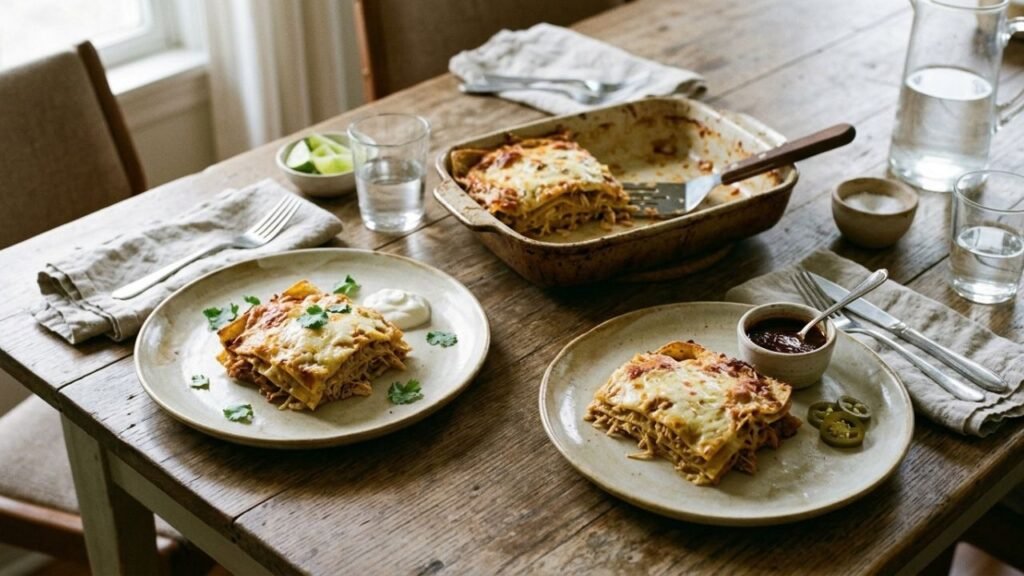
Five Quick Checks Before Choosing
- Think about the people eating it. If tolerance varies widely, flexibility is valuable.
- Look at the filling. Stronger fillings can usually hold their own against more assertive chile flavors.
- Separate heat from flavor. A chile-forward casserole does not have to be extremely hot.
- Consider the rest of the meal. Several spicy dishes can make even a moderate casserole feel much hotter.
- Choose for the whole bite. The right heat level should allow you to notice the sauce, filling, tortilla, and cheese together.
Small Decisions That Change the Experience
A few seemingly minor choices can shift how a casserole feels without changing its basic identity.
- Cheese: A richer, creamier cheese presence can make a hot casserole seem rounder and less aggressive.
- Acid: Bright acidic flavors can cut through richness and make chile heat feel cleaner rather than heavier.
- Fresh toppings: Fresh ingredients can introduce contrast to a casserole that otherwise has a deep, baked, savory character.
- Chile type: The particular pepper or chile blend matters as much as the amount of heat. Some bring smokiness and depth, others are sharper and more direct.
- Serving temperature: Very hot food can make it harder to distinguish individual flavors at first. Giving the casserole a moment before eating can change how its flavors register. For food-safety guidance on serving and reheating casseroles, see the USDA’s Safe Minimum Internal Temperature Chart.
These details matter because “spicy” is never experienced in isolation.
FAQs
1. Is a mild enchilada casserole better for families?
It can be the more flexible choice when people have different spice tolerances. Individual servings can be made hotter with toppings or sauces.
2. Does spicy enchilada casserole always contain more chili?
Not necessarily. Different chiles can provide very different levels of heat and flavor, so the type of chile matters alongside the amount used.
3. Can a mild casserole still have a strong flavor?
Yes. Mildness describes the level of heat, not the overall intensity of flavor. A casserole can be deeply savory, smoky, tangy, or rich without being very hot.
4. Is medium heat a good compromise?
For many shared meals, medium can work well because it gives chile a noticeable presence without making heat the dominant feature.
5. What makes a spicy casserole feel too hot?
Usually, it is a question of balance. When the chile overwhelms the filling, sauce, cheese, or other flavors, the casserole can lose some of its character.
6. Should the sauce or filling determine the heat level?
Both matter. The sauce usually carries much of the heat, but the filling determines how well that heat fits into the finished dish.
The Better Choice Is
Choosing between spicy and mild enchilada casserole is less about proving how much heat you can tolerate and more about deciding what you want the dish to emphasize. Mild works when you want the filling, sauce, and cheese to remain easy to distinguish, spicy works when chili is meant to play a central role. When there are different preferences at the table, flexibility becomes part of the decision too.
The sweet spot is the heat level that makes the casserole more interesting without making everything else disappear. A good choice should leave room for the sauce, filling, cheese, and toppings to work together, so the final bite feels balanced rather than simply hot.