Salmon has a naturally rich flavor that pairs well with simple ingredients, making lemon and garlic a popular combination. Whether you use fresh fillets or skin-on portions, Oven Baked Salmon offers a tender, flavorful option for a quick family dinner or a relaxed weekend meal. Baking it in the oven keeps preparation and cleanup simple while bringing out the fish’s natural richness.
Getting salmon tender without leaving it undercooked can be tricky, especially when fillets vary in thickness. Here’s how to bake it just right with lemon and garlic.
Oven-Baked Salmon at a Glance
| Preparation detail | Estimated time |
| Prep time | 5–10 minutes |
| Cooking time | 10–15 minutes |
| Total time | Approximately 20–25 minutes |
| Servings | 2 |
| Oven temperature | 400°F (200°C) |
| Difficulty | Easy |
These timings are estimates for the quantities listed below. Your actual preparation and cooking time may vary depending on your experience, the thickness of the salmon, your oven, and how quickly you work in the kitchen.
Ingredients for Lemon Garlic Salmon
- 2 salmon fillets (approximately 150–200 g each)
- 2 tablespoons olive oil or melted butter
- 3 garlic cloves, finely minced
- 1 lemon, juiced, with a few slices reserved for topping
- ½ teaspoon salt, adjusted to taste
- ¼ teaspoon black pepper
- ½ teaspoon paprika (optional)
- 1 tablespoon fresh parsley, chopped (optional)

Simple Substitutions That Still Work
| Ingredient | Possible replacement |
| Olive oil | Melted butter for a richer flavor |
| Fresh garlic | ½–1 teaspoon garlic powder, adjusted to taste |
| Fresh lemon | Bottled lemon juice, although fresh lemon generally offers a brighter flavor |
| Fresh parsley | Fresh dill or dried parsley |
| Paprika | A small pinch of chili flakes or simply omit it |
These substitutions can change the flavor slightly, so adjust quantities according to your preference rather than assuming every replacement will taste exactly the same.
Directions for Tender, Flavorful Salmon
The preparation is simple, but the order of a few small steps makes a difference. Keep the seasoning evenly distributed and pay attention to the fish as it cooks, especially if your fillets vary in thickness.
1. Get the Oven Ready
Preheat the oven to 400°F (200°C). Line a baking tray with parchment paper or lightly grease it with oil to make serving and cleanup easier.
2. Prepare the Fillets
Pat the salmon dry with paper towels and arrange the pieces on the tray, skin-side down if the skin is attached. Removing excess surface moisture helps the seasoning coat the fish more evenly.
3. Mix the Lemon and Garlic
Combine the olive oil or melted butter with minced garlic, lemon juice, salt, black pepper, and paprika in a small bowl. Stir well so the garlic is distributed throughout the mixture rather than concentrated in one spot.
4. Season the Salmon
Spoon the mixture over each fillet, covering the top and sides. Add a few thin lemon slices on top. Keep the garlic coated in the oil or butter, as exposed pieces can brown too quickly and develop a bitter taste.
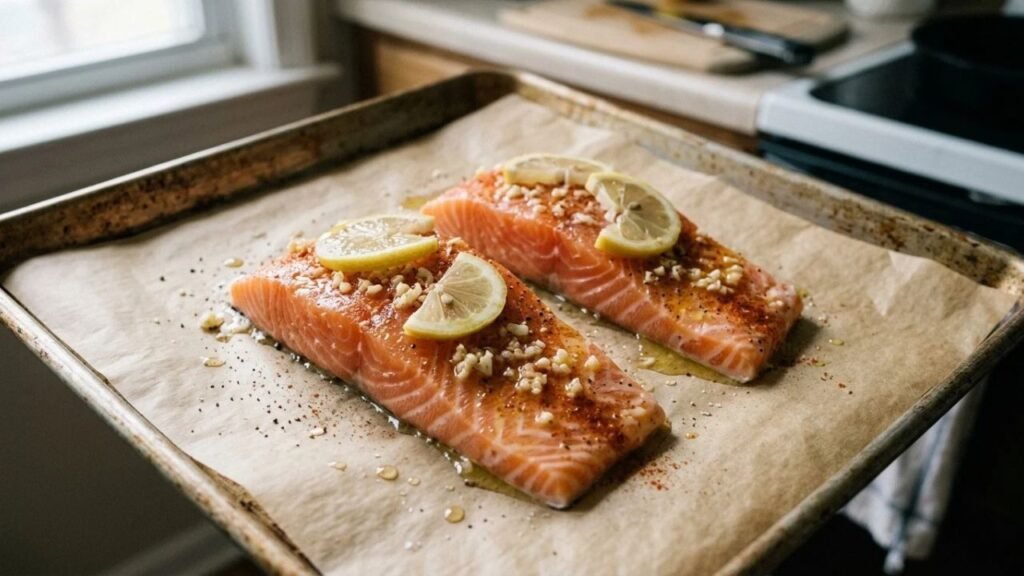
5. Bake Until Cooked Through
Bake for approximately 10–15 minutes, depending on the thickness of the salmon. Begin checking thinner pieces early. For food safety, the thickest part should reach 145°F (63°C) on a food thermometer.
6. Finish and Serve
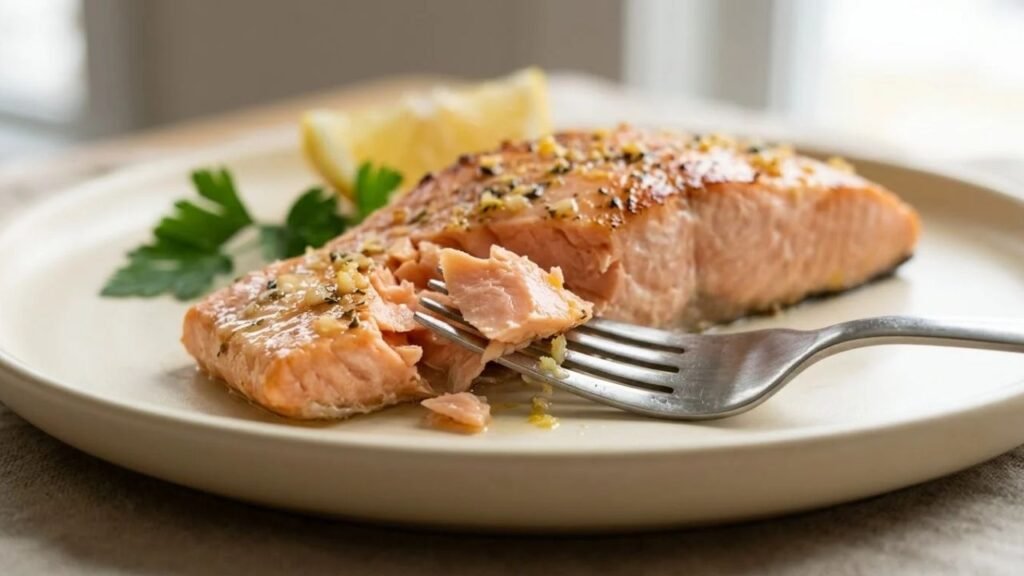
Remove the tray from the oven and spoon the remaining juices over the fish. Add chopped parsley and a little fresh lemon juice if desired, then serve while warm.
Sides That Bring the Meal Together
Lemon garlic salmon has a rich, buttery character, so it pairs well with sides that provide contrast without competing with the fish.
- Roasted potatoes: Their crisp exterior and soft centers make a satisfying accompaniment.
- Steamed rice: A simple option that catches the lemony juices from the tray.
- Roasted broccoli or carrots: These add color, texture, and a slightly sweet or earthy flavor.
- Fresh green salad: A light vinaigrette complements the richness of the salmon.
- Garlic green beans: A good choice when you want a vegetable side that fits the same flavor profile.
For an easier dinner, choose one starch and one vegetable rather than preparing several sides.
Keeping Leftovers Fresh
If you have leftover salmon, transfer it to an airtight container and refrigerate it promptly. As a general guideline, cooked salmon can be kept in the refrigerator for 3–4 days at 40°F (4°C) or below. For broader guidance on storing different foods safely, consult the official cold food storage chart. The quality of your leftovers will also depend on how they were handled and stored.
For reheating, place the salmon in an oven-safe dish, add a teaspoon of water or a little butter, cover loosely, and warm in a low oven until heated through. The exact time depends on the portion size and your oven. Reheating can dry the fish, so avoid leaving it in the oven longer than necessary.
Small Mistakes That Can Change the Result
- Using cooking time as the only test: Fillet thickness varies, so check the fish rather than relying entirely on the clock.
- Adding too much lemon: Excessive acidity can overpower the salmon’s natural flavor.
- Leaving garlic exposed: Small pieces of uncovered garlic may burn before the fish finishes cooking.
- Skipping the initial drying step: Wet surfaces make it harder for the seasoning to coat the fish evenly.
- Overcrowding the tray: Leave some space between fillets so they cook more evenly.
Common Questions About Baked Salmon
1. Can frozen salmon be used?
Yes. Thawing it in the refrigerator before cooking generally makes seasoning and cooking more predictable. Pat it dry after thawing.
2. Is salmon better baked with the skin on?
Either option works. The skin helps protect the flesh from direct heat and can make the cooked fillet easier to lift from the tray.
3. Can butter replace olive oil?
Yes. Butter gives the salmon a richer flavor, while olive oil provides a lighter, fruitier note. Both work well with lemon and garlic.
4. How can I tell when salmon is cooked?
The flesh should separate into flakes, and the thickest part should reach 145°F (63°C) for the recommended food-safe temperature. A thermometer is more reliable than appearance alone.
5. Can other herbs be added?
Yes. Dill, thyme, and chives all work well. Start with a modest amount so the herbs complement rather than overwhelm the lemon and garlic.
6. Can this recipe be doubled?
Yes. Use a larger tray or two trays, leaving space between the fillets. Depending on your oven and the amount being cooked, the timing may vary.
A Simple Dinner Without Unnecessary Complications
Lemon garlic salmon is an easy dinner to return to when you want something flavorful without spending too much time in the kitchen. The combination of fresh lemon, minced garlic, and a little butter or olive oil brings out the fish’s natural richness without relying on complicated seasoning or a long list of ingredients. It works just as well for a quiet dinner at home as it does for a meal shared with family.
The key is to watch the salmon as it cooks, since thicker fillets need more time than thinner ones. Once you understand how your oven affects the texture, you can adjust the timing and try different herbs or side dishes to suit your taste.