The Dragon Roll is a modern sushi-bar favorite linked to Western-style sushi rather than one traditional Japanese recipe. Usually made as an inside-out roll, it gets its name from thin avocado slices layered on top like scales. Some menus also call it a Caterpillar Roll, while the filling can vary from one restaurant to another. Its familiar look is what makes the roll instantly recognizable, even when the ingredients inside are different.
Getting the avocado to stay neatly on a Dragon Roll can be frustrating, especially when the rice shifts or the slices lose their curved, scaled shape. This recipe shows how to keep it together.
Timing that leaves room for your own pace
| Stage | Approx. time |
| Rice preparation | 25–35 minutes |
| Tempura shrimp | 15–20 minutes |
| Ingredient preparation | 10 minutes |
| Rolling and topping | 15 minutes |
| Total | About 50–65 minutes |
These are working estimates, not fixed promises. Your actual prep and cooking time can be shorter or longer depending on your experience, equipment, ingredient preparation, and how quickly you work.
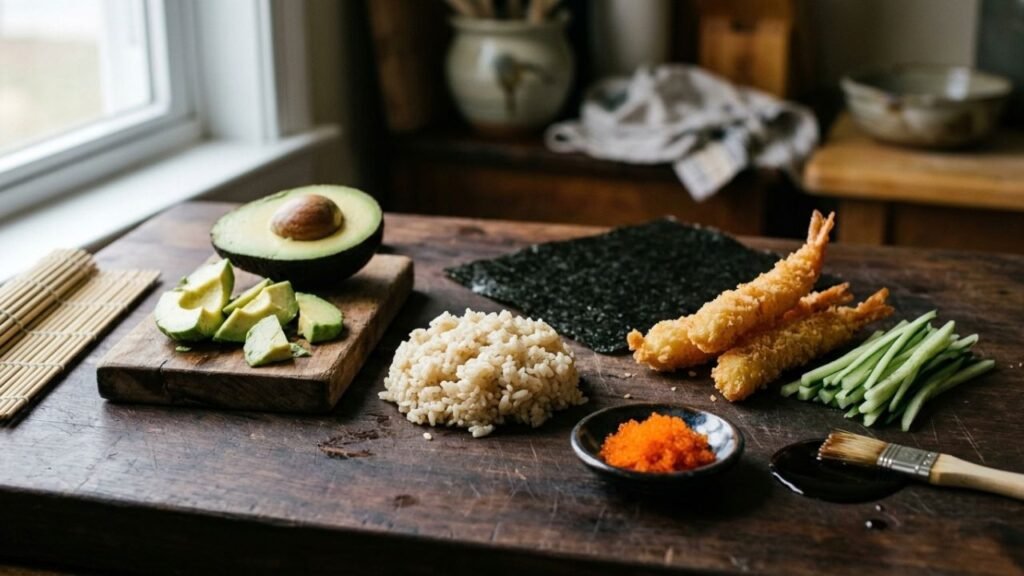
Ingredients that create the Dragon Roll
For 2 rolls
- 2 sheets nori
- About 2 cups prepared sushi rice
- 4 shrimp, peeled and deveined
- 1 Japanese or Persian cucumber
- 1 large ripe avocado
- 2 tablespoons tobiko or masago
- 2 tablespoons unagi sauce
- 1–2 tablespoons spicy mayonnaise
- Black or white sesame seeds, optional
- Soy sauce, for serving
- Pickled ginger, for serving
- Wasabi, for serving
A Quick Tempura Mix for the Shrimp
- ½ cup all-purpose flour
- ⅓ cup cold water
- 1 egg
- Neutral oil, for frying
- Small pinch of salt
The avocado is the ingredient that defines the appearance, but the contrast comes from elsewhere. Shrimp tempura brings crispness, cucumber adds a clean crunch, tobiko gives little pops of texture, and unagi sauce supplies the dark, glossy finish often associated with the finished roll.
Simple Ingredient Swaps That Still Work
| Ingredient | Useful replacement | What changes |
| Shrimp tempura | Cooked shrimp | Less crunch, but still works |
| Tobiko | Masago | Smaller roe with a slightly different texture |
| Japanese cucumber | Persian cucumber | Similar crispness and mild flavor |
| Unagi sauce | Teriyaki-style glaze | Usually a little different in sweetness and thickness |
| Japanese mayonnaise | Regular mayonnaise | Less rich and slightly less tangy |
| Nori | Nori snack sheets, if large enough | Can work, but size and strength may vary |
Not every substitution needs to be made. The avocado and rice are the parts worth protecting if the goal is the familiar Dragon Roll appearance.
Directions
The method is straightforward once the ingredients are ready. The part that deserves the most attention is the final avocado layer, because that is where the roll gets its signature surface.
Build the filling before the roll
Prepare the shrimp tempura first and let it drain until excess oil has disappeared. When working with hot oil, follow basic precautions such as keeping water away from the pan and handling the oil carefully; the USDA’s guidance on deep-frying safety is useful if you want a fuller explanation. Cut the cucumber into thin, even strips.
Halve the avocado, remove the pit, and slice it very thinly crosswise. Keep the slices together so they are easier to transfer onto the finished roll.
Turn the rice into the outside layer
Place a sheet of nori on a bamboo sushi mat. With damp fingers, spread an even layer of sushi rice across the nori.
Turn the rice-covered nori over so the rice faces the mat. Place the shrimp tempura and cucumber along the lower portion of the nori.
Give the roll its shape
Roll the nori around the filling while keeping gentle, even pressure on the mat. The roll should feel compact without being squeezed flat.
Once rolled, use the mat to square or slightly round the shape. A firm roll makes the avocado topping much easier to manage.
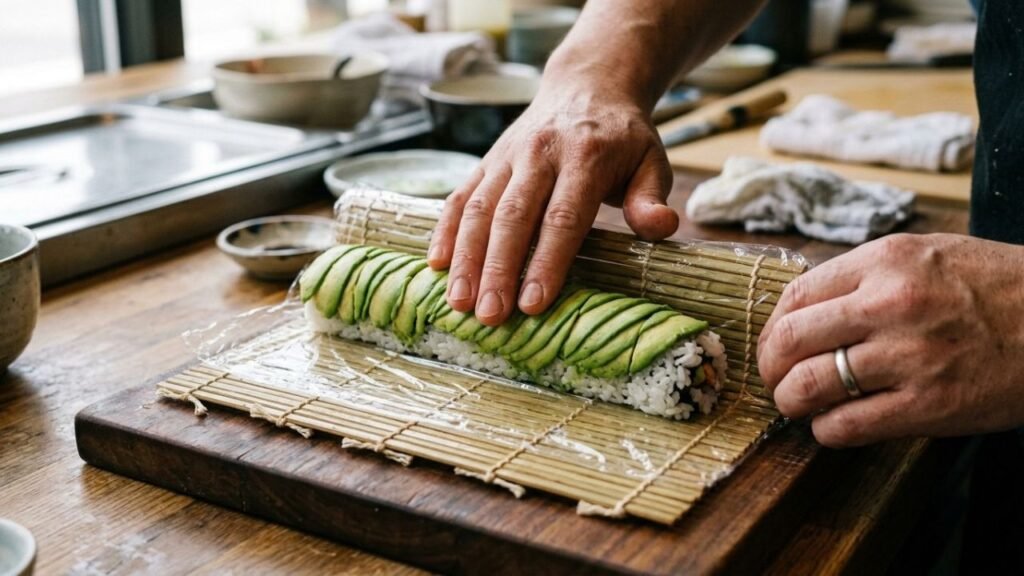
Create the scales
Lay the thin avocado slices across the top of the roll, allowing them to overlap slightly. Cover the roll loosely with plastic wrap and use the bamboo mat to press the avocado gently into place.
Remove the plastic wrap and cut the roll into even pieces with a very sharp, slightly damp knife. Finish with tobiko, sesame seeds, spicy mayonnaise and a thin drizzle of unagi sauce.
This is the visual moment that separates a Dragon Roll from an ordinary avocado-topped sushi roll. The avocado should follow the curve of the rice rather than sit on it as a thick layer.
Serving it without hiding the good parts
Dragon Roll already carries several rich flavors, so the accompaniments can stay simple. Put soy sauce, pickled ginger and wasabi on the side rather than covering the roll with additional sauce.
If you are serving several rolls together, place the Dragon Roll where its avocado topping can remain visible. The contrast between the green avocado, dark sauce and small bright roe is part of the appeal.
Storage and reheating
Dragon Roll is best eaten soon after it is assembled, while the avocado is fresh and the tempura still has some of its crisp texture. As it sits, the avocado can darken, the rice can become firmer, and the crunchy filling gradually softens. If you have leftovers, refrigerate them promptly in a sealed container and use your own judgment about freshness rather than relying on a fixed storage time.
Reheating the whole roll is not recommended because it can change the texture of the rice and avocado. If needed, reheat the tempura separately and add it back when serving.
Small mistakes that change the whole roll
Avocado slices are too thick
Thick slices sit on top rather than bending around the roll. Thin, even slices create the overlapping effect that gives the Dragon Roll its familiar appearance.
The roll is packed too tightly
It is tempting to press hard when rolling, but excessive pressure can crush the rice and filling. The finished roll should hold together without becoming dense.
The avocado is too soft
An extremely ripe avocado may collapse when sliced or pressed. Look for one that yields slightly but still holds its shape under a knife.
The rice layer is uneven
Too much rice makes the roll bulky, while thin patches can leave the nori exposed and make the roll difficult to shape. Aim for an even layer rather than maximum coverage.
The knife is dragging through the avocado
A dull or sticky knife can pull the topping away from the rice. Clean the blade between cuts and keep it slightly damp.
Too much sauce goes on top
Unagi sauce and spicy mayonnaise are strong flavors. A light drizzle adds contrast, while too much can overpower the avocado and tempura.
Five quick things worth knowing
1. Is Dragon Roll made with raw fish?
Not necessarily. Many versions use cooked shrimp tempura, which is one reason the roll is popular with people who do not want raw fish. Some restaurant versions use eel or other fillings.
2. Why is it called a Dragon Roll?
The avocado slices arranged over the top resemble scales, giving the roll its dragon-like appearance.
3. Is Dragon Roll the same as a Caterpillar Roll?
They are very similar in appearance, and menus sometimes use the names differently. The exact distinction depends on the restaurant, so the name alone does not always tell you exactly what will be inside.
4. Can I make Dragon Roll without shrimp tempura?
Yes. Cooked shrimp, eel, crab-style seafood or vegetable fillings can work, although each changes the texture and flavor of the finished roll.
5. What makes the avocado look like scales?
Thin slices are overlapped across the curved surface of the roll. Keeping the slices even and pressing them gently into place helps create that continuous pattern.
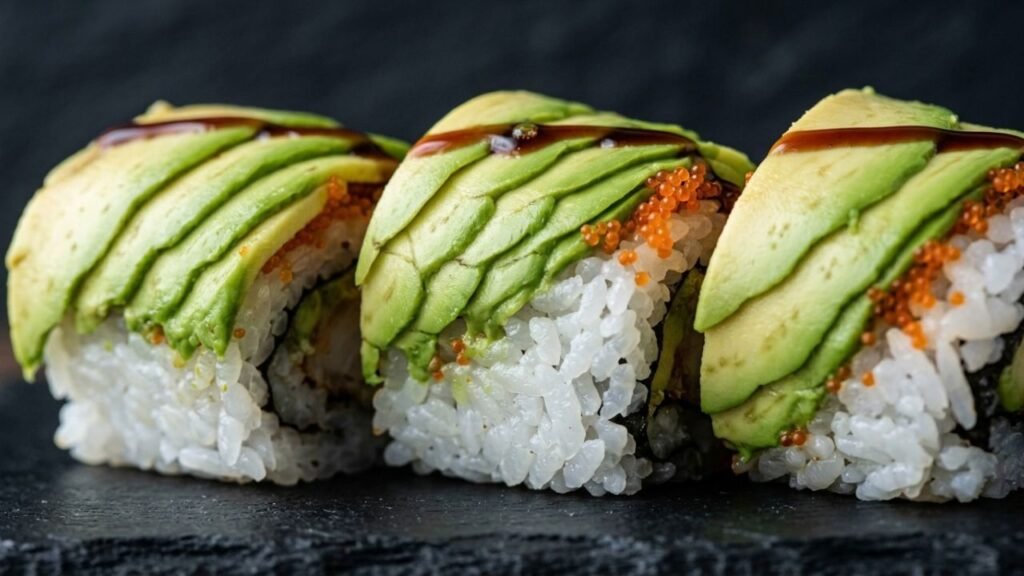
The detail that makes it look like a Dragon Roll
The Dragon Roll does not get its identity from one exotic ingredient. Its signature comes from proportion and arrangement. A compact rice-and-nori structure, a contrasting filling, and thin avocado slices carefully laid across the surface are what give it its familiar look.
That is why the avocado deserves more attention than it usually gets. It is not simply a topping added at the end. It is the part that turns an ordinary sushi roll into the recognizable shape people expect when they order a Dragon Roll.